






























to weave
01
織る, 編む
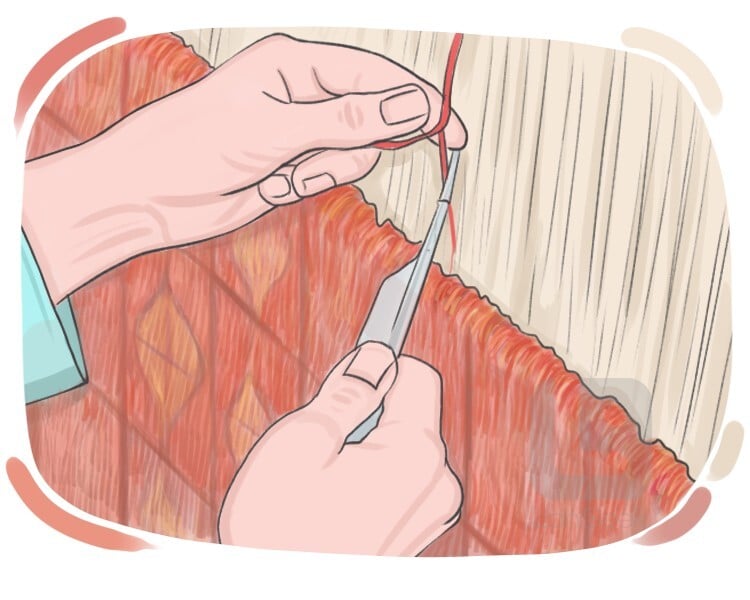
to create fabric or material by interlacing threads, yarn, or other strands in a pattern using a loom or by hand
Transitive: to weave a fabric or pattern
文法情報
形態的構成
単純語
動作動詞
規則的
現在時制
weave
三人称単数
weaves
現在分詞
weaving
単純過去
wove
過去分詞
woven
例
The artisan weaved a complex pattern into the rug.
職人は絨毯に複雑な模様を織り込みました。
02
織る, 編む
to create an intricate structure by intertwining strands or materials
Transitive: to weave an intricate structure
例
She weaved a beautiful tapestry to hang on the wall.
彼女は壁にかける美しいタペストリーを織りました。
03
織る, 頭を振る
(of a horse) to rhythmically move the head back and forth in a stereotypical pattern, often as a behavioral response
Intransitive
例
The nervous horse began to weave in its stall, a sign of its unease before a big competition.
神経質な馬は、大きな競技会前の不安の兆候として、厩舎で織り始めました。
04
縫うように進む, ジグザグに進む
to continuously change directions while moving to avoid colliding with things or people that are in the way
Intransitive: to weave somewhere
例
As the crowded street became more congested, pedestrians had to weave around each other to move forward.
混雑した通りがさらに混雑するにつれて、歩行者は前進するために互いの周りを縫うようにしなければならなかった。
4.1
蛇行する, うねる
to cause continuous changes in direction while moving to avoid colliding with people or things
Transitive: to weave a way somewhere
例
The river weaves its way through the valley, carving a path through the landscape over millennia.
川は谷間を縫うように進み、何千年もの間に風景の中に道を刻みます。
Weave
01
織り方, 織り目
the pattern, structure, or arrangement of threads in a piece of fabric or textile
文法情報
有生性の状態
無生物
形態的構成
単純語
可算
singular
not gender specific
複数形
weaves
例
The fabric had a tight, intricate weave.
その生地は、きつく複雑な織り方をしていた。
LanGeek
モバイルアプリをダウンロード

語彙ツリー
inweave
unweave
weaver
weave

