






























to knock
01
노크하다, 치다
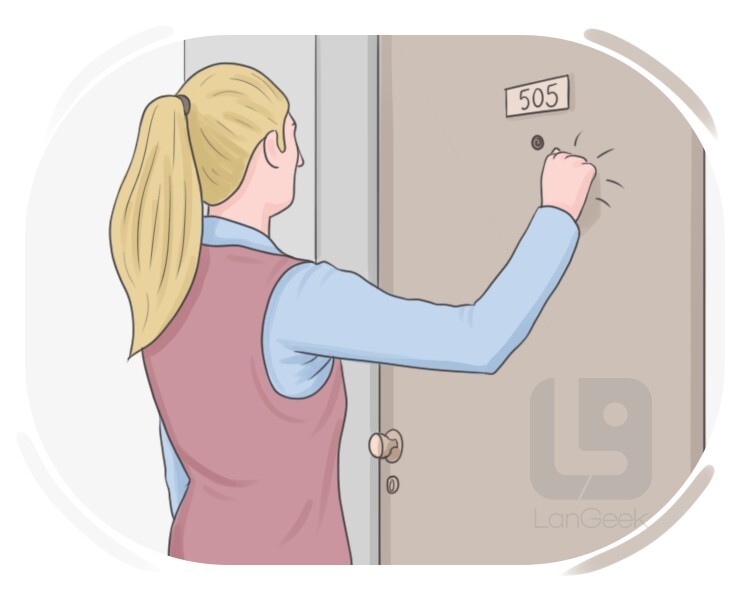
to hit a door, surface, etc. in a way to attract attention, especially expecting it to be opened
Intransitive: to knock on a surface
문법 정보
형태적 구성
단순어
동작 동사
규칙
현재 시제
knock
3인칭 단수
knocks
현재분사
knocking
단순 과거
knocked
과거분사
knocked
예시들
She had to knock on the door to announce her arrival.
그녀는 자신의 도착을 알리기 위해 문을 두드려야 했다.
02
치다, 때리다
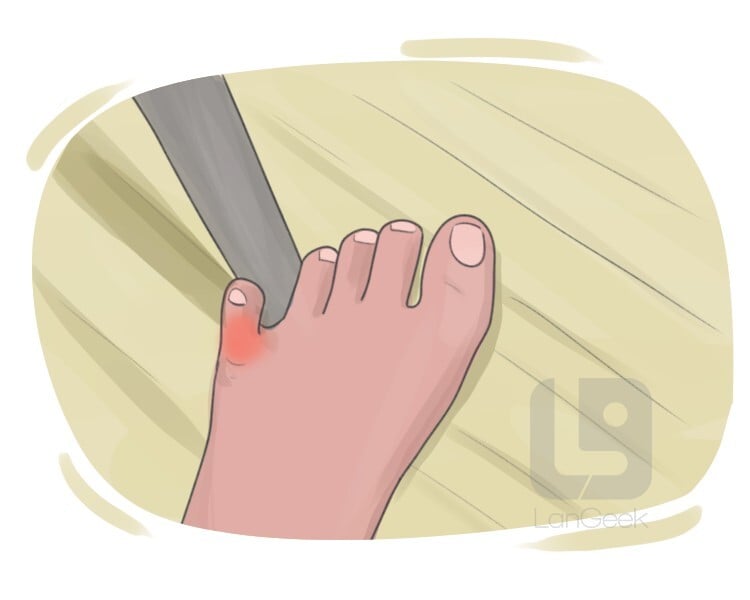
to hit or strike with force, often accidentally
Transitive: to knock sth against | to knock sth on sth
예시들
The child knocked his knee against the edge of the coffee table.
아이가 커피 테이블 가장자리에 무릎을 부딪쳤다.
03
치다, 넘어뜨리다
to hit an object with enough intensity to cause it to shift or topple
Transitive: to knock sth somewhere
예시들
He knocked the glass off the table accidentally.
그는 실수로 테이블에서 유리잔을 떨어뜨렸다.
04
두드리다, 치다
to strike something with force, resulting in a sharp, audible sound
Transitive: to knock sb/sth somewhere
예시들
She knocked the nail into the wall with a hammer.
그녀는 망치로 못을 벽에 쳤다.
05
비판하다, 질책하다
to express disapproval or point out shortcomings in someone or something
Transitive: to knock sth
예시들
The film critic knocked the movie for its lack of character development.
영화 평론가는 캐릭터 개발 부족으로 영화를 비판했다.
06
노크하다, 탁탁 소리나다
(of an engine) produce a sharp, metallic noise caused by the premature or uneven ignition of the air-fuel mixture
Intransitive
예시들
The engine started to knock loudly after using low-quality fuel.
저품질 연료를 사용한 후 엔진이 시끄럽게 노킹하기 시작했습니다.
07
뛰다, 두근거리다
(of the heart or body) to beat or shake hard, often from fear, excitement, or nervousness
예시들
My heart was knocking as I waited for the results.
결과를 기다리는 동안 내 심장이두근거렸다.
Knock
01
노크 소리, 두드리는 소리
the sound of knocking (as on a door or in an engine or bearing)
문법 정보
유생성 상태
무생물
형태적 구성
합성어
가산
singular
not gender specific
복수형
knocks
02
비판, 비난
negative criticism
03
때리기, 노크
the act of hitting vigorously
04
강타, 노크
a vigorous blow
05
타격, 나쁜 경험
a bad experience
LanGeek
모바일 앱 다운로드

어휘 나무
knocker
knocking
knock

