






























Root
01
뿌리, 뿌리줄기
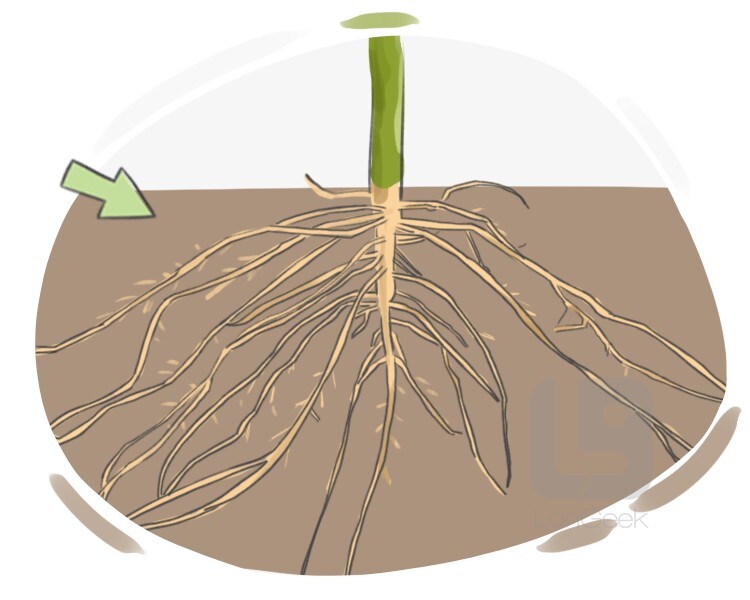
the underground part of a plant that absorbs water and minerals, sending it to other parts
예시들
She carefully planted the new tree, ensuring that its roots were well spread out in the hole to encourage healthy growth.
그녀는 새 나무를 조심스럽게 심었고, 건강한 성장을 장려하기 위해 구멍에 뿌리가 잘 퍼져 있는지 확인했습니다.
02
뿌리, 근원
the primary cause of something

예시들
Understanding the root of the problem is essential for finding an effective solution to the conflict.
문제의 근원을 이해하는 것은 갈등에 대한 효과적인 해결책을 찾는 데 필수적입니다.
03
어근, 어기
(in linguistics) the base form of a word, remaining after removing all prefixes and suffixes
문법 정보
유생성 상태
추상
형태적 구성
단순어
가산
singular
not gender specific
복수형
roots
예시들
"Kind" is the root of "kindness."
어근은 "친절"의 기초입니다.
04
근, 해
the values that satisfy an equation, making it true
예시들
x = 3 is a root of the equation x² – 9 = 0.
근은 방정식 x² – 9 = 0의 해입니다.
05
근, 루트
a value that, when multiplied by itself a specified number of times, results in the given number
예시들
The square root of 16 is 4.
16의 제곱근은 4입니다.
06
뿌리, 기초
the embedded or base part of a bodily structure, such as a hair, nail, or tooth
예시들
The dentist examined the root of the tooth.
치과 의사가 치아의 뿌리를 검사했습니다.
07
기원, 근원
the place or point where something begins or originates
예시들
The roots of democracy are in ancient Greece.
민주주의의 뿌리는 고대 그리스에 있습니다.
08
어근, 어원형
(in linguistics) a reconstructed ancestral form from which related words in different languages are derived
예시들
The Proto-Indo-European root gives rise to many modern words.
원시 인도유럽어 어근은 많은 현대 단어를 낳습니다.
09
조상, 선조
an ancestor, usually more distant than a grandparent
예시들
He discovered his roots in Ireland.
그는 아일랜드에서 자신의 뿌리를 발견했습니다.
10
섹스, 성교
(Australian and New Zealand) the act of sexual intercourse
속어
저속한
예시들
They had a quick root behind the pub.
그들은 펍 뒤에서 빠른 root를 했다.
to root
01
뿌리를 내리다, 심다
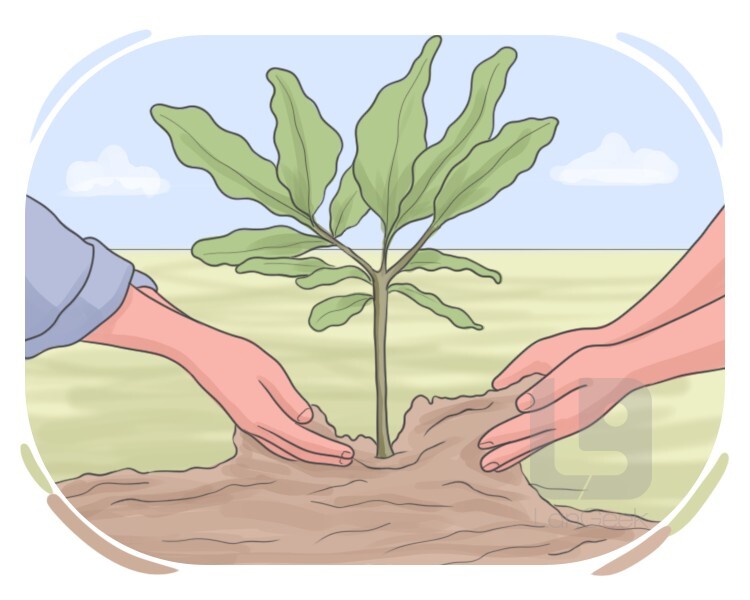
to plant by burying the base of a plant in soil
Transitive: to root a plant
예시들
She roots the cuttings in a potting mix to propagate new plants.
그녀는 새로운 식물을 번식시키기 위해 삽목을 화분용 혼합물에 뿌리내립니다.
02
뒤지다, 찾아다니다
to dig or search for something by using the snout, as done by certain animals like pigs
Intransitive
문법 정보
형태적 구성
단순어
이동 동사
규칙
현재 시제
root
3인칭 단수
roots
현재분사
rooting
단순 과거
rooted
과거분사
rooted
예시들
The pig rooted around the forest floor for truffles.
돼지가 트러플을 찾아 숲 바닥을 파헤쳤다.
03
뿌리를 내리다, 뿌리가 박히다
(of a plant) to grow and develop roots
Intransitive
예시들
The sapling rooted quickly in the rich soil of the garden.
묘목은 정원의 비옥한 토양에 빠르게 뿌리를 내렸다.
04
뿌리내리다, 기원을 두다
to have a starting point, origin, or foundation
Intransitive: to root in an origin
예시들
The philosophy of the movement rooted in a desire for equality.
이 운동의 철학은 평등에 대한 열망에 뿌리를 두고 있습니다.
05
뿌리내리게 하다, 뿌리를 내리도록 돕다
to help a plant or cutting grow roots
Transitive: to root a plant or cutting
예시들
The gardener rooted the cutting in a jar of water before planting it.
정원사는 삽목을 심기 전에 물병에서 뿌리를 내리게 했습니다.
06
하다, 박다
(Australian and New Zealand) to have sexual intercourse
속어
저속한
예시들
He rooted her hard from behind until she screamed.
그는 그녀가 소리 질을 때까지 뒤에서 강하게박았다.
LanGeek
모바일 앱 다운로드

어휘 나무
rootable
rootage
rootless
root

