






























to label
01
라벨을 붙이다, 표시하다
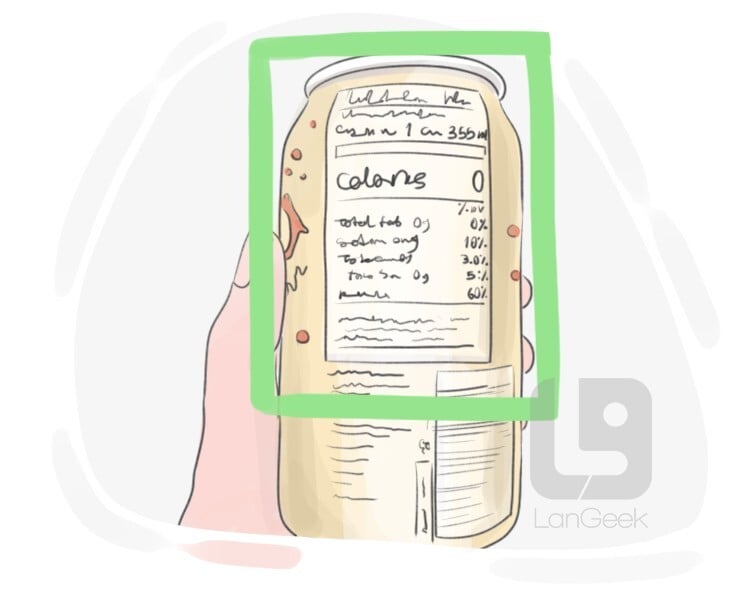
to stick or put something such as tag or marker, with a little information written on it, on an object
Transitive: to label sth
문법 정보
형태적 구성
단순어
동작 동사
규칙
현재 시제
label
3인칭 단수
labels
현재분사
labeling
단순 과거
labeled
과거분사
labeled
예시들
I will label the boxes with their contents for easy unpacking.
쉽게 개봉할 수 있도록 상자에 내용물을 라벨링하겠습니다.
02
라벨을 붙이다, 분류하다
to assign a quality to someone or something in order to categorize them
Complex Transitive: to label sb/sth as sth
예시들
They labeled her as a troublemaker because of her outspoken nature.
그들은 그녀의 솔직한 성격 때문에 그녀를 문제制造者로 꼬리표를 붙였다.
03
표시하다, 라벨을 붙이다
to mark or identify a cell or compound by adding a recognizable element, like a dye or a labeled atom, making it distinguishable from others
Transitive: to label a cell or compound with a chemical marker
예시들
The researchers labeled the protein with a fluorescent dye to visualize its distribution within the cell.
연구자들은 세포 내 분포를 시각화하기 위해 단백질을 형광 염료로 표지했습니다.
04
표시하다, 라벨을 붙이다
to substitute specific atoms or elements with their isotopes to track it through a reaction, metabolic pathway, or cell
Transitive: to label atoms or elements with their isotopes
예시들
The chemists labeled the glucose molecules with carbon-13 isotopes to trace their metabolism in the body.
화학자들은 체내에서의 대사를 추적하기 위해 포도당 분자를 탄소-13 동위 원소로 표지했습니다.
Label
01
라벨, 꼬리표
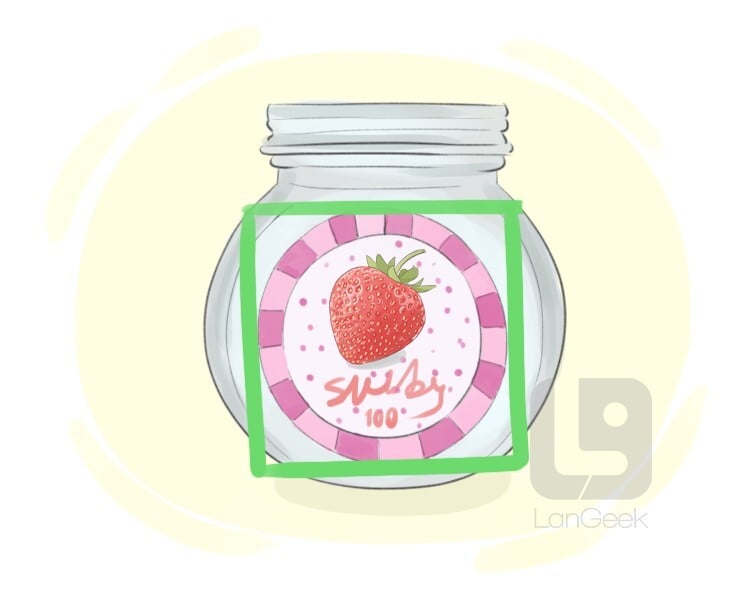
a marker attached to an object that gives extra information about it
예시들
The label on the jar listed all the ingredients used in the jam.
항아리의 라벨에는 잼에 사용된 모든 재료가 나열되어 있었습니다.
02
브랜드, 라벨
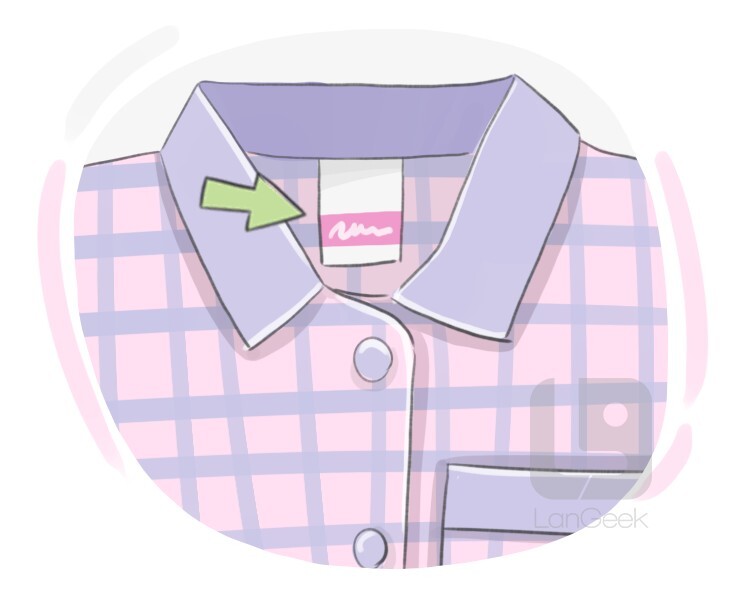
the trade name of a company that makes designer clothes
예시들
She always dreams of wearing dresses from her favorite fashion label.
그녀는 항상 그녀가 가장 좋아하는 패션 라벨의 드레스를 입는 꿈을 꿉니다.
03
레이블, 음반사
the name or trademark of a company that produces music records
문법 정보
유생성 상태
무생물
형태적 구성
단순어
가산
singular
not gender specific
복수형
labels
예시들
She’s been working for a popular music label for over a decade.
그녀는 인기 있는 음악 레이블에서 10년 이상 일해 왔습니다.
04
라벨, 꼬리표
a brief description given for purposes of identification
05
표지, 방사성 추적자
a radioactive isotope that is used in a compound in order to trace the mechanism of a chemical reaction
LanGeek
모바일 앱 다운로드

어휘 나무
labeled
label

