





























to wake
01
目覚める, 起きる
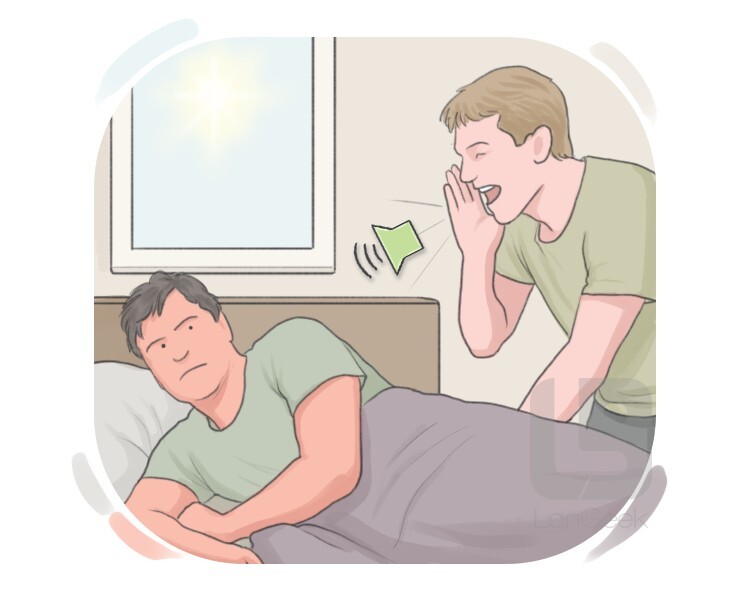
to become conscious again after sleeping
Intransitive
例
After a refreshing nap, it takes a moment to fully wake and regain awareness.
さわやかな昼寝の後、完全に目が覚めて意識を取り戻すには少し時間がかかります。
02
見張る, 監視する
to stay attentive and aware and watch or guard over something
Intransitive
文法情報
形態的構成
単純語
動作動詞
規則的
現在時制
wake
三人称単数
wakes
現在分詞
waking
単純過去
woke
過去分詞
woken
例
He promised to wake and watch over the city as part of his night patrol.
彼は夜間パトロールの一環として、街を見張り、見守ることを約束した。
03
起こす, 目を覚まさせる
to bring someone from sleep or unconsciousness into a state of wakefulness
Transitive: to wake sb
例
The loud noise outside woke her from her deep sleep.
外の大きな音が彼女を深い眠りから起こした。
04
目覚めさせる, 関心を喚起する
to bring something to someone’s attention or spark their interest in it
Transitive: to wake sb to sth
例
The campaign aimed to wake the public to the importance of mental health care.
このキャンペーンは、精神医療の重要性について一般の人々に気づかせることを目的としていました。
05
呼び起こす, かき立てる
to stir up emotions, feelings, or passions in someone
Transitive: to wake feelings or passions
例
His words woke a passion for justice in her heart.
彼の言葉は彼女の心に正義への情熱を呼び起こした。
Wake
01
余波, 結果
the aftermath or consequences following a significant event, especially a disaster
文法情報
有生性の状態
抽象的
形態的構成
単純語
不可算
singular
not gender specific
複数形
wakes
例
The wake of the storm caused widespread damage to homes and infrastructure.
嵐の余波は、家屋やインフラに広範な被害をもたらしました。
02
通夜, 夜通しの葬儀
a ceremony or vigil held over a dead body the night before burial
例
Family and friends gathered for a wake.
家族と友人が通夜のために集まった。
03
航跡, 波跡
the trail of waves left behind a moving boat
例
The boat's wake spread across the lake.
ボートの航跡が湖に広がった。
04
ウェーク島, ウェーク
an island in the western Pacific Ocean, located between Hawaii and Guam
例
Wake is a remote island in the Pacific.
ウェーク島は太平洋の遠隔地にある島です。
LanGeek
モバイルアプリをダウンロード
語彙ツリー
waker
waking
waking
wake

