

Cerca
Seleziona la lingua del dizionario





























to organize
01
organizzare
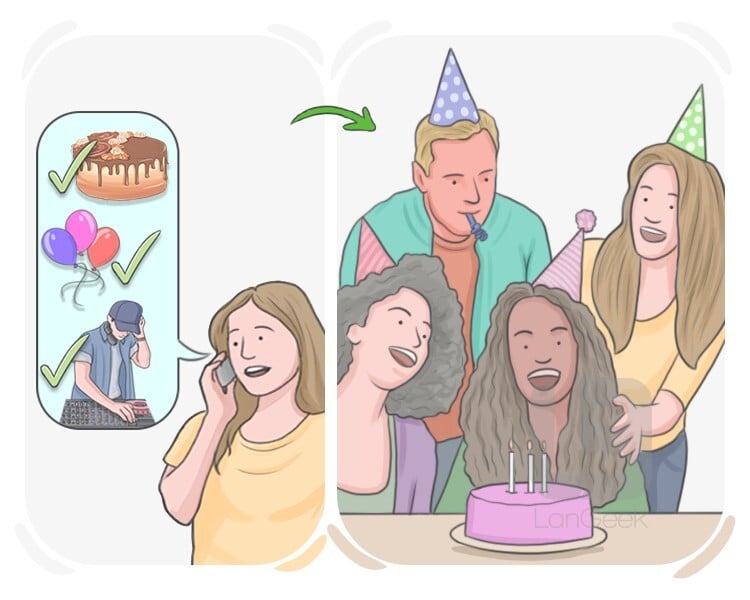
to make the necessary arrangements for an event or activity to take place
Transitive: to organize an event or activity
informazioni grammaticali
composizione morfologica
derivato
verbo d’azione
regolare
presente
organize
3ª persona singolare
organizes
participio presente
organizing
passato semplice
organized
participio passato
organized
Esempi
I organize the annual charity event for our community.
Organizzo l'evento di beneficenza annuale per la nostra comunità.
02
organizzare
to put things into a particular order or structure
Transitive: to organize a space or its contents

Esempi
She organized her closet by color, making it easier to find clothes in the morning.
Ha organizzato il suo armadio per colore, rendendo più facile trovare i vestiti al mattino.
03
organizzare
to bring different parts together and arrange them so they work together as a complete and effective system
Transitive: to organize components of a whole
Esempi
They organized the data into a report that made sense to the stakeholders.
Hanno organizzato i dati in un rapporto che aveva senso per gli stakeholder.
04
organizzare, strutturare
to establish and set up the administrative framework for an organization or system
Transitive: to organize an organization or system
Esempi
They organized the company’s management team to handle daily operations.
Hanno organizzato il team di gestione dell'azienda per gestire le operazioni quotidiane.
05
organizzare, strutturare
to form a group of people with a particular purpose, especially a political cause
Transitive: to organize a group of people
Esempi
He organized the workers into a trade union to demand better wages.
Ha organizzato i lavoratori in un sindacato per chiedere salari migliori.
LanGeek
Scarica la nostra app mobile

Albero Lessicale
disorganize
organization
organized
organize
organ

