

Rechercher
Sélectionnez la langue du dictionnaire





























to organize
01
ordonner, organiser
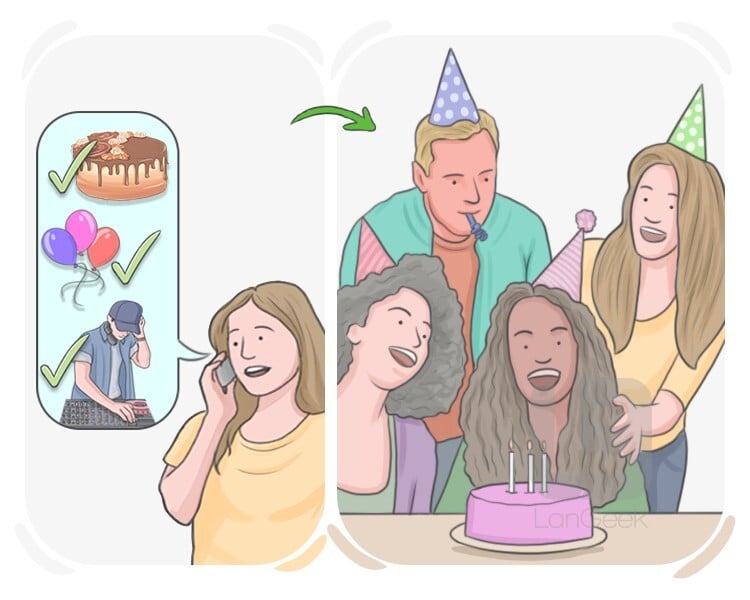
to make the necessary arrangements for an event or activity to take place
Transitive: to organize an event or activity
informations grammaticales
composition morphologique
dérivé
verbe d’action
régulier
présent
organize
3e personne du singulier
organizes
participe présent
organizing
passé simple
organized
participe passé
organized
Exemples
I organize the annual charity event for our community.
J'organise l'événement caritatif annuel pour notre communauté.
02
classer
to put things into a particular order or structure
Transitive: to organize a space or its contents

Exemples
She organized her closet by color, making it easier to find clothes in the morning.
Elle a organisé son placard par couleur, ce qui facilite la recherche de vêtements le matin.
03
organiser
to bring different parts together and arrange them so they work together as a complete and effective system
Transitive: to organize components of a whole
Exemples
They organized the data into a report that made sense to the stakeholders.
Ils ont organisé les données dans un rapport qui avait du sens pour les parties prenantes.
04
organiser, structurer
to establish and set up the administrative framework for an organization or system
Transitive: to organize an organization or system
Exemples
They organized the company’s management team to handle daily operations.
Ils ont organisé l'équipe de direction de l'entreprise pour gérer les opérations quotidiennes.
05
organiser, structurer
to form a group of people with a particular purpose, especially a political cause
Transitive: to organize a group of people
Exemples
He organized the workers into a trade union to demand better wages.
Il a organisé les travailleurs en syndicat pour exiger de meilleurs salaires.
LanGeek
Téléchargez notre application mobile

Arbre Lexical
disorganize
organization
organized
organize
organ

