

Search
Select the dictionary language





























a row of closely-planted bushes or small trees that form a boundary, particularly on the edge of a garden, road, or field
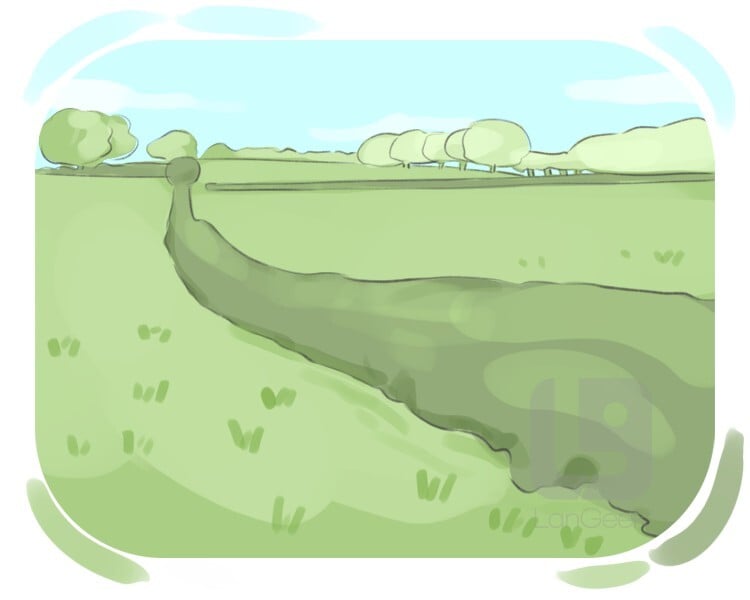
What is a "hedge"?
A hedge is a row of closely planted shrubs or small trees that are often used to form a boundary, fence, or decorative feature in gardens or landscapes. Hedges are trimmed and shaped to grow in a dense, continuous line, providing privacy, wind protection, or an attractive division between areas. Hedges can be evergreen, maintaining their leaves throughout the year, or deciduous, losing their leaves in the fall. They are commonly used for both functional purposes, like creating a natural fence, and aesthetic reasons, such as adding structure and color to outdoor spaces.
a deliberately vague statement
a linguistic device used to indicate uncertainty, vagueness, or lack of commitment, often expressed through words or phrases
What is a "hedge"?
A hedge is a word or phrase used in conversation to lessen the impact of a statement, making it less direct or assertive. A hedge allows speakers to soften their claims or opinions, often to express uncertainty, politeness, or caution. Common examples of hedges include words like "maybe," "possibly," "I think," and "kind of." For instance, saying "I think it might rain" is a hedge that suggests uncertainty about the weather rather than a strong assertion. Using hedges can help maintain a friendly tone in discussions and make it easier to share opinions without coming across as overly forceful or confrontational.
to create an obstacle or restriction, hindering movement or impact
to evade giving a clear or firm response, decision, or commitment
to reduce the risk of loss or failure by making a counterbalancing action or decision
to enclose or outline an area by planting or placing a row of shrubs or small trees
LanGeek


