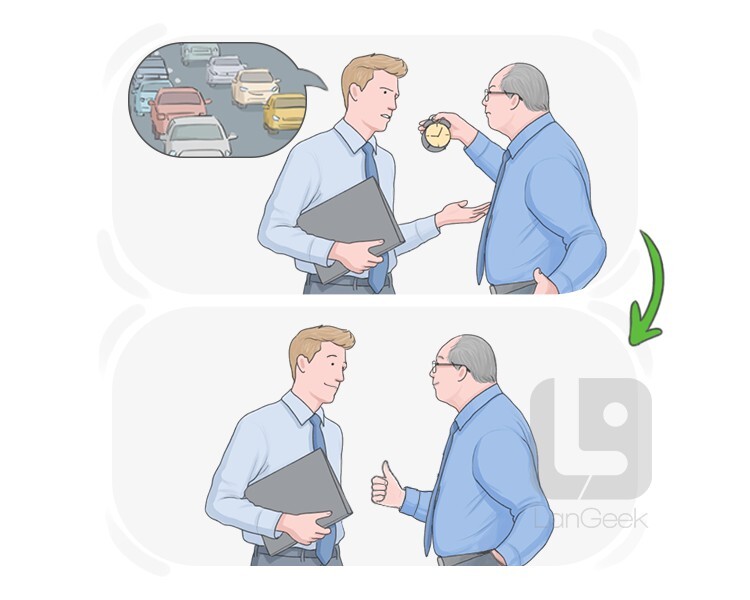
excuse
ex
ˈÉĒks
iks
cuse
kjus
kyoos
/ɛkskjˈuːs/

āχāĻ‚āϰ⧇āϜāĻŋāϤ⧇ "excuse"āĻāϰ āϏāĻ‚āĻœā§āĻžāĻž āĻ“ āĻ…āĻ°ā§āĻĨ

01

āĻ•ā§āώāĻŽāĻž āĻ•āϰāĻž, āĻŽāĻžāĻĢ āĻ•āϰāĻž

to forgive someone for making a mistake, etc.
Transitive: to excuse sb
to excuse definition and meaning
āωāĻĻāĻžāĻšāϰāĻŖ
He frequently excuses his friends for their occasional lapses.
āϤāĻŋāύāĻŋ āĻĒā§āϰāĻžāϝāĻŧāχ āϤāĻžāϰ āĻŦāĻ¨ā§āϧ⧁āĻĻ⧇āϰ āϤāĻžāĻĻ⧇āϰ āĻŽāĻžāĻā§‡ āĻŽāĻžāĻā§‡ āĻ¤ā§āϰ⧁āϟāĻŋāϰ āϜāĻ¨ā§āϝ āĻ•ā§āώāĻŽāĻž āĻ•āϰ⧇āύāĨ¤
02

āĻ•ā§āώāĻŽāĻž āĻ•āϰāĻž, āĻŽāĻžāĻĢ āĻ•āϰāĻž

to act as a valid reason or justification for something
Transitive: to excuse an action or shortcoming
āωāĻĻāĻžāĻšāϰāĻŖ
The bad weather could excuse the delay in the flight schedule.
āĻ–āĻžāϰāĻžāĻĒ āφāĻŦāĻšāĻžāĻ“āϝāĻŧāĻž āĻĢā§āϞāĻžāχāϟ āϏāĻŽāϝāĻŧāϏ⧂āĻšā§€āϤ⧇ āĻŦāĻŋāϞāĻŽā§āĻŦ āĻ•ā§āώāĻŽāĻž āĻ•āϰāϤ⧇ āĻĒāĻžāϰ⧇āĨ¤
03

āĻŽā§āĻ•ā§āϤāĻŋ āĻĻ⧇āĻ“āϝāĻŧāĻž, āĻ•ā§āώāĻŽāĻž āĻ•āϰāĻž

to formally free or exempt someone from an obligation, responsibility, or task
Transitive: to excuse sb from an obligation
āωāĻĻāĻžāĻšāϰāĻŖ
She was excused from jury duty because she had a prior engagement.
āϤāĻžāϕ⧇ āϜ⧁āϰāĻŋ āĻĄāĻŋāωāϟāĻŋ āĻĨ⧇āϕ⧇ āĻ•ā§āώāĻŽāĻž āĻ•āϰāĻž āĻšāϝāĻŧ⧇āĻ›āĻŋāϞ āĻ•āĻžāϰāĻŖ āϤāĻžāϰ āφāϗ⧇ āĻĨ⧇āϕ⧇ āĻāĻ•āϟāĻŋ āĻŦā§āϝāĻ¸ā§āϤāϤāĻž āĻ›āĻŋāϞāĨ¤
04

āĻ•ā§āώāĻŽāĻž āϚāĻžāĻ“āϝāĻŧāĻž, āĻ“āϜāϰ āĻĻ⧇āĻ“āϝāĻŧāĻž

to try to minimize or remove the blame associated with a wrongdoing by offering an explanation or defense
Transitive: to excuse a wrongdoing
āωāĻĻāĻžāĻšāϰāĻŖ
The defendant attempted to excuse his actions by arguing that he was under stress.
āĻĒā§āϰāϤāĻŋāĻŦāĻžāĻĻā§€ āϚāĻžāĻĒ⧇āϰ āĻŽāĻ§ā§āϝ⧇ āĻ›āĻŋāϞ⧇āύ āĻŦāϞ⧇ āĻĻāĻžāĻŦāĻŋ āĻ•āϰ⧇ āϤāĻžāϰ āĻ•āĻ°ā§āĻŽāĻ•āĻžāĻŖā§āĻĄ āĻ•ā§āώāĻŽāĻž āĻ•āϰāĻžāϰ āĻšā§‡āĻˇā§āϟāĻž āĻ•āϰ⧇āĻ›āĻŋāϞ⧇āύāĨ¤
05

āĻ•ā§āώāĻŽāĻž āĻ•āϰāĻž, āĻŽāĻžāĻĢ āĻ•āϰāĻž

to pardon or overlook someone's mistake or wrongdoing
Transitive: to excuse a mistake or wrongdoing
āωāĻĻāĻžāĻšāϰāĻŖ
He asked her to excuse his behavior, and she forgave him.
āϤāĻŋāύāĻŋ āϤāĻžāϕ⧇ āϤāĻžāϰ āφāϚāϰāĻŖ āĻ•ā§āώāĻŽāĻž āĻ•āϰāϤ⧇ āĻŦāϞ⧇āĻ›āĻŋāϞ⧇āύ, āĻāĻŦāĻ‚ āϏ⧇ āϤāĻžāϕ⧇ āĻ•ā§āώāĻŽāĻž āĻ•āϰ⧇āĻ›āĻŋāϞāĨ¤
06

āĻ•ā§āώāĻŽāĻž āĻ•āϰāĻž, āĻ…āύ⧁āĻŽāϤāĻŋ āĻĻ⧇āĻ“āϝāĻŧāĻž

to grant permission for someone to leave or exit a room, meeting, or event
Transitive: to excuse sb
āωāĻĻāĻžāĻšāϰāĻŖ
He was excused from the gathering as he had an urgent matter to attend to.
āϤāĻŋāύāĻŋ āĻāĻ•āϟāĻŋ āϜāϰ⧁āϰāĻŋ āĻŦāĻŋāώāϝāĻŧ āωāĻĒāĻ¸ā§āĻĨāĻŋāϤ āĻĨāĻžāĻ•āĻžāϰ āϜāĻ¨ā§āϝ āϏāĻŽāĻžāĻŦ⧇āĻļ āĻĨ⧇āϕ⧇ āĻ•ā§āώāĻŽāĻž āĻĒ⧇āϝāĻŧ⧇āĻ›āĻŋāϞ⧇āύāĨ¤
01

āĻ…āϜ⧁āĻšāĻžāϤ, āĻ•ā§āώāĻŽāĻž

a reason given to explain one's careless, offensive, or wrong behavior or action
āωāĻĻāĻžāĻšāϰāĻŖ
She used a family emergency as an excuse to leave the party early.
āϤāĻŋāύāĻŋ āĻĒāĻžāĻ°ā§āϟāĻŋ āĻĨ⧇āϕ⧇ āϤāĻžāĻĄāĻŧāĻžāϤāĻžāĻĄāĻŧāĻŋ āϚāϞ⧇ āϝāĻžāĻ“āϝāĻŧāĻžāϰ āϜāĻ¨ā§āϝ āĻāĻ•āϟāĻŋ āĻĒāĻžāϰāĻŋāĻŦāĻžāϰāĻŋāĻ• āϜāϰ⧁āϰāĻŋ āĻ…āĻŦāĻ¸ā§āĻĨāĻžāϕ⧇ āĻ…āϜ⧁āĻšāĻžāϤ āĻšāĻŋāϏāĻžāĻŦ⧇ āĻŦā§āϝāĻŦāĻšāĻžāϰ āĻ•āϰ⧇āĻ›āĻŋāϞ⧇āύāĨ¤
02

āĻ…āϜ⧁āĻšāĻžāϤ, āφāĻ•āĻžāϰ

something considered a poor or inadequate example of its kind
āωāĻĻāĻžāĻšāϰāĻŖ
The meal was an excuse for dinner — barely edible.
āĻ–āĻžāĻŦāĻžāϰāϟāĻŋ āĻ›āĻŋāϞ āϰāĻžāϤ⧇āϰ āĻ–āĻžāĻŦāĻžāϰ⧇āϰ āϜāĻ¨ā§āϝ āĻāĻ•āϟāĻŋ āĻ…āϜ⧁āĻšāĻžāĻ¤â€”āĻĒā§āϰāĻžāϝāĻŧ āĻ–āĻžāĻ“āϝāĻŧāĻžāϰ āĻ…āϝ⧋āĻ—ā§āϝāĨ¤

āĻļāĻŦā§āĻĻāϤāĻžāĻ¤ā§āĻ¤ā§āĻŦāĻŋāĻ• āĻ—āĻžāĻ›

excusatory
excused
excuser
excuse
App
LanGeek
āĻ…ā§āϝāĻžāĻĒ āĻĄāĻžāωāύāϞ⧋āĻĄ āĻ•āϰ⧁āύ