






























to excuse
01
許す, 大目に見る
to forgive someone for making a mistake, etc.
Transitive: to excuse sb
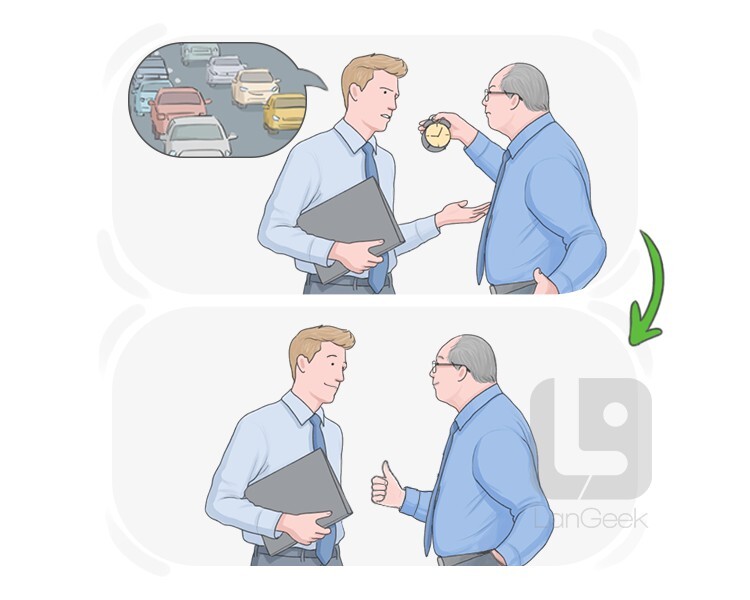
例
Understanding the circumstances, she chose to excuse her colleague for the unintentional oversight.
状況を理解して、彼女は意図しない見落としのために同僚を許すことを選んだ。
02
言い訳する, 許す
to act as a valid reason or justification for something
Transitive: to excuse an action or shortcoming
文法情報
形態的構成
単純語
動作動詞
規則的
現在時制
excuse
三人称単数
excuses
現在分詞
excusing
単純過去
excused
過去分詞
excused
例
His illness served to excuse his absence from the meeting.
彼の病気は会議を欠席する言い訳として役立った。
03
免除する, 許す
to formally free or exempt someone from an obligation, responsibility, or task
Transitive: to excuse sb from an obligation
例
The manager excused him from the meeting because of his conflicting schedule.
マネージャーは、彼のスケジュールの衝突のために会議から彼を免除しました。
04
言い訳する, 弁解する
to try to minimize or remove the blame associated with a wrongdoing by offering an explanation or defense
Transitive: to excuse a wrongdoing
例
He tried to excuse his mistake by saying he didn't have enough time to prepare.
彼は準備する時間が足りなかったと言って自分の間違いを言い訳しようとした。
05
許す, 大目に見る
to pardon or overlook someone's mistake or wrongdoing
Transitive: to excuse a mistake or wrongdoing
例
The teacher excused the student's late arrival because of the traffic.
先生は交通渋滞のために生徒の遅刻を許しました。
06
許す, 許可を与える
to grant permission for someone to leave or exit a room, meeting, or event
Transitive: to excuse sb
例
The professor excused the student from the lecture when he had to leave early.
教授は、学生が早退しなければならなかったとき、講義から免除しました。
Excuse
01
言い訳, 口実
a reason given to explain one's careless, offensive, or wrong behavior or action
文法情報
有生性の状態
抽象的
形態的構成
複合語
可算
singular
not gender specific
複数形
excuses
例
He made an excuse for being late to the meeting, claiming that traffic was heavy.
彼は会議に遅刻した理由として、交通が混雑していたと主張する言い訳をした。
02
口実, 見せかけ
something considered a poor or inadequate example of its kind
例
That old shed is an excuse for a garage.
あの古い物置はガレージのための言い訳です。
LanGeek
モバイルアプリをダウンロード

語彙ツリー
excusatory
excused
excuser
excuse

