






























to hiss
01
发出嘶嘶声, 嘶叫
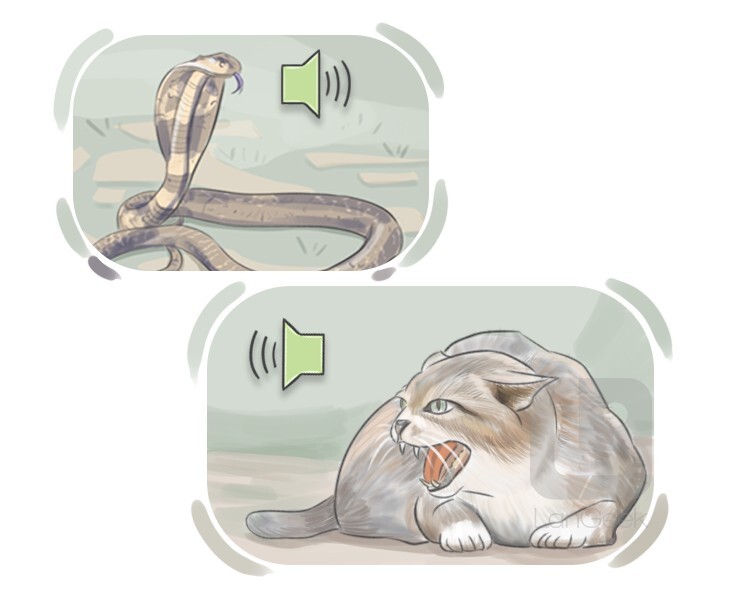
to make a sharp, prolonged sound, usually produced by forcing air through the mouth
Intransitive
语法信息
形态构成
简单词
动作动词
规则
现在时
hiss
第三人称单数
hisses
现在分词
hissing
一般过去时
hissed
过去分词
hissed
例子
The cat hissed at the approaching stranger, warning them to stay away.
猫对接近的陌生人发出嘶嘶声,警告他们远离。
02
发出嘘声, 嘶嘶声
to produce a sharp, sibilant sound to express disapproval, contempt, or mockery
Intransitive
例子
The crowd began to hiss when the referee made a questionable call.
当裁判做出一个有问题的判罚时,人群开始发出嘘声。
03
发出嘘声, 喝倒彩
to show disapproval or contempt for someone by making a hissing sound directed at them
Transitive: to hiss sb
例子
The audience began to hiss the actor off the stage after a poor performance.
观众开始嘘声把演员赶下台,因为他的表演很差。
04
发出嘶嘶声, 嘶嘶作响
to move while producing a sharp, sibilant sound
Intransitive
例子
The train hissed by, its brakes releasing air with a sharp sound.
火车嘶嘶地驶过,刹车释放空气时发出尖锐的声音。
Hiss
01
嘶嘶声, 嘘声
a cry or noise made to express displeasure or contempt
语法信息
有生性状态
抽象
形态构成
复合词
可数
singular
not gender specific
复数形式
hisses
02
嘶嘶声, 嘘声
a fricative sound (especially as an expression of disapproval)
LanGeek
下载我们的移动应用
词汇树
hisser
hissing
hiss

