

Suchen
Wählen Sie die Wörterbuchsprache




























to hiss
01
zischen, fauchen
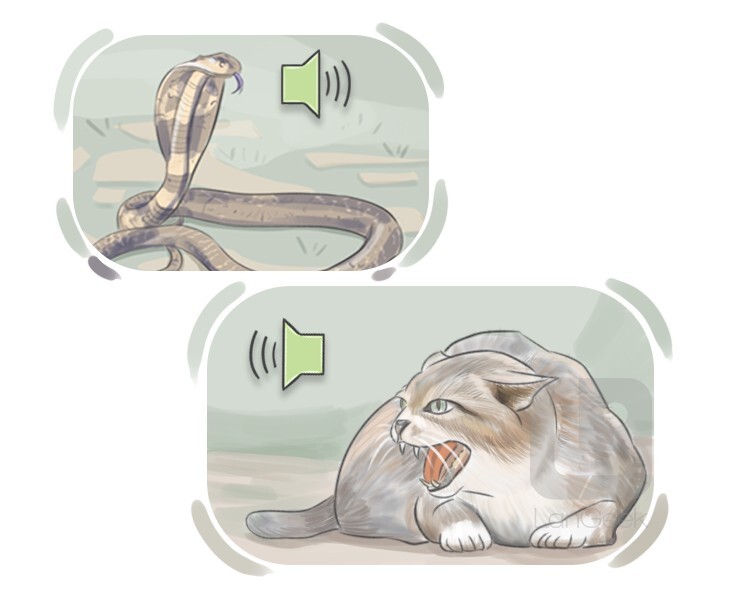
to make a sharp, prolonged sound, usually produced by forcing air through the mouth
Intransitive
Grammatische Informationen
morphologische Zusammensetzung
einfach
Handlungsverb
regelmäßig
Präsens
hiss
3. Person Singular
hisses
Partizip Präsens
hissing
einfache Vergangenheit
hissed
Partizip Perfekt
hissed
Beispiele
The cat hissed at the approaching stranger, warning them to stay away.
Die Katze fauchte den sich nähernden Fremden an und warnte ihn, Abstand zu halten.
02
zischen, pfeifen
to produce a sharp, sibilant sound to express disapproval, contempt, or mockery
Intransitive
Beispiele
The crowd began to hiss when the referee made a questionable call.
Die Menge begann zu zischen, als der Schiedsrichter eine fragwürdige Entscheidung traf.
03
zischen, auszischen
to show disapproval or contempt for someone by making a hissing sound directed at them
Transitive: to hiss sb
Beispiele
The audience began to hiss the actor off the stage after a poor performance.
Das Publikum begann, den Schauspieler von der Bühne zu pfeifen, nachdem er schlecht gespielt hatte.
04
zischen, fauchen
to move while producing a sharp, sibilant sound
Intransitive
Beispiele
The train hissed by, its brakes releasing air with a sharp sound.
Der Zug zischte vorbei, seine Bremsen ließen Luft mit einem scharfen Geräusch frei.
Hiss
01
Zischen, Pfeifen
a cry or noise made to express displeasure or contempt
Grammatische Informationen
Belebtheitsstatus
abstrakt
morphologische Zusammensetzung
Kompositum
zählbar
singular
not gender specific
Pluralform
hisses
02
Zischen, Fauchen
a fricative sound (especially as an expression of disapproval)
LanGeek
Laden Sie unsere mobile App herunter

Lexikalischer Baum
hisser
hissing
hiss

