

Rechercher
Sélectionnez la langue du dictionnaire





























to hiss
01
siffler, striduler
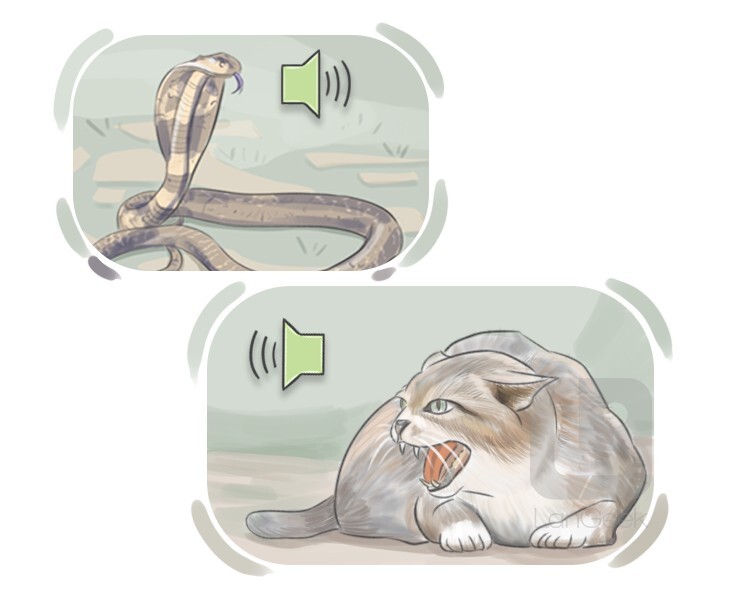
to make a sharp, prolonged sound, usually produced by forcing air through the mouth
Intransitive
informations grammaticales
composition morphologique
simple
verbe d’action
régulier
présent
hiss
3e personne du singulier
hisses
participe présent
hissing
passé simple
hissed
participe passé
hissed
Exemples
The cat hissed at the approaching stranger, warning them to stay away.
Le chat a sifflé à l'approche de l'étranger, les avertissant de rester à l'écart.
02
siffler, stifler
to produce a sharp, sibilant sound to express disapproval, contempt, or mockery
Intransitive
Exemples
The crowd began to hiss when the referee made a questionable call.
La foule a commencé à siffler lorsque l'arbitre a pris une décision discutable.
03
siffler, huer
to show disapproval or contempt for someone by making a hissing sound directed at them
Transitive: to hiss sb
Exemples
The audience began to hiss the actor off the stage after a poor performance.
Le public a commencé à siffler l'acteur pour le faire quitter la scène après une mauvaise performance.
04
siffler, striduler
to move while producing a sharp, sibilant sound
Intransitive
Exemples
The train hissed by, its brakes releasing air with a sharp sound.
Le train siffla en passant, ses freins libérant de l'air avec un son aigu.
Hiss
01
sifflement, sifflet
a cry or noise made to express displeasure or contempt
informations grammaticales
statut d’animéité
abstrait
composition morphologique
composé
dénombrable
singular
not gender specific
forme plurielle
hisses
02
sifflement, sifflage
a fricative sound (especially as an expression of disapproval)
LanGeek
Téléchargez notre application mobile

Arbre Lexical
hisser
hissing
hiss

