






























to hiss
01
シューという音を立てる, ヒスる
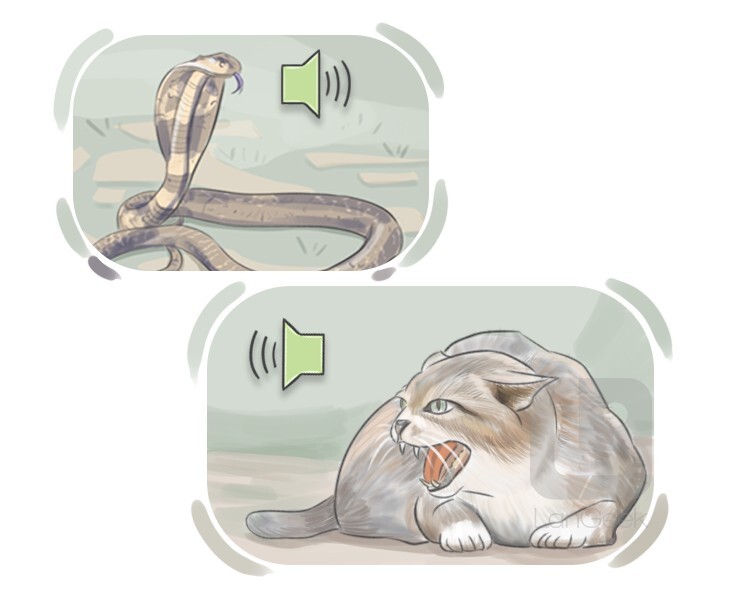
to make a sharp, prolonged sound, usually produced by forcing air through the mouth
Intransitive
文法情報
形態的構成
単純語
動作動詞
規則的
現在時制
hiss
三人称単数
hisses
現在分詞
hissing
単純過去
hissed
過去分詞
hissed
例
The cat hissed at the approaching stranger, warning them to stay away.
猫は近づいてくる見知らぬ人にヒースと鳴いて、近寄らないように警告した。
02
シューという音を立てる, 野次を飛ばす
to produce a sharp, sibilant sound to express disapproval, contempt, or mockery
Intransitive
例
The crowd began to hiss when the referee made a questionable call.
審判が疑問のある判定を下したとき、群衆は野次るようになった。
03
シューという音を立てる, 野次る
to show disapproval or contempt for someone by making a hissing sound directed at them
Transitive: to hiss sb
例
The audience began to hiss the actor off the stage after a poor performance.
観客は、ひどい演技の後、俳優をステージから追い出すために野次ることを始めました。
04
シューという音を立てる, ヒスる
to move while producing a sharp, sibilant sound
Intransitive
例
The train hissed by, its brakes releasing air with a sharp sound.
電車がヒューッと音を立てて通り過ぎ、ブレーキが鋭い音で空気を放出した。
Hiss
01
シューという音, 口笛
a cry or noise made to express displeasure or contempt
文法情報
有生性の状態
抽象的
形態的構成
複合語
可算
singular
not gender specific
複数形
hisses
02
ヒス, シューという音
a fricative sound (especially as an expression of disapproval)
LanGeek
モバイルアプリをダウンロード

語彙ツリー
hisser
hissing
hiss

