

Keresés
Válassza ki a szótár nyelvét





























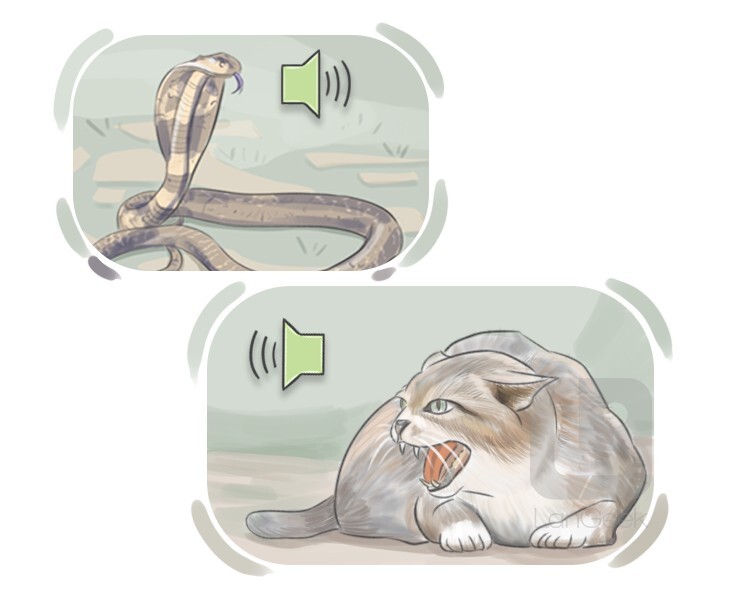
to hiss
01
sziszeg, nyíszít
to make a sharp, prolonged sound, usually produced by forcing air through the mouth
Intransitive
nyelvtani információk
morfológiai összetétel
egyszerű
cselekvést jelentő ige
szabályos
jelen idő
hiss
egyes szám 3. személy
hisses
folyamatos melléknévi igenév
hissing
egyszerű múlt
hissed
befejezett melléknévi igenév
hissed
Példák
The cat hissed at the approaching stranger, warning them to stay away.
A macska sziszegve figyelmeztette a közeledő idegent, hogy maradjon távol.
02
sziszeg, fütyül
to produce a sharp, sibilant sound to express disapproval, contempt, or mockery
Intransitive
Példák
The crowd began to hiss when the referee made a questionable call.
A tömeg elkezdett sípolni, amikor a játékvezető vitatható döntést hozott.
03
sziszeg, kifütyül
to show disapproval or contempt for someone by making a hissing sound directed at them
Transitive: to hiss sb
Példák
The audience began to hiss the actor off the stage after a poor performance.
A közönség elkezdett fütyülni a színészre, hogy levigyék a színpadról a gyenge előadás után.
04
sziszeg, fütyül
to move while producing a sharp, sibilant sound
Intransitive
Példák
The train hissed by, its brakes releasing air with a sharp sound.
A vonat sípolva haladt el, a fékjei éles hanggal engedték el a levegőt.
Hiss
01
sziszegés, fütty
a cry or noise made to express displeasure or contempt
nyelvtani információk
élőségi állapot
elvont
morfológiai összetétel
összetett
megszámlálható
singular
not gender specific
többes számú alak
hisses
02
sziszegés, fütty
a fricative sound (especially as an expression of disapproval)
LanGeek
Töltse le mobilalkalmazásunkat

Lexikai Fa
hisser
hissing
hiss

