

Szukaj





























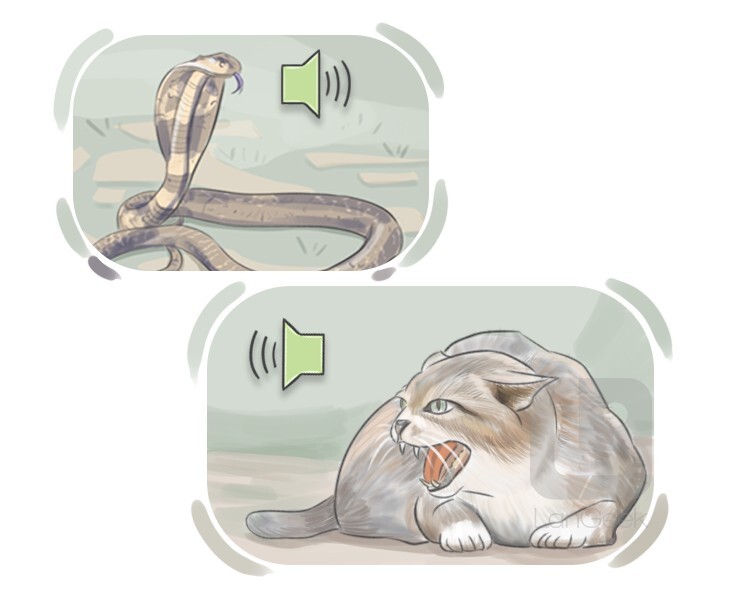
to hiss
01
syczeć, warczeć
to make a sharp, prolonged sound, usually produced by forcing air through the mouth
Intransitive
informacje gramatyczne
budowa morfologiczna
prosty
czasownik czynnościowy
regularny
czas teraźniejszy
hiss
3. osoba liczby pojedynczej
hisses
imiesłów czynny
hissing
czas przeszły prosty
hissed
imiesłów bierny
hissed
Przykłady
The cat hissed at the approaching stranger, warning them to stay away.
Kot syknął na zbliżającego się nieznajomego, ostrzegając go, aby się trzymał z daleka.
02
syczeć, gwizdać
to produce a sharp, sibilant sound to express disapproval, contempt, or mockery
Intransitive
Przykłady
The crowd began to hiss when the referee made a questionable call.
Tłum zaczął gwizdać, gdy sędzia podjął wątpliwą decyzję.
03
syczeć, wygwizdywać
to show disapproval or contempt for someone by making a hissing sound directed at them
Transitive: to hiss sb
Przykłady
The audience began to hiss the actor off the stage after a poor performance.
Publiczność zaczęła gwizdać na aktora, aby zszedł ze sceny po słabym występie.
04
syczeć, warczeć
to move while producing a sharp, sibilant sound
Intransitive
Przykłady
The train hissed by, its brakes releasing air with a sharp sound.
Pociąg zasysał przejeżdżając, jego hamulce uwalniały powietrze z ostrym dźwiękiem.
Hiss
01
syczenie, gwizd
a cry or noise made to express displeasure or contempt
informacje gramatyczne
status żywotności
abstrakcyjny
budowa morfologiczna
złożenie
policzalny
singular
not gender specific
forma liczby mnogiej
hisses
02
syczenie, gwizd
a fricative sound (especially as an expression of disapproval)
LanGeek
Pobierz naszą aplikację mobilną

Drzewo Leksykalne
hisser
hissing
hiss

