






























to hiss
01
쉬익 소리내다, 히싱거리다
to make a sharp, prolonged sound, usually produced by forcing air through the mouth
Intransitive
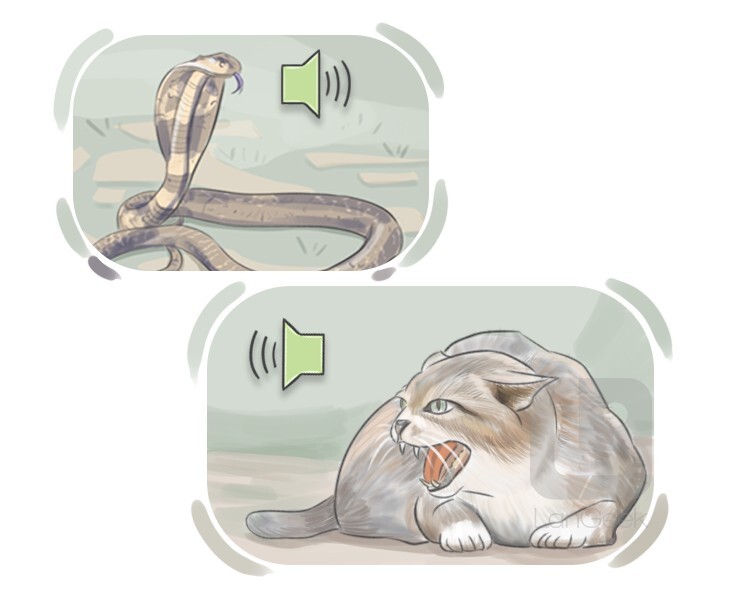
문법 정보
형태적 구성
단순어
동작 동사
규칙
현재 시제
hiss
3인칭 단수
hisses
현재분사
hissing
단순 과거
hissed
과거분사
hissed
예시들
The cat hissed at the approaching stranger, warning them to stay away.
고양이는 다가오는 낯선 사람에게 히싱 소리를 내며 멀리 있으라고 경고했다.
02
쉬하다, 야유하다
to produce a sharp, sibilant sound to express disapproval, contempt, or mockery
Intransitive
예시들
The crowd began to hiss when the referee made a questionable call.
심판이 의심스러운 판정을 내리자 군중이 야유하기 시작했다.
03
쉬익 소리를 내다, 야유하다
to show disapproval or contempt for someone by making a hissing sound directed at them
Transitive: to hiss sb
예시들
The audience began to hiss the actor off the stage after a poor performance.
관중들은 형편없는 공연 후에 배우를 무대에서 내쫓기 위해 야유하기 시작했습니다.
04
쉬익 소리내다, 히싱거리다
to move while producing a sharp, sibilant sound
Intransitive
예시들
The train hissed by, its brakes releasing air with a sharp sound.
기차가 치익 소리를 내며 지나갔고, 브레이크에서 날카로운 소리와 함께 공기가 빠져나왔다.
Hiss
01
치찰음, 휘파람
a cry or noise made to express displeasure or contempt
문법 정보
유생성 상태
추상
형태적 구성
합성어
가산
singular
not gender specific
복수형
hisses
02
쉬이 하는 소리, 히스
a fricative sound (especially as an expression of disapproval)
LanGeek
모바일 앱 다운로드

어휘 나무
hisser
hissing
hiss

