

Caută
Selectați limba dicționarului





























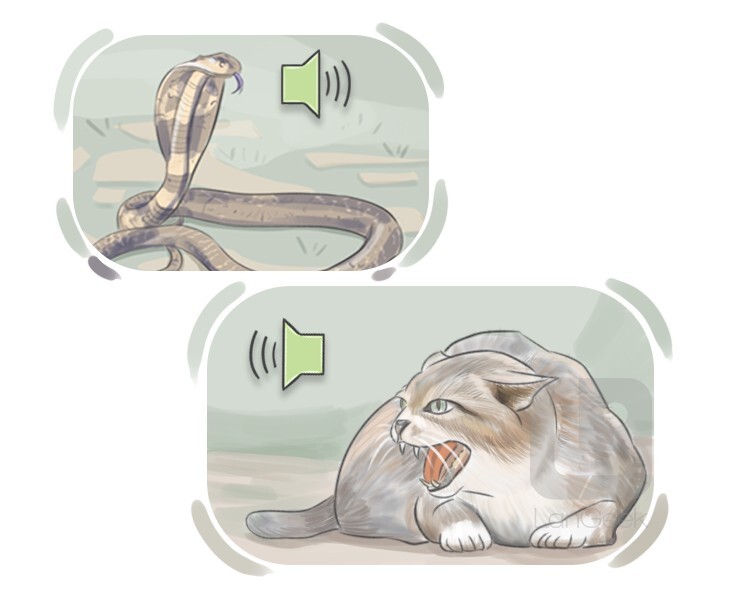
to hiss
01
sâsâi, șuiera
to make a sharp, prolonged sound, usually produced by forcing air through the mouth
Intransitive
informații gramaticale
compoziție morfologică
simplu
verb de acțiune
regulat
timpul prezent
hiss
persoana a III-a singular
hisses
participiu prezent
hissing
trecut simplu
hissed
participiu trecut
hissed
Exemple
The cat hissed at the approaching stranger, warning them to stay away.
Pisica a sâsâit la străinul care se apropia, avertizându-l să stea departe.
02
șuiera, fluiera
to produce a sharp, sibilant sound to express disapproval, contempt, or mockery
Intransitive
Exemple
The crowd began to hiss when the referee made a questionable call.
Publicul a început să fluere când arbitrul a luat o decizie discutabilă.
03
a sâsâi, a huidui
to show disapproval or contempt for someone by making a hissing sound directed at them
Transitive: to hiss sb
Exemple
The audience began to hiss the actor off the stage after a poor performance.
Publicul a început să fluieră actorul pentru a-l scoate de pe scenă după o performanță slabă.
04
șuiera, fâsâi
to move while producing a sharp, sibilant sound
Intransitive
Exemple
The train hissed by, its brakes releasing air with a sharp sound.
Trenul sâsâi trecând, frânele lui eliberând aer cu un sunet ascuțit.
Hiss
01
șuierat, fluierat
a cry or noise made to express displeasure or contempt
informații gramaticale
statut de animatitate
abstract
compoziție morfologică
compus
numărabil
singular
not gender specific
formă de plural
hisses
02
șuierat, fluierat
a fricative sound (especially as an expression of disapproval)
LanGeek
Descarcă aplicația noastră mobilă

Arbore Lexical
hisser
hissing
hiss

