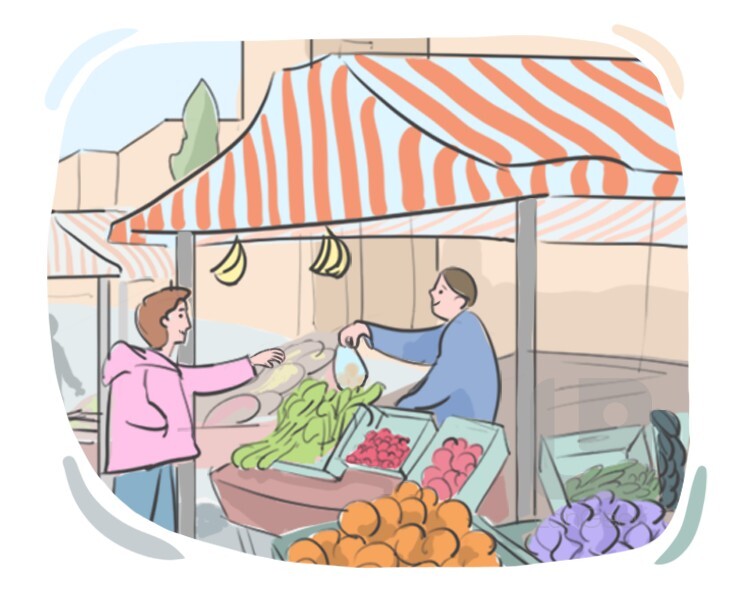
stall
stall
stɑ:l
staal
/stɔːl/

A(z) „stall” jelentĂ©se Ă©s meghatĂĄrozĂĄsa angolul

01

bódé, stand

a stand or a small table or shop with an open front where people sell their goods
stall definition and meaning
Példåk
The flower stall on the corner always has the best roses.
A sarokon lĂ©vƑ virĂĄg bĂłdĂ© mindig a legjobb rĂłzsĂĄkkal rendelkezik.
02

a compartment in a stable for housing and feeding a single animal

Példåk
Straw covered the floor of each stall for comfort.
03

a small enclosed area separated by walls or partitions for a specific purpose

Példåk
The festival provided stalls for artists to display their work.
04

an action intended to delay, mislead, or obstruct

Példåk
The driver executed a stall to confuse the pursuing car.
05

a small, private study space in a library

Példåk
Each student had a private stall for focused reading.
06

a szĂ­npad közelĂ©ben lĂ©vƑ ĂŒlĂ©sek, a parkett

the seats that are located near the stage in a theater
Dialectbritish flagBritish
orchestraamerican flagAmerican
Példåk
The stalls were packed with enthusiastic theatergoers on opening night.
A stallok lelkes színhåzi közönséggel voltak tele a nyitóestén.
07

a sudden loss of lift in an aircraft, causing it to drop or descend abruptly

Példåk
High angles of attack can trigger a stall in small aircraft.
to stall
01

kĂ©sleltet, hĂșzĂłdzkodik

to delay doing something that needs to be done
Intransitive
to stall definition and meaning
Példåk
He stalled during the meeting, hoping the decision would be postponed.
Késlekedett a megbeszélés alatt, remélve, hogy a döntést elhalasztjåk.
02

késleltet, gåtol

to intentionally delay or prevent someone from proceeding with something
Transitive: to stall sb
Példåk
The politician stalled the voters with vague answers.
A politikus kétértelmƱ vålaszokkal késleltette a vålasztókat.
03

megreked, leĂĄll

to cease to make progress or move forward
Intransitive
Példåk
The meeting stalled because no one could agree on the next step.
A talĂĄlkozĂł megrekedt, mert senki sem tudott megegyezni a következƑ lĂ©pĂ©sben.
04

lefullad, lefullaszt

to cause a car's engine to stop working
Transitive: to stall an engine or vehicle
Példåk
The driver accidentally stalled the engine while trying to start it on a steep hill.
A sofƑr vĂ©letlenĂŒl lefullasztotta a motort, miközben megprĂłbĂĄlta elindĂ­tani egy meredek dombon.
05

ĂĄtbillen, repĂŒlƑgĂ©pet ĂĄtbillent

to cause an aircraft to lose lift and begin falling
Transitive: to stall an aircraft
Példåk
The instructor demonstrated how to stall an aircraft safely in training.
Az oktatĂł bemutatta, hogyan lehet biztonsĂĄgosan stallba hozni egy repĂŒlƑgĂ©pet a kikĂ©pzĂ©s sorĂĄn.
06

átbillen, elveszíti a felhajtóerƑt

(of an aircraft) to lose lift and begin falling
Intransitive
Példåk
The aircraft stalled due to a sharp turn at low speed.
A repĂŒlƑgĂ©p ĂĄtbillent egy Ă©les kanyar miatt alacsony sebessĂ©gnĂ©l.
07

bezĂĄr, istĂĄllĂłba helyez

to place something or someone into a small, enclosed space
Transitive: to stall an animal
Példåk
They stalled the cows in separate pens to make milking easier.
BezĂĄrtĂĄk a teheneket kĂŒlön karĂĄmokba, hogy megkönnyĂ­tsĂ©k a fejĂ©st.
08

lefullad, hirtelen megĂĄll

(of a vehicle or engine) to stop suddenly and unexpectedly, especially because of a lack of fuel or mechanical issues
Intransitive
Példåk
The engine is stalling because it needs a tune-up.
A motor leĂĄll, mert be kell ĂĄllĂ­tani.
LanGeek
Alkalmazås Letöltése
langeek application

Download Mobile App

App Store