

Rechercher
Sélectionnez la langue du dictionnaire




























to distinguish
01
distinguer
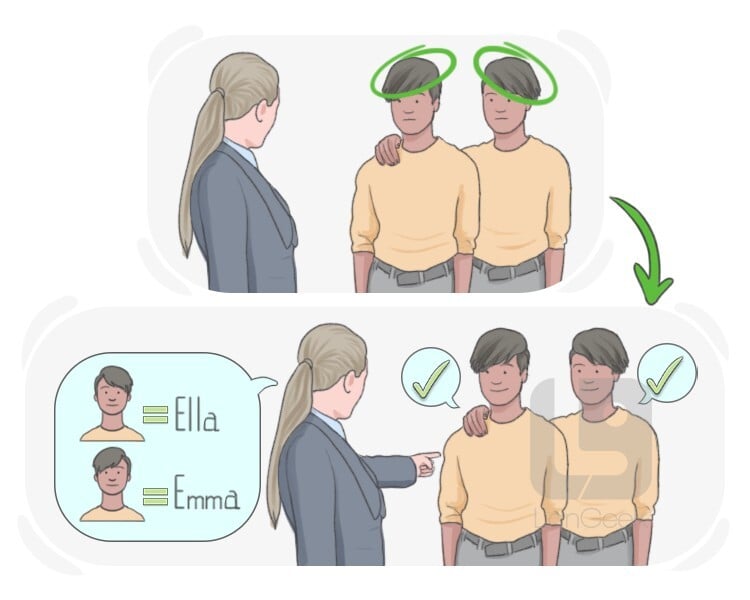
to recognize and mentally separate two things, people, etc.
Transitive: to distinguish between two things or people | to distinguish sb/sth from sb/sth
informations grammaticales
composition morphologique
dérivé
verbe d’action
régulier
présent
distinguish
3e personne du singulier
distinguishes
participe présent
distinguishing
passé simple
distinguished
participe passé
distinguished
Exemples
The detective could distinguish the authentic painting from the clever forgery.
Le détective pouvait distinguer le tableau authentique de la contrefaçon intelligente.
02
distinguer, discerner
to perceive or identify someone or something with clarity
Transitive: to distinguish a shape or sound
Exemples
In the fog, I could barely distinguish the shapes of the trees.
Dans le brouillard, je pouvais à peine distinguer les formes des arbres.
03
distinguer
to be the distinctive feature or characteristic between two things, people, etc.
Transitive: to distinguish sb/sth from others
Exemples
The bright red color distinguishes this car from the others in the lot.
La couleur rouge vif distingue cette voiture des autres sur le parking.
04
distinguer, différencier
to sort or divide things into different groups based on their features or qualities
Transitive: to distinguish sb/sth
Exemples
Scientists distinguish species by examining their genetic traits.
Les scientifiques distinguent les espèces en examinant leurs traits génétiques.
05
distinguer
to make something conspicuous or noteworthy by discerning it
Transitive: to distinguish sb/sth
Exemples
The artist distinguished the main character by using bold colors in the painting.
L'artiste a distingué le personnage principal en utilisant des couleurs audacieuses dans la peinture.
LanGeek
Téléchargez notre application mobile
Arbre Lexical
distinguishable
distinguished
distinguish

