






























to bruise
01
멍들게 하다, 타박상을 입히다
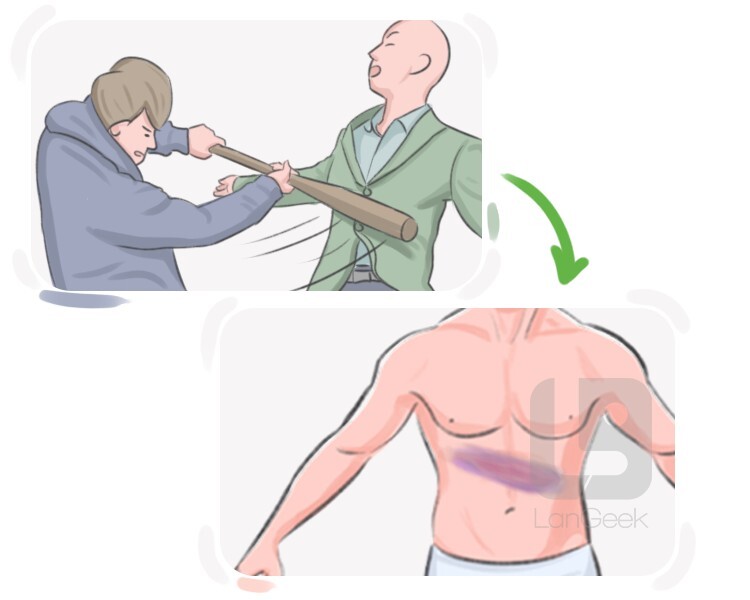
to make injuries, particularly ones caused by a blow, appear on the skin and cause discoloration
Intransitive
Transitive: to bruise a body part
문법 정보
형태적 구성
단순어
동작 동사
규칙
현재 시제
bruise
3인칭 단수
bruises
현재분사
bruising
단순 과거
bruised
과거분사
bruised
예시들
The collision with the doorframe caused her arm to bruise.
문틀과의 충돌로 그녀의 팔에 멍이 들었다.
02
멍들게 하다, 손상시키다
to cause discoloration or damage to a fruit, vegetable, or plant
Transitive: to bruise fruit, vegetable, or plants
예시들
The apples were bruised during transport, showing dark spots on their skin.
사과는 운송 중에 멍이 들어 피부에 검은 반점이 생겼다.
03
으깨다, 다지다
to crush, mash, or pound food, typically to soften or break it down
Transitive: to bruise food ingredients
예시들
She bruised the garlic cloves to release their flavor for the sauce.
그녀는 소스의 맛을 내기 위해 마늘 쪽을 으깼다.
04
상처를 주다, 마음을 아프게 하다
to cause emotional pain or distress
Transitive: to bruise someone's feelings
예시들
His thoughtless comment bruised her feelings deeply.
그의 무심한 코멘트는 그녀의 감정을 깊이 상처 입혔습니다.
Bruise
01
멍, 타박상
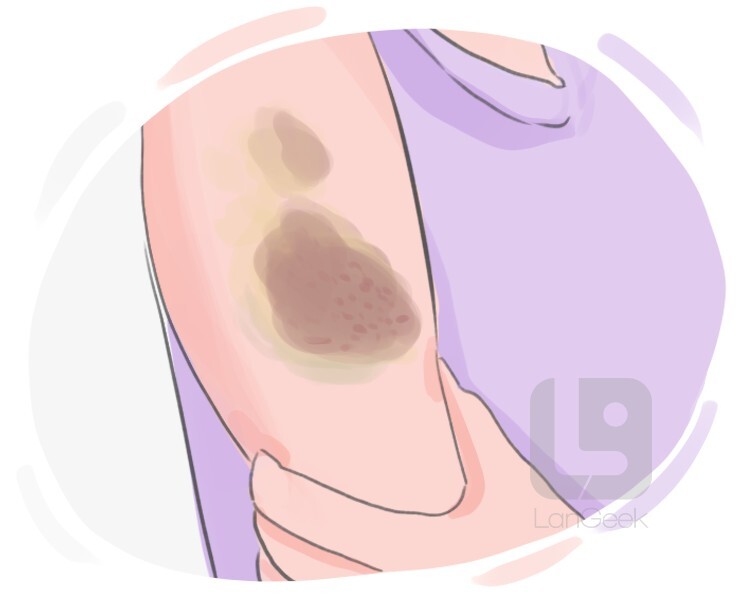
an injury on the skin that appears as a dark mark, caused by a blow involving the rupture of vessels underneath
문법 정보
유생성 상태
추상
형태적 구성
단순어
가산
singular
not gender specific
복수형
bruises
예시들
After falling off his bike, he noticed a painful bruise forming on his arm, which would take several days to heal.
자전거에서 떨어진 후, 그는 팔에 고통스러운 멍이 생기는 것을 발견했고, 이는 치유되는 데 며칠이 걸릴 것입니다.
LanGeek
모바일 앱 다운로드

어휘 나무
bruised
bruiser
bruising
bruise

