

Rechercher
Sélectionnez la langue du dictionnaire





























to depart
01
partir
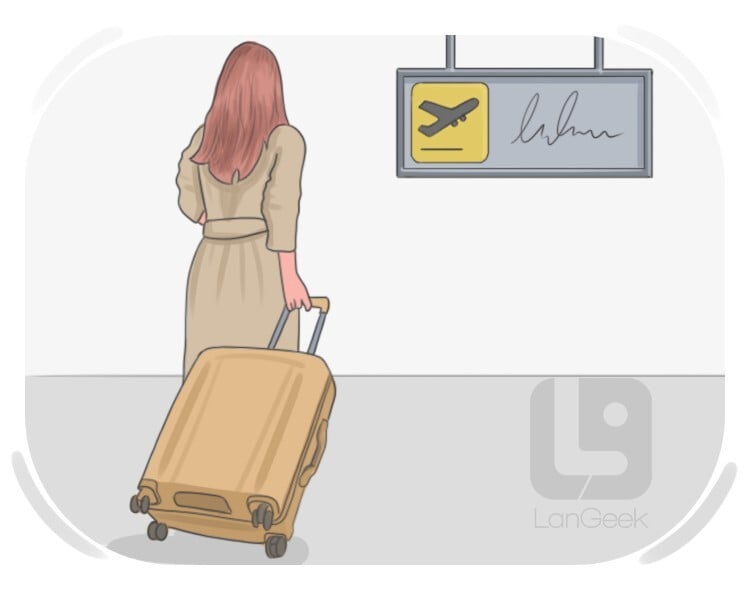
to leave a location, particularly to go on a trip or journey
Intransitive
informations grammaticales
composition morphologique
simple
verbe de mouvement
régulier
présent
depart
3e personne du singulier
departs
participe présent
departing
passé simple
departed
participe passé
departed
Exemples
The train is scheduled to depart from the station at 3:00 PM.
Le train est prévu pour partir de la gare à 15h00.
02
partir, quitter
to leave a place
Transitive: to depart a place

Exemples
As the sun set, it was time for them to depart the small village.
Alors que le soleil se couchait, il était temps pour eux de quitter le petit village.
03
s'écarter, dévier
to deviate or move away from an accepted, prescribed, or usual course of action or behavior
Transitive: to depart from a course of action or behavior
Exemples
The company decided to depart from traditional marketing strategies and explore innovative digital advertising techniques.
L'entreprise a décidé de s'écarter des stratégies de marketing traditionnelles et d'explorer des techniques innovantes de publicité numérique.
04
démissionner, quitter
to resign or leave a position of employment
Transitive: to depart a position
Exemples
After years of dedicated service, Susan decided to depart her role as the company's CFO.
Après des années de service dévoué, Susan a décidé de quitter son rôle de CFO de l'entreprise.
05
s'écarter, dévier
to deviate or stray from a planned, direct, or straight path
Transitive: to depart from a path or direction
Exemples
Lost in thought, the hiker began to depart from the trail.
Perdu dans ses pensées, le randonneur a commencé à s'écarter du sentier.
LanGeek
Téléchargez notre application mobile

Arbre Lexical
departed
departer
department
depart

