






























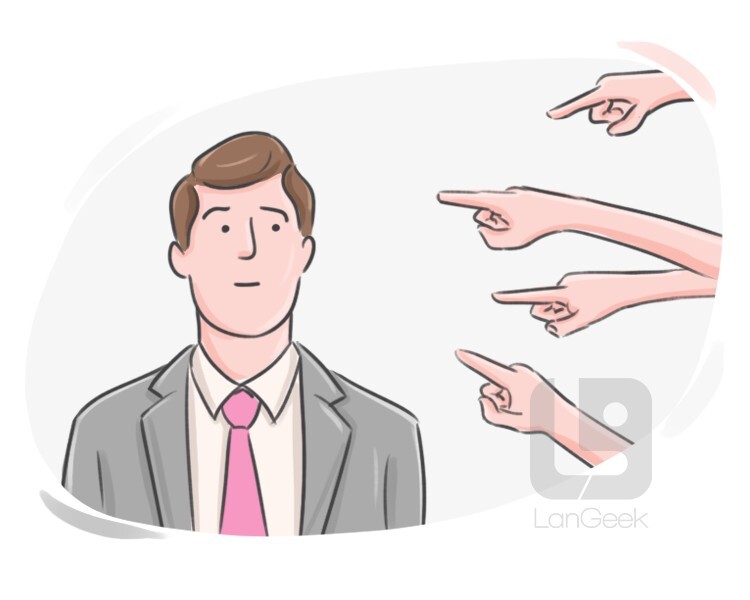
to blame
01
責める, 非難する
to say or feel that someone or something is responsible for a mistake or problem
Transitive: to blame sb/sth | to blame sb/sth for a mistake or problem
文法情報
形態的構成
単純語
動作動詞
規則的
現在時制
blame
三人称単数
blames
現在分詞
blaming
単純過去
blamed
過去分詞
blamed
例
The teacher decided to blame the entire class for the disruption, even though only a few students were involved.
教師は、混乱の責任をクラス全体に負わせることに決めたが、関与したのは数人の生徒だけだった。
02
非難する, 批判する
to critique or find fault with something or someone
Transitive: to blame sth
例
The literary critic blamed the novel for its shallow character development and predictable plot twists.
文学評論家は、その小説を浅はかなキャラクター開発と予測可能なプロットの展開のために非難した。
03
責める, 非難する
to attribute responsibility or fault for a negative outcome or situation to a person, group, or thing
Transitive: to blame a fault or shortcoming on sth
例
The CEO blamed the recent decline in profits on poor market conditions and increased competition.
CEOは、最近の利益の減少を市場状況の悪化と競争の激化のせいだと非難した。
Blame
01
非難, 責任
an accusation that someone is responsible for a mistake, fault, or wrongdoing
文法情報
有生性の状態
抽象的
形態的構成
単純語
不可算
singular
not gender specific
複数形
blames
例
The manager accepted the blame for the project's failure.
マネージャーはプロジェクトの失敗に対する責任を受け入れました。
02
非難, 責め
a reproach or expression of disapproval for a mistake, fault, or wrongdoing
例
He received blame for being late.
彼は遅刻したことで非難を受けた。
LanGeek
モバイルアプリをダウンロード

語彙ツリー
blamed
blame

