have
have
hæv
hāv
British pronunciation
/hæv/

A(z) „have” jelentése és meghatározása angolul

to have
01

birtokolni, tulajdonolni

to hold or own something
Dialect
have gotbritish flagBritish
Transitive: to have sth
to have definition and meaning
example
Példák
I have a collection of antique coins that I inherited from my grandfather.
Van egy gyűjteményem régi érmékből, amelyeket a nagyapámtól örököltem.
They used to have a beach house.
Régen volt egy strandházuk.
1.1

birtokolni, kapni

to get or receive something
Transitive: to have sth
example
Példák
Waiter, can I have the menu, please?
Pincér, kaphatnám az étlapot, kérem?
Can I have your email address for the registration?
Megkaphatom az email címedet a regisztrációhoz?
1.2

birtokolni, rendelkezni

used to indicate the relationships between people, as in family members, friends, or acquaintances
Transitive: to have a family or acquaintance
example
Példák
Do you have a coworker named Johnson?
Van egy kollégád, akit Johnsonnak hívnak?
She's got four aunts and two uncles.
Neki van négy nagynénje és két nagybátyja.
1.3

birtokolni, rendelkezik

to possess a feature or quality
Transitive: to have a quality or feature
example
Példák
She has a remarkable talent for playing the violin.
Kivételes tehetség van benne a hegedűjátékban.
He has a great sense of humor that lightens the mood.
Nagyszerű humorérzékkel rendelkezik, ami felvidítja a hangulatot.
1.4

fogad, vendégül lát

to receive someone as a guest
Transitive: to have | to have for a meal
example
Példák
I 'm having a few friends for brunch; would you like to join us?
Néhány barátomat meghívom brunchra; szeretnél csatlakozni hozzánk?
They had us for dinner at their new place.
Meghívtak minket vacsorára az új helyükre.
1.5

birtokolni, elfogadni

to accept or take a particular person for a specific position or role
Transitive: to have sb as a role
example
Példák
Who are we going to have as the new project manager?
Kit fogunk tartani az új projektmenedzserként?
The team is considering who to have as the spokesperson.
A csapat mérlegeli, kit legyen a szóvivő.
1.6

birtokolni, okozni

to cause a specific effect on a person or thing
Transitive: to have an impact | to have an impact on sb/sth
example
Példák
The speech had a profound impact on the audience, inspiring change.
A beszéd mély hatást gyakorolt a közönségre, változásra ösztönözve.
The new policy has a positive influence on workplace morale.
Az új szabályzat pozitív hatással van a munkahelyi morálra.
1.7

birtokol, tartalmaz

to contain or include a specific item, number, or group
Transitive: to have a component or item
example
Példák
The conference had 500 attendees from around the world.
A konferencián 500 résztvevő volt a világ minden tájáról.
The book has 20 chapters, each exploring a different aspect.
A könyv tartalmaz 20 fejezetet, mindegyik egy másik szempontot vizsgál.
1.8

birtokolni, rendelkezni

to possess the ability or opportunity to make use of something that is available
Transitive: to have a resource or opportunity
example
Példák
We have no access to the restricted area.
Nincs hozzáférésünk a korlátozott területhez.
You have only one chance to solve the puzzle.
Csak egyetlen esélyed van a rejtvény megoldására.
1.9

elfogad, feleségül vesz

to accept to marry someone
Transitive: to have sb
example
Példák
I 'll gladly have him as my husband if he proposes.
Szívesen fogadom el férjemnek, ha megkér a kezemet.
He was thrilled when she said she would have him as her husband.
Nagyon örült, amikor azt mondta, hogy férjül fogadja őt.
02

birtokolni, átélni

to undergo or experience something
Transitive: to have a particular experience
example
Példák
They had difficulties adjusting to the new city.
Nehézségeik voltak az új városhoz való alkalmazkodásban.
She had a wonderful experience during her travels.
Csodálatos élménye volt utazásai során.
2.1

van, szenved

to suffer from a disease, injury, or pain
Transitive: to have a disease
to have definition and meaning
example
Példák
She had the flu last week and had to take time off work.
Múlt héten influenzás volt, és szabadságot kellett kivennie a munkából.
Many children had chickenpox before the vaccine became widespread.
Sok gyerek átesett a bárányhimlőn, mielőtt a vakcina széles körben elterjedt volna.
2.2

csináltat, birtokol

to cause someone or something to undergo or experience something
Ditransitive: to have sb/sth doing sth
example
Példák
The restaurant has customers waiting for their tables to be cleared.
Az étterem váró vendégei arra várnak, hogy az asztalukat felszabadítsák.
She has her inbox overflowing with emails from clients.
Neki van egy ügyfelektől érkező e-mailekkel teli postaládája.
2.3

tűr, megenged

to allow or accept with no complaint
Transitive: to have sth
Ditransitive: to have sb doing sth
example
Példák
We ca n't have employees ignoring safety protocols in the workplace.
Nem engedhetjük meg, hogy a munkavállalók figyelmen kívül hagyják a biztonsági protokollokat a munkahelyen.
We 'll have no more of your disruptive behavior in the office.
Nem tűrünk többé zavaró magatartást az irodában.
2.4

birtokolni, kell

to be in a position in which one needs or is required to do something
Transitive: to have a task or errand
example
Példák
I have a meeting in the morning, so I ca n't stay out too late.
Reggel van egy megbeszélésem, ezért nem maradhatok sokáig kint.
We have a presentation to prepare for next week.
Van egy előadásunk, amit a jövő hétre kell előkészítenünk.
2.5

elszenved, birtokol

to be affected by an action someone else does to one
Complex Transitive: to have sb/sth [adj]
example
Példák
He had his car vandalized while it was parked on the street.
Hagyta, hogy a kocsiját vandalizálják, miközben az az utcán parkolt.
The patient had his appendix removed in the emergency surgery.
A beteg volt a vakbelét eltávolították a sürgősségi műtétben.
2.6

birtokolni, érezni

to express the occurrence of thoughts, feelings, or ideas in one's mind
Transitive: to have an idea or feeling
example
Példák
He had an unsettling suspicion that something was n't quite right.
Nyugtalanító gyanúja volt, hogy valami nincs rendben.
I had a nagging feeling that I had forgotten something important.
Kínozott az érzés, hogy valami fontosat elfelejtettem volna.
2.7

birtokol, rászed

to trick someone and make them believe something untrue
Transitive: to have sb
example
Példák
I ca n't believe you fell for that story; you 've been had by the con artist.
Nem hiszem el, hogy bedőltél ennek a történetnek; becsaptak a szélhámos.
It 's important to verify information to ensure you 're not being had by misinformation.
Fontos ellenőrizni az információkat, hogy megbizonyosodjon arról, hogy nem verik át Önt a félretájékoztatás.
2.8

csináltat, birtokol

to cause someone to react in a certain manner
Complex Transitive: to have sb doing sth
example
Példák
They had the audience laughing throughout the performance.
Ők megnevettették a közönséget az előadás során.
The speaker had the crowd applauding enthusiastically.
Az előadó lelkes tapsolásra késztette a közönséget.
2.9

birtokolni, veled lenni

to be with a particular person
Transitive: to have sb with sb
example
Példák
He had his family with him at the event.
Volt a családja vele az eseményen.
Do you mind if I have a friend with me for the dinner?
Nem bánod, ha egy barátot viszek magammal a vacsorára?
2.10

tesz, birtokol

to make someone or something be in a specific state or condition
Complex Transitive: to have sb/sth [adj] | to have sb/sth doing sth
example
Példák
The engineer had the machine running smoothly again.
A mérnök elérte, hogy a gép ismét zökkenőmentesen működjön.
The chef had the dish seasoned to perfection.
A séf volt, aki tökéletesen fűszerezte az ételt.
03

birtokolni, csinálni

(dummy verb) to perform an action that is specified by a noun
Transitive: to have sth
example
Példák
He had a laugh with his friends at the comedy show.
Ő nevetett a barátaival a komédia műsoron.
He had a go at solving the challenging puzzle.
Megpróbálta megoldani a kihívásokat jelentő rejtvényt.
3.1

szülni, világra hozni

to give birth to a baby
Transitive: to have one's child
to have definition and meaning
example
Példák
She 's excited to have her first child in a few months.
Izgatott, hogy néhány hónap múlva születik az első gyermeke.
The couple had their second child yesterday.
A párnak tegnap született a második gyermekük.
3.2

megtettet, megkérni valakit

to make someone do a particular task or action by asking or instructing them
Ditransitive: to have sb do sth
example
Példák
She had me complete various tasks for her.
Rávett, hogy elvégezzek neki különféle feladatokat.
I 'll have Jack guide you to your room.
Meg fogom kérni Jacket, hogy vigyen a szobádhoz.
3.3

venni, enni

to eat or drink something
Transitive: to have food or a meal
to have definition and meaning
example
Példák
Let 's have breakfast together before we start our day.
Reggelizzünk együtt, mielőtt elkezdjük a napunkat.
Would you like to have a cup of tea with me?
Szeretnél velem egy csésze teát inni?
3.4

baszni, dugni

to have sexual intercourse with someone
Transitive: to have sb
example
Példák
She had him on her desk.
Volt neki az íróasztalán.
He looks like he ’s had lots of men.
Úgy tűnik, sok férfival volt.
3.5

birtokolni, szervezni

to hold or arrange an event
Transitive: to have an event
to have definition and meaning
example
Példák
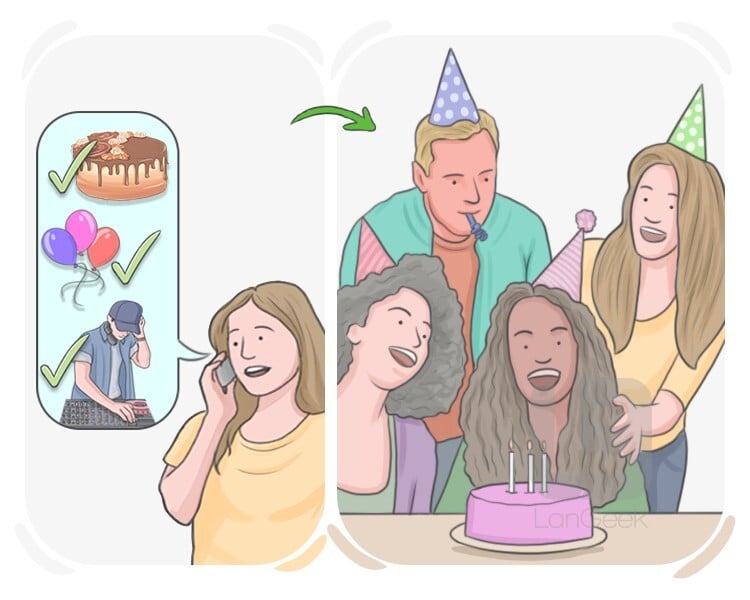
She had a birthday party for her son last weekend.
Tartott egy születésnapi bulit a fiának a múlt hétvégén.
We 're planning to have a family reunion this summer.
Azt tervezzük, hogy idén nyáron családi összejövetelt tartunk.
3.6

birtokolni, nehéz helyzetbe hozni

to make someone be at a position of disadvantage in an argument
Transitive: to have sb
example
Példák
Well, you 've got me there. I ca n't argue with that logic.
Nos, itt elkaptál. Nem tudok vitatkozni ezzel a logikával.
I must admit, you have me there — I did n't consider that aspect.
Be kell vallanom, ott tartasz engem—nem vettem figyelembe ezt a szempontot.
3.7

dohányzik, szív

to smoke a tobacco or similar product
Transitive: to have a smoke
example
Példák
He had a cigar to celebrate the occasion.
Volt egy szivarja az alkalom megünneplésére.
We had a hookah during the gathering.
Volt egy nargilénk a találkozó alatt.
3.8

terhes, gyermeket vár

to be pregnant
Transitive: to have a baby
example
Példák
She just found out she 's going to have a baby.
Most tudta meg, hogy gyermeket vár.
They have been trying to have a baby for a while.
Már egy ideje próbálkoznak, hogy terhesek legyenek.
3.9

szundítani, pihenni egy kicsit

to take a short rest or sleep
Transitive: to have a period of rest
example
Példák
After a busy morning, she decided to have a nap to recharge her energy.
Egy elfoglalt reggel után úgy döntött, hogy alszik egyet, hogy feltöltődjön.
I like to have a lie down in the afternoon to refresh my mind.
Szeretek pihenni egy kicsit délután, hogy felfrissüljön az elmém.
3.10

mosakszik, megmosakszik

to clean oneself using water
Transitive: to have a shower or bath
example
Példák
I need to have a quick wash before heading out.
Gyorsan meg kell mosakodnom, mielőtt kimegyek.
She has a bath every evening to relax.
Ő minden este fürdik, hogy pihenjen.
3.11

csinál, vállal

to experience or undertake a travel
Transitive: to have a trip
example
Példák
We decided to have a spontaneous road trip to explore the scenic countryside.
Úgy döntöttünk, hogy egy spontán utazást teszünk, hogy felfedezzük a festői vidéket.
She had a thrilling adventure backpacking through the Amazon rainforest.
Izgalmas kalandot élt át Amazonas-esőerdőben hátizsákkal utazva.
3.12

birtokolni, folytatni

to engage in communication with others
Transitive: to have an act of communication | to have an act of communication with sb
example
Példák
We decided to have a conversation about our future plans.
Úgy döntöttünk, hogy beszélgetést folytatunk jövőbeli terveinkről.
She had a chat with her friend over a cup of coffee.
Beszélgetett a barátjával egy csésze kávé mellett.
3.13

birtokolni, vitatkozni

to verbally express opposing views or differences with someone
Transitive: to have a disagreement | to have a disagreement with sb
example
Példák
They had a heated dispute over the property boundaries.
Heves vitájuk volt az ingatlan határait illetően.
We had a minor argument about who should do the dishes.
Egy kis vitánk volt arról, hogy ki mosogasson.
04

birtokolni, bírni

used for saying that something is in a specific position or state
Complex Transitive: to have sth [adj]
Transitive: to have sth somewhere
example
Példák
He had his hands on his hips, waiting for a response.
A kezét a csípőjén tartotta, várt a válaszra.
We had the car parked in the shade to avoid the sun.
Az autót az árnyékban parkoltattuk, hogy elkerüljük a napot.
4.1

tart, birtokol

to hold something or someone in a certain way
Transitive: to have sb/sth in a specific manner
example
Példák
The security guard had the intruder by the arm, preventing escape.
A biztonsági őr fogta a betolakodót a karjánál, megakadályozva a menekülését.
She had the misbehaving child by the ear, leading him to the principal's office.
A fülébe fogta a rossz gyereket, és a igazgató irodájába vezette.
05

van

(auxiliary) used with a past participle in forming perfect tenses
example
Példák
I have visited that museum before.
Már látogattam azt a múzeumot korábban.
They have already eaten dinner.
Ők már vacsoráztak.
06

megbíz, rendel

to arrange for something to be done by someone for one
Complex Transitive: to have sth [adj]
example
Példák
They 're having their house painted next week.
Jövő héten festetni fogják a házukat.
I had my computer fixed by a technician.
Megbíztam egy technikust a számítógépem javításával.
07

birtokolni, magánál hordani

to carry an item with oneself
Transitive: to have sth
example
Példák
Do you have a pen I can borrow?
Van egy tollad, amit kölcsönvehetnék?
Have you got a map of the city with you?
Van nálad várostérkép ?
08

birtokolni, mutatni

to show kindness or understanding toward someone in a difficult situation
Transitive: to have kindness or mercy on sb | to have empathy for sb
example
Példák
May the judge have mercy on your soul during the trial.
Az ítélet idején a bíró kegyelmet gyakoroljon a lelked iránt.
The teacher chose to have pity on the student and overlooked the mistake.
A tanár úgy döntött, hogy megszánja a diákot és figyelmen kívül hagyta a hibát.
09

szerez, megszerez

to acquire a favorable result by offering money or incentives, typically in an unethical manner
example
Példák
Information about the competitor 's strategy can be had for a price.
A versenytárs stratégiájáról szóló információ egy árért megszerezhető.
Some officials can be had if you offer the right incentive.
Néhány hivatalnokot meg lehet szerezni, ha megfelelő ösztönzést kínálsz.
10

részt venni, csinálni

to participate in a physical activity
Transitive: to have a physical activity
example
Példák
She 's planning on having a swim at the beach this afternoon.
Azt tervezi, hogy ma délután úszik a strandon.
Let 's have a hike in the mountains this weekend.
Tegyünk egy túrát a hegyekben ezen a hétvégén.
01

tulajdonos, gazdag

a person who possesses great material wealth
LanGeek
Alkalmazás Letöltése
langeek application

Download Mobile App

stars

app store