

Keresés
Válassza ki a szótár nyelvét





























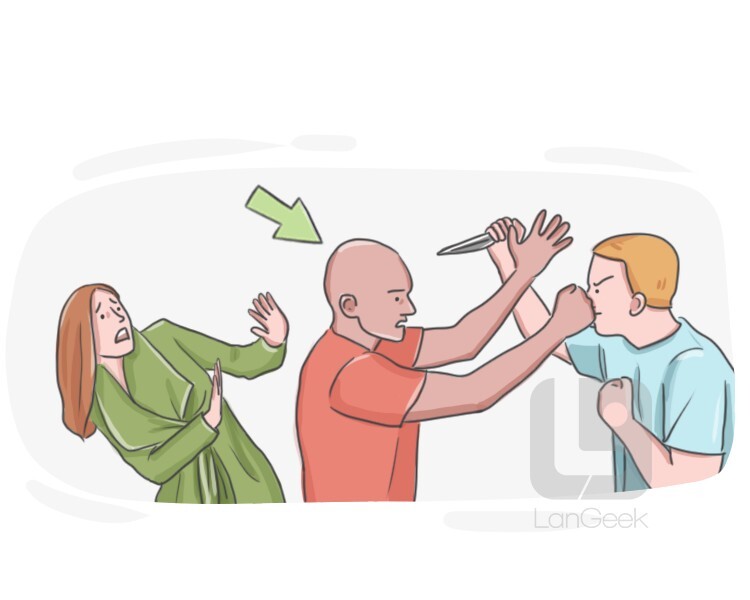
to stand off
01
távol tart, visszaver
to prevent a potential attacker from approaching by taking on a defensive posture
nyelvtani információk
morfológiai összetétel
frazális
cselekvést jelentő ige
szabályos
elválasztható
partikula
off
alapige
stand
jelen idő
stand off
egyes szám 3. személy
stands off
folyamatos melléknévi igenév
standing off
egyszerű múlt
stood off
befejezett melléknévi igenév
stood off
Példák
The security guards were trained to stand off any intruders with a strong and assertive presence.
A biztonsági őröket arra képezték ki, hogy erős és határozott jelenlétükkel távol tartsák a behatolókat.
02
távol marad, távolságot tart
to remain at a certain distance away from something or someone
Példák
As a safety precaution, spectators were instructed to stand off from the racetrack during the car race.
Biztonsági elővigyázatosságból a nézőket arra utasították, hogy távol maradjanak a versenypályától az autóverseny alatt.
03
ideiglenesen elbocsát, felfüggeszt a munkából
to let go of a worker, whether temporarily or permanently, due to a lack of available work
Dialect British
BritishPéldák
Due to a sudden decline in orders, the factory had to stand off several workers until production picked up again.
A megrendelések hirtelen csökkenése miatt a gyárnak ideiglenesen el kellett bocsátania több munkást, amíg a termelés újra fel nem pörgött.
04
távolodik, távol tartja magát
to move one's watercraft away from the sea coast
Példák
As the storm approached, the captain decided to stand off from the coast to ensure the safety of the ship and its crew.
Ahogy a vihar közeledett, a kapitány úgy döntött, hogy távol marad a parttól, hogy biztosítsa a hajó és legénységének biztonságát.
LanGeek


