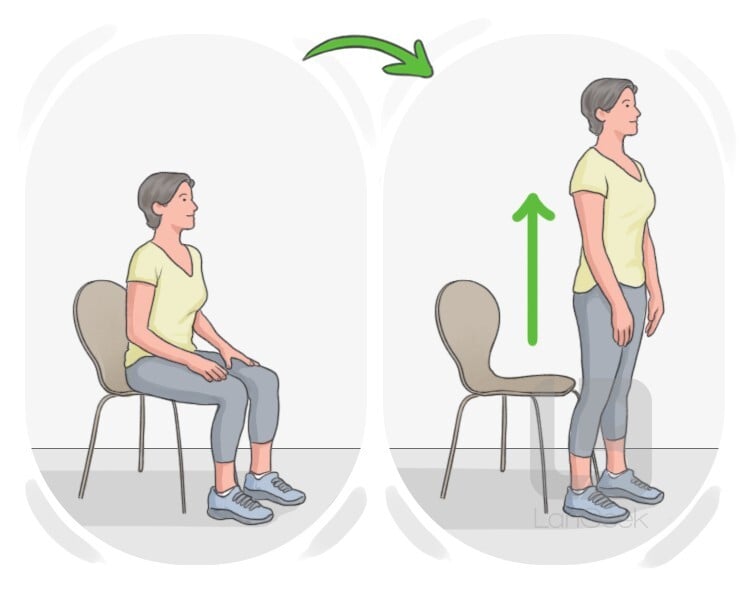
stand up
stand
stÃĻnd
stānd
up
ƌp
ap
/stˈand ˈʌp/

āχāĻ‚āϰ⧇āϜāĻŋāϤ⧇ "stand up"āĻāϰ āϏāĻ‚āĻœā§āĻžāĻž āĻ“ āĻ…āĻ°ā§āĻĨ

to stand up
[phrase form: stand]
01

āĻĻāĻžāρāĻĄāĻŧāĻžāύ⧋, āωāϠ⧇ āĻĻāĻžāρāĻĄāĻŧāĻžāύ⧋

to rise to a standing position from a seated or lying position
Intransitive
to stand up definition and meaning
āωāĻĻāĻžāĻšāϰāĻŖ
He stands up whenever the teacher asks a question.
āĻļāĻŋāĻ•ā§āώāĻ• āϝāĻ–āύāχ āĻĒā§āϰāĻļā§āύ āĻ•āϰ⧇āύ āϤāĻ–āύāχ āϏ⧇ āĻĻāĻžāρāĻĄāĻŧāĻŋāϝāĻŧ⧇ āĻĒāĻĄāĻŧ⧇āĨ¤
02

āϰāĻ•ā§āώāĻž āĻ•āϰāĻž, āĻ…āϟāϞ āĻĨāĻžāĻ•āĻž

to keep one's position or beliefs, especially when facing criticism
Transitive: to stand up one's position or beliefs
āωāĻĻāĻžāĻšāϰāĻŖ
The politician stood up his stance on climate change despite facing opposition from other party members.
āϰāĻžāϜāύ⧀āϤāĻŋāĻŦāĻŋāĻĻ āĻ…āĻ¨ā§āϝāĻžāĻ¨ā§āϝ āĻĻāϞ āϏāĻĻāĻ¸ā§āϝāĻĻ⧇āϰ āĻŦāĻŋāϰ⧋āϧāĻŋāϤāĻž āϏāĻ¤ā§āĻ¤ā§āĻŦ⧇āĻ“ āϜāϞāĻŦāĻžāϝāĻŧ⧁ āĻĒāϰāĻŋāĻŦāĻ°ā§āϤāύ āϏāĻŽā§āĻĒāĻ°ā§āϕ⧇ āϤāĻžāϰ āĻ…āĻŦāĻ¸ā§āĻĨāĻžāύ āĻŦāϜāĻžāϝāĻŧ āϰ⧇āϖ⧇āϛ⧇āύāĨ¤
03

āĻ—āĻ āύ āĻ•āϰāĻž, āϏāĻ‚āĻ—āĻ āĻŋāϤ āĻ•āϰāĻž

to organize a unit so that it can fulfill its duties and responsibilities
Transitive: to stand up an operational unit
āωāĻĻāĻžāĻšāϰāĻŖ
The humanitarian organization stood up a disaster relief unit, assembling volunteers, procuring supplies, and setting up logistics to provide aid and support in affected areas.
āĻŽāĻžāύāĻŦāĻŋāĻ• āϏāĻ‚āĻ¸ā§āĻĨāĻžāϟāĻŋ āĻāĻ•āϟāĻŋ āĻĻ⧁āĻ°ā§āϝ⧋āĻ— āĻ¤ā§āϰāĻžāĻŖ āχāωāύāĻŋāϟ āĻ¸ā§āĻĨāĻžāĻĒāύ āĻ•āϰ⧇āϛ⧇, āĻ¸ā§āĻŦ⧇āĻšā§āĻ›āĻžāϏ⧇āĻŦāĻ•āĻĻ⧇āϰ āĻāĻ•āĻ¤ā§āϰāĻŋāϤ āĻ•āϰ⧇āϛ⧇, āϏāϰāĻŦāϰāĻžāĻš āϏāĻ‚āĻ—ā§āϰāĻš āĻ•āϰ⧇āϛ⧇ āĻāĻŦāĻ‚ āĻĒā§āϰāĻ­āĻžāĻŦāĻŋāϤ āĻ…āĻžā§āϚāϞ⧇ āϏāĻžāĻšāĻžāĻ¯ā§āϝ āĻ“ āϏāĻŽāĻ°ā§āĻĨāύ āĻĒā§āϰāĻĻāĻžāύ⧇āϰ āϜāĻ¨ā§āϝ āϞāϜāĻŋāĻ¸ā§āϟāĻŋāĻ•ā§āϏ āĻ¸ā§āĻĨāĻžāĻĒāύ āĻ•āϰ⧇āϛ⧇āĨ¤
04

āϤ⧋āϞāĻž, āĻĻāĻžāρāĻĄāĻŧ āĻ•āϰāĻžāύ⧋

to raise something or someone from a lowered position to an upright position
Transitive: to stand up sth
āωāĻĻāĻžāĻšāϰāĻŖ
The workers stood the ladder up against the wall to reach the high shelves.
āĻļā§āϰāĻŽāĻŋāĻ•āϰāĻž āωāĻšā§āϚ āϤāĻžāĻ•āϗ⧁āϞāĻŋāϤ⧇ āĻĒ⧌āρāĻ›āĻžāύ⧋āϰ āϜāĻ¨ā§āϝ āĻĻ⧇āϝāĻŧāĻžāϞ⧇āϰ āĻŦāĻŋāϰ⧁āĻĻā§āϧ⧇ āϏāĻŋāρāĻĄāĻŧāĻŋ āĻĻāĻžāρāĻĄāĻŧ āĻ•āϰāĻžāϞāĨ¤
05

āĻĒāϰ⧀āĻ•ā§āώāĻž āϏāĻšā§āϝ āĻ•āϰāĻž, āϏāĻ¤ā§āϝ āĻĒā§āϰāĻŽāĻžāĻŖāĻŋāϤ āĻ•āϰāĻž

to confirm the truth or validity of something when subjected to close examination
Intransitive
āωāĻĻāĻžāĻšāϰāĻŖ
The eyewitness testimony stood up as credible and consistent with other evidence.
āĻĒā§āϰāĻ¤ā§āϝāĻ•ā§āώāĻĻāĻ°ā§āĻļā§€āϰ āϏāĻžāĻ•ā§āĻˇā§āϝ āĻŦāĻŋāĻļā§āĻŦāĻžāϏāϝ⧋āĻ—ā§āϝ āĻāĻŦāĻ‚ āĻ…āĻ¨ā§āϝāĻžāĻ¨ā§āϝ āĻĒā§āϰāĻŽāĻžāϪ⧇āϰ āϏāĻžāĻĨ⧇ āϏāĻžāĻŽāĻžā§āϜāĻ¸ā§āϝāĻĒā§‚āĻ°ā§āĻŖ āĻšāĻŋāϏ⧇āĻŦ⧇ āϟāĻŋāϕ⧇ āĻ›āĻŋāϞāĨ¤
06

āϛ⧇āĻĄāĻŧ⧇ āĻĻ⧇āĻ“āϝāĻŧāĻž, āĻĻ⧇āĻ–āĻž āύāĻž āĻĻ⧇āĻ“āϝāĻŧāĻž

to fail to appear for a scheduled romantic meeting
Transitive: to stand up sb
āωāĻĻāĻžāĻšāϰāĻŖ
He stood up his date by not showing up at the agreed-upon location.
āϤāĻŋāύāĻŋ āϏāĻŽā§āĻŽāϤ āĻ¸ā§āĻĨāĻžāύ⧇ āύāĻž āĻ—āĻŋāϝāĻŧ⧇ āϤāĻžāϰ āϤāĻžāϰāĻŋāĻ–āϟāĻŋ āĻĢ⧇āϞ⧇ āϰ⧇āϖ⧇āĻ›āĻŋāϞ⧇āύāĨ¤
07

āĻ•āĻžāĻ›āĻžāĻ•āĻžāĻ›āĻŋ āφāϏāĻž, āĻ¸ā§āϟāĻžāĻŽā§āĻĒ⧇āϰ āĻ•āĻžāϛ⧇ āĻĻāĻžāρāĻĄāĻŧāĻžāύ⧋

(of a wicket-keeper in cricket) to move closer to the area behind the batsman to be in a better position to catch the ball, especially when the bowler is delivering the ball
Transitive: to stand up to the stump
āωāĻĻāĻžāĻšāϰāĻŖ
The wicket-keeper's strategy involved standing up to the stumps against the fast bowler to minimize the batsman's reaction time.
āωāχāϕ⧇āϟ-āĻ•āĻŋāĻĒāĻžāϰ⧇āϰ āĻ•ā§ŒāĻļāϞ⧇ āĻĻā§āϰ⧁āϤ āĻŦā§‹āϞāĻžāϰ⧇āϰ āĻŦāĻŋāϰ⧁āĻĻā§āϧ⧇ āĻ¸ā§āϟāĻžāĻŽā§āĻĒ⧇āϰ āĻ•āĻžāϛ⧇ āĻĻāĻžāρāĻĄāĻŧāĻžāύ⧋ āϜāĻĄāĻŧāĻŋāϤ āĻ›āĻŋāϞ āϝāĻžāϤ⧇ āĻŦā§āϝāĻžāϟāϏāĻŽā§āϝāĻžāύ⧇āϰ āĻĒā§āϰāϤāĻŋāĻ•ā§āϰāĻŋāϝāĻŧāĻž āϏāĻŽāϝāĻŧ āĻ•āĻŽāĻžāύ⧋ āϝāĻžāϝāĻŧāĨ¤
LanGeek
āĻ…ā§āϝāĻžāĻĒ āĻĄāĻžāωāύāϞ⧋āĻĄ āĻ•āϰ⧁āύ