

Search
Select the dictionary language





























to engage in violent and disorderly behavior, typically by a group of people, often in protest or as a reaction to a perceived injustice
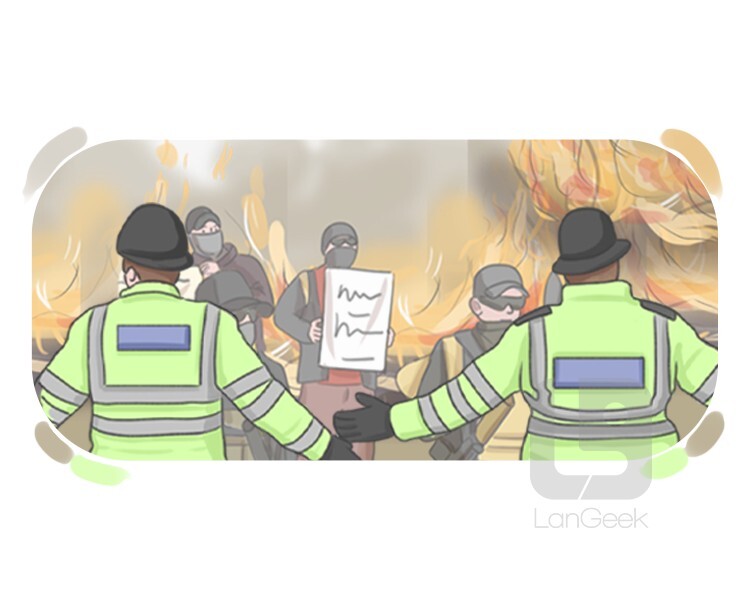
to behave in an drunken or uncontrolled way, often involving overindulgence in pleasure or luxury
a unrestrained gathering marked by excessive drinking and licentious behavior
something or someone extremely funny or entertaining
a sudden, intense, and unrestrained outpouring of emotion
a person considered chaotic, disruptive, or dangerously uncontrollable
What is the origin of the term "riot" and how is it used?
"Riot" comes from Old French riote, meaning a dispute, brawl, or unruly behavior, and entered English in the 13th century to describe violent public disorder. While it is primarily a noun for an event, it has been used metaphorically in modern English to label a person considered chaotic, disruptive, or dangerously uncontrollable. This usage draws on the idea of someone embodying disorder or upheaval rather than causing a single incident. It appears in informal speech, journalism, and commentary, often exaggerated for emphasis. The term is context-dependent: it can be derogatory when condemning behavior, but sometimes playful or hyperbolic when describing someone wild or unpredictable.


