






























to riot
01
暴動を起こす, 騒乱を起こす
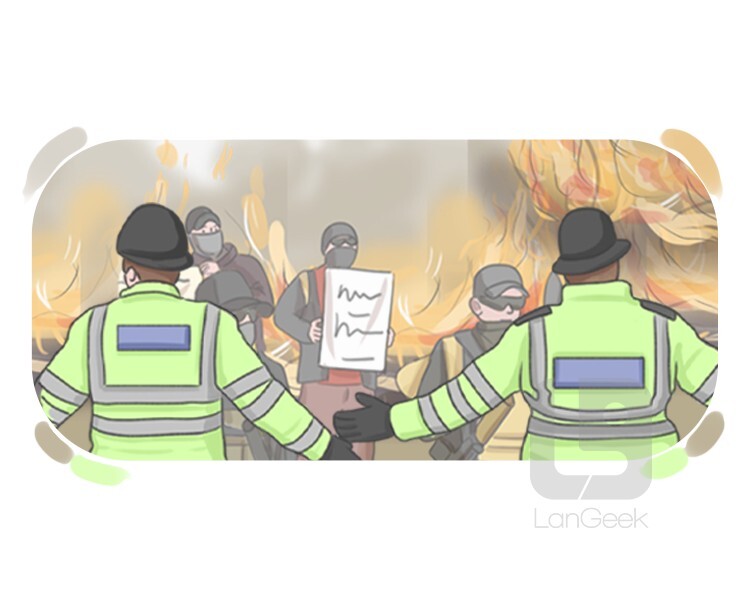
to engage in violent and disorderly behavior, typically by a group of people, often in protest or as a reaction to a perceived injustice
Intransitive
文法情報
形態的構成
単純語
動作動詞
規則的
現在時制
riot
三人称単数
riots
現在分詞
rioting
単純過去
rioted
過去分詞
rioted
例
The crowd began to riot when they learned about the unjust decision.
群衆は不当な決定を知ると暴動を始めた。
02
暴れる, 騒ぎまわる
to behave in an drunken or uncontrolled way, often involving overindulgence in pleasure or luxury
Intransitive
例
The guests rioted at the banquet, indulging in an excessive amount of food and drink.
賓客たちは宴会で大騒ぎし、過剰な量の食べ物と飲み物にふけった。
Riot
文法情報
有生性の状態
抽象的
形態的構成
単純語
可算
singular
not gender specific
複数形
riots
例
A peaceful demonstration turned into a violent riot after clashes broke out between protesters and counter-protesters.
平和的なデモが、抗議者と反対抗議者の間で衝突が発生した後、暴力的な暴動に変わりました。
02
乱痴気騒ぎ, 放縦
a unrestrained gathering marked by excessive drinking and licentious behavior
時代遅れ
例
The novel described the emperor's palace as a place of endless riot and decadence.
その小説は皇帝の宮殿を果てしない乱痴気騒ぎと退廃の場所として描いた。
03
楽しみ, 娯楽
something or someone extremely funny or entertaining
例
The comedian was an absolute riot, leaving the audience in stitches for an hour.
そのコメディアンは絶対的な成功で、観客を1時間笑い転げさせた。
04
爆発, ほとばしり
a sudden, intense, and unrestrained outpouring of emotion
例
When she opened the letter, a riot of grief and relief overwhelmed her.
彼女が手紙を開けたとき、悲しみと安堵の爆発が彼女を圧倒した。
05
暴れ者, 破壊者
a person considered chaotic, disruptive, or dangerously uncontrollable
非難的
くだけた
例
That riot destroyed the kitchen in five minutes.
その暴動は5分で台所を破壊した。


