

Caută
Selectați limba dicționarului





























to haunt
01
bântui, persecuta
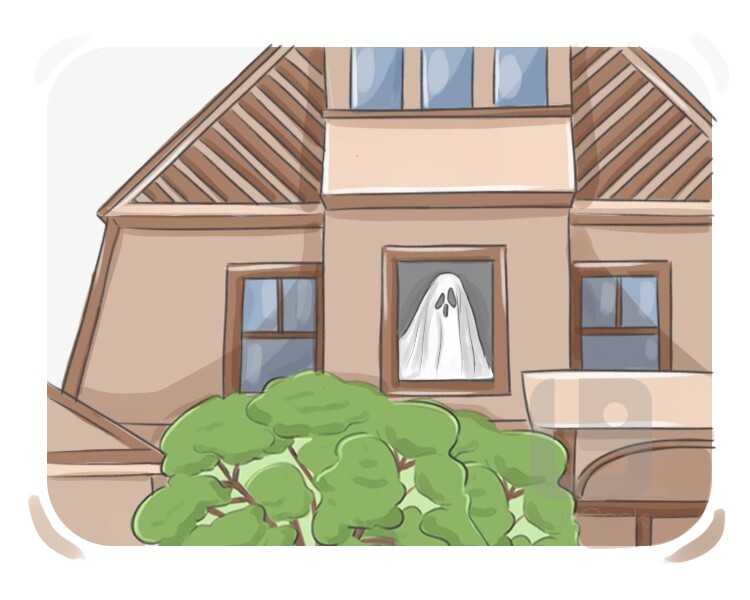
(of a ghost) to appear or be seen repeatedly in a building
Transitive: to haunt a place
informații gramaticale
compoziție morfologică
simplu
verb de acțiune
regulat
timpul prezent
haunt
persoana a III-a singular
haunts
participiu prezent
haunting
trecut simplu
haunted
participiu trecut
haunted
Exemple
The old mansion was said to be haunted by the ghost of a former resident.
Se spunea că vechea conac este bântuită de fantoma unui fost locuitor.
02
bântui, urmări
to persistently seek or follow someone, often in a way that is unwanted or bothersome
Transitive: to haunt sb
Exemple
He haunted her every weekend, always showing up at the places she visited.
El o bântuia în fiecare weekend, apărând întotdeauna în locurile pe care le vizita.
03
bântui, vizita frecvent
to visit a place regularly or repeatedly
Transitive: to haunt a place
Exemple
The old man haunted the park every morning, sitting on the same bench to read his newspaper.
Bătrânul frecventa parcul în fiecare dimineață, stând pe aceeași bancă pentru a-și citi ziarul.
04
bântui, persecuta
to stay in the thoughts of someone for a long time
Transitive: to haunt sb/sth
Exemple
The memory of the accident continued to haunt her for years.
Amintirea accidentului a continuat să o bântuie timp de ani.
05
bântui, urmări
to keep creating problems for someone for a long time
Transitive: to haunt sb/sth
Exemple
The mistake on his record continued to haunt him, affecting every job interview.
Greșeala din dosarul său a continuat să-l bântuie, afectând fiecare interviu de angajare.
Haunt
01
refugiu, loc obișnuit
a place someone visits regularly or favors as a usual spot
informații gramaticale
statut de animatitate
inanimat
compoziție morfologică
compus
numărabil
singular
not gender specific
formă de plural
haunts
Exemple
This café is her favorite haunt.
Acest cafenea este refugiul ei preferat.


