






























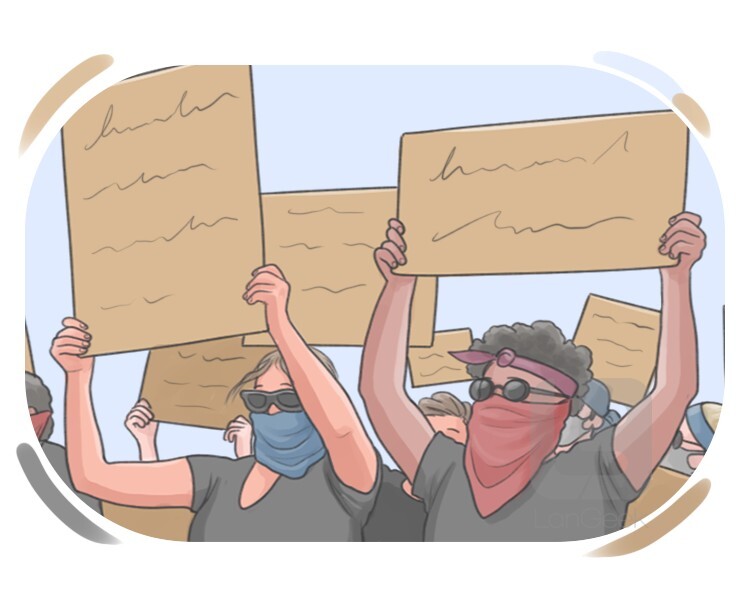
to protest
01
抗議する, デモを行う
to show disagreement by taking action or expressing it verbally, particularly in public
Transitive: to protest an injustice
文法情報
形態的構成
単純語
動作動詞
規則的
現在時制
protest
三人称単数
protests
現在分詞
protesting
単純過去
protested
過去分詞
protested
例
Employees decided to protest the unfair working conditions by organizing a strike.
従業員は、ストライキを組織することで不公平な労働条件に抗議することを決めました。
02
抗議する, デモを行う
to express dissent or objection openly and publicly against a particular policy, decision, or course of action taken
Intransitive: to protest against a policy or decision
例
Thousands of citizens gathered in the capital to protest against the government's proposed measures.
何千人もの市民が政府の提案した対策に抗議するために首都に集まった。
Protest
01
抗議, デモンストレーション
the act of publicly expressing strong disagreement or disapproval
文法情報
有生性の状態
抽象的
形態的構成
単純語
可算
singular
not gender specific
複数形
protests
例
Her loud protest against the unfair treatment caught everyone's attention.
不当な扱いに対する彼女の大きな抗議は、皆の注目を集めた。
1.1
抗議
an organized public demonstration expressing strong disapproval of an official policy or action
例
Thousands of people gathered for a protest against the new government policy.
何千人もの人々が新しい政府の政策に対する抗議のために集まった。
1.2
抗議, 抗議書
a formal written declaration, usually by a notary, stating that a bill was presented and payment or acceptance was refused
例
The merchant received a protest after the customer refused to accept the bill.
商人は、顧客が請求書の受け入れを拒否した後、抗議を受け取りました。
LanGeek
モバイルアプリをダウンロード

語彙ツリー
protester
protest

