

Rechercher
Sélectionnez la langue du dictionnaire





























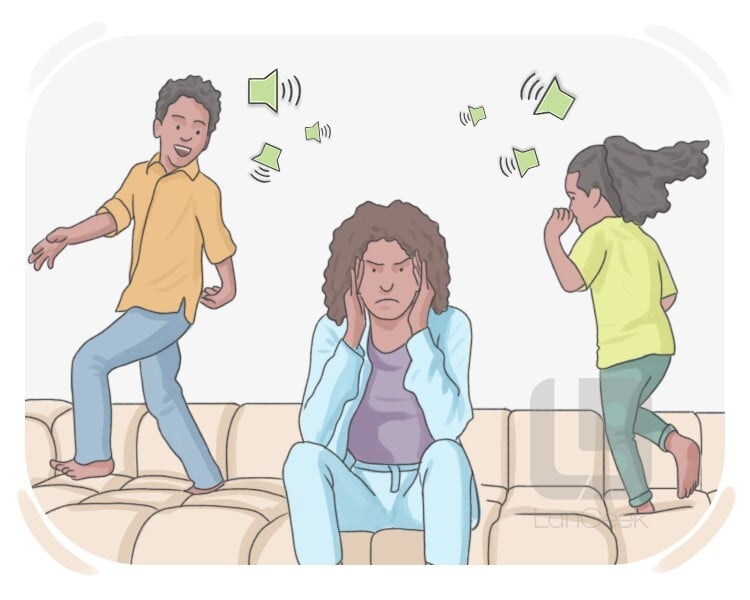
to disturb
01
déranger, importuner
to trouble someone and make them uneasy
Transitive: to disturb sb
informations grammaticales
composition morphologique
simple
verbe d’action
régulier
présent
disturb
3e personne du singulier
disturbs
participe présent
disturbing
passé simple
disturbed
participe passé
disturbed
Exemples
The unsettling images in the movie disturbed him for days afterward.
Les images troublantes du film l'ont dérangé pendant des jours par la suite.
02
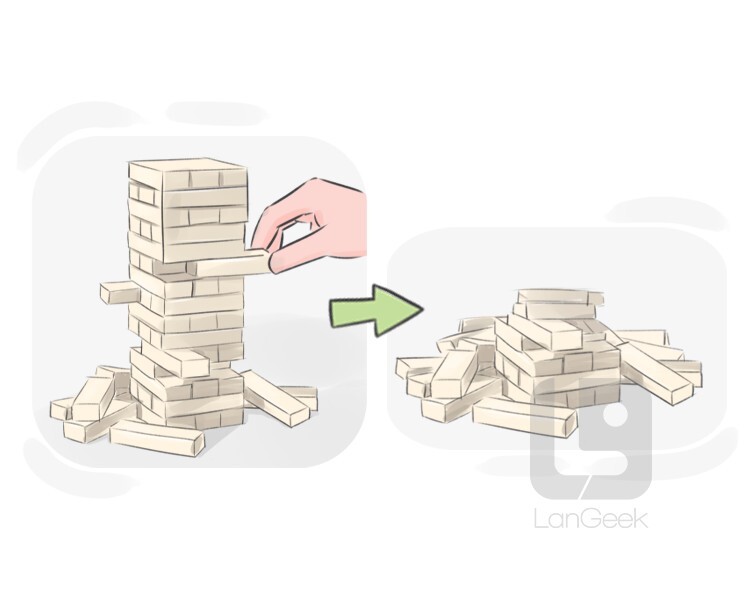
déranger, perturber
to alter the position or shape of something
Transitive: to disturb sth
Exemples
The wind disturbed the neatly stacked pile of papers, scattering them across the room.
Le vent a perturbé la pile de papiers soigneusement empilés, les dispersant dans toute la pièce.
03
perturber, déranger
to disrupt or alter the usual order or operation of something
Transitive: to disturb a process or activity
Exemples
The power outage disturbed the normal functioning of the office computers.
La panne de courant a perturbé le fonctionnement normal des ordinateurs de bureau.
04
déranger, perturber
to cause inconvenience or disrupt someone’s comfort or routine
Transitive: to disturb sb/sth
Exemples
I hope my early call didn’t disturb your morning routine.
J'espère que mon appel précoce n'a pas dérangé votre routine matinale.
LanGeek
Téléchargez notre application mobile

Arbre Lexical
disturbance
disturbed
disturber
disturb

