






























to revolt
01
使反感, 使厌恶
to cause strong disgust or offense to someone's morals
Transitive: to revolt sb

语法信息
形态构成
简单词
动作动词
规则
现在时
revolt
第三人称单数
revolts
现在分词
revolting
一般过去时
revolted
过去分词
revolted
例子
His sexist remarks revolted the entire audience.
他的性别歧视言论激怒了所有观众。
02
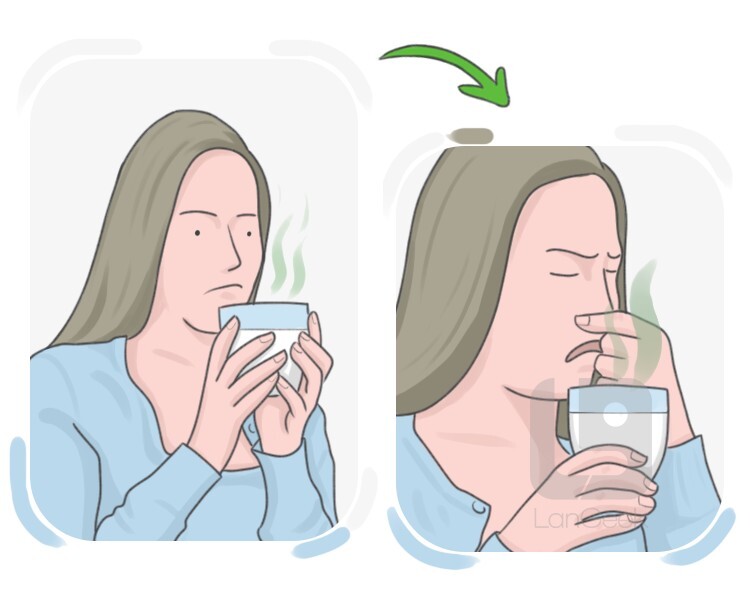
使厌恶, 使反感
to make someone feel extreme disgust or repulsion
Transitive: to revolt sb
例子
The thought of eating insects revolts many people.
吃昆虫的想法让许多人感到厌恶。
03
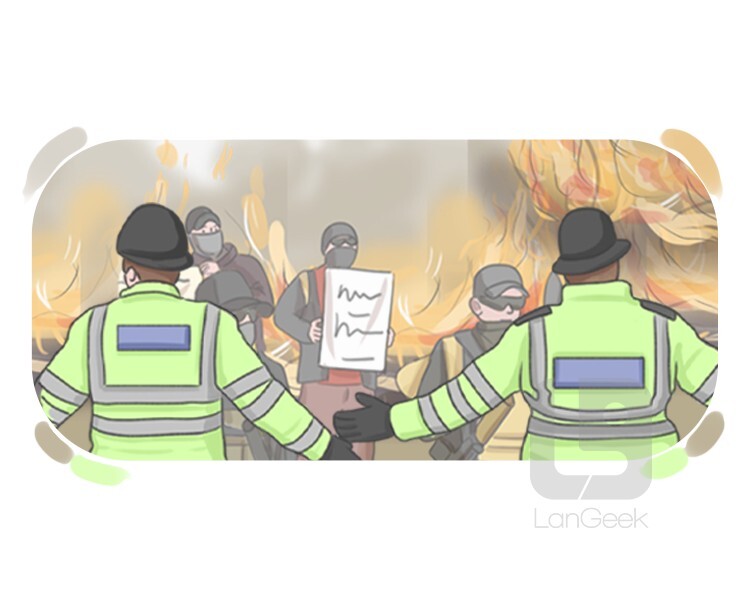
反抗, 起义
to lead a sudden and often forceful change against a government or system that is perceived as oppressive, seeking a radical transformation
Intransitive
例子
The people decided to revolt against the oppressive government, seeking a complete overhaul of the system.
人民决定反抗压迫政府,寻求系统的彻底改革。
04
反抗, 起义
to strongly reject or oppose something
例子
The students revolted against the strict school rules.
学生们反抗了严格的校规。
Revolt
01
起义, 叛乱
a rebellion or uprising, often involving violence, by a group of people against an authority or ruling power
语法信息
有生性状态
抽象
形态构成
简单词
可数
singular
not gender specific
复数形式
revolts
例子
The revolt against the oppressive regime lasted for months.
对压迫政权的反抗持续了数月。
LanGeek
下载我们的移动应用

词汇树
revolting
revolt

