






























to revolt
01
反乱を起こす, 嫌悪感を抱かせる
to cause strong disgust or offense to someone's morals
Transitive: to revolt sb

文法情報
形態的構成
単純語
動作動詞
規則的
現在時制
revolt
三人称単数
revolts
現在分詞
revolting
単純過去
revolted
過去分詞
revolted
例
His sexist remarks revolted the entire audience.
彼の性差別的な発言は聴衆全体を憤慨させた。
02
嫌悪感を抱かせる, うんざりさせる
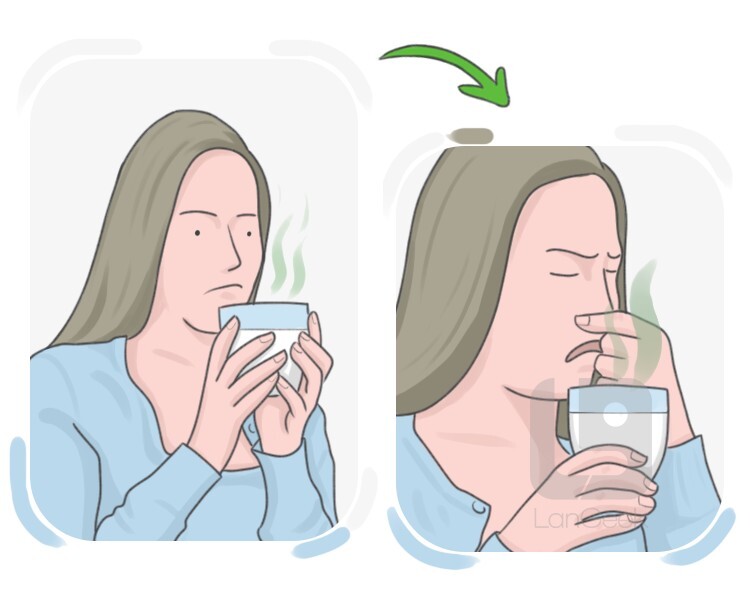
to make someone feel extreme disgust or repulsion
Transitive: to revolt sb
例
The thought of eating insects revolts many people.
昆虫を食べるという考えは多くの人々に嫌悪感を抱かせる。
03
反乱を起こす, 反抗する
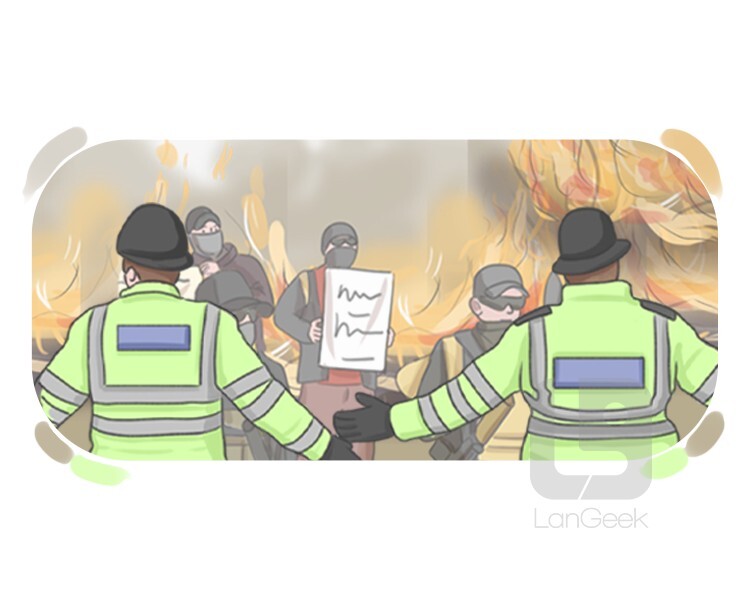
to lead a sudden and often forceful change against a government or system that is perceived as oppressive, seeking a radical transformation
Intransitive
例
The people decided to revolt against the oppressive government, seeking a complete overhaul of the system.
人々は抑圧的な政府に対して反乱を起こすことを決め、システムの完全な見直しを求めた。
04
反乱を起こす, 反抗する
to strongly reject or oppose something
例
The students revolted against the strict school rules.
生徒たちは学校の厳しい規則に対して反乱を起こした。
Revolt
01
反乱, 暴動
a rebellion or uprising, often involving violence, by a group of people against an authority or ruling power
文法情報
有生性の状態
抽象的
形態的構成
単純語
可算
singular
not gender specific
複数形
revolts
例
The revolt against the oppressive regime lasted for months.
抑圧的な政権に対する反乱は数ヶ月続いた。
LanGeek
モバイルアプリをダウンロード

語彙ツリー
revolting
revolt

