

Szukaj





























to revolt
01
buntować, obrzydzać
to cause strong disgust or offense to someone's morals
Transitive: to revolt sb

informacje gramatyczne
budowa morfologiczna
prosty
czasownik czynnościowy
regularny
czas teraźniejszy
revolt
3. osoba liczby pojedynczej
revolts
imiesłów czynny
revolting
czas przeszły prosty
revolted
imiesłów bierny
revolted
Przykłady
His sexist remarks revolted the entire audience.
Jego seksistowskie uwagi zbuntowały całą publiczność.
02
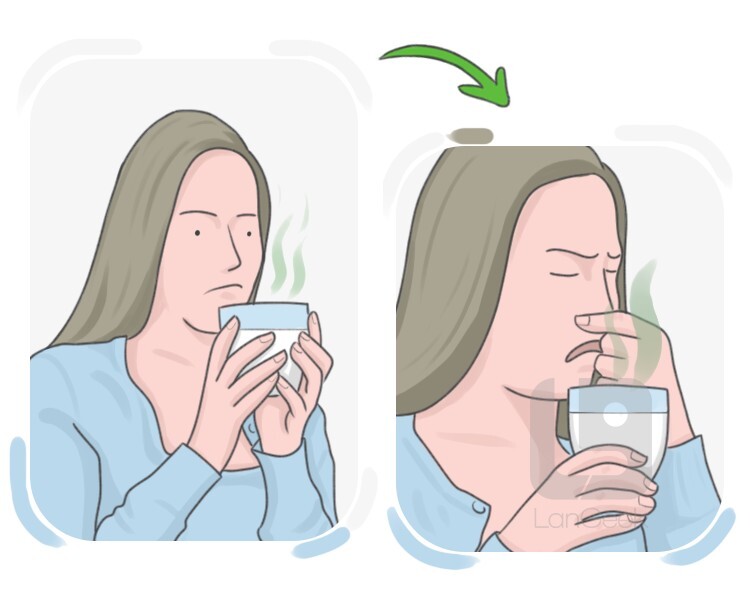
obrzydzać, wzbudzać odrazę
to make someone feel extreme disgust or repulsion
Transitive: to revolt sb
Przykłady
The thought of eating insects revolts many people.
Myśl o jedzeniu owadów wzbudza obrzydzenie u wielu ludzi.
03
buntować się, powstawać
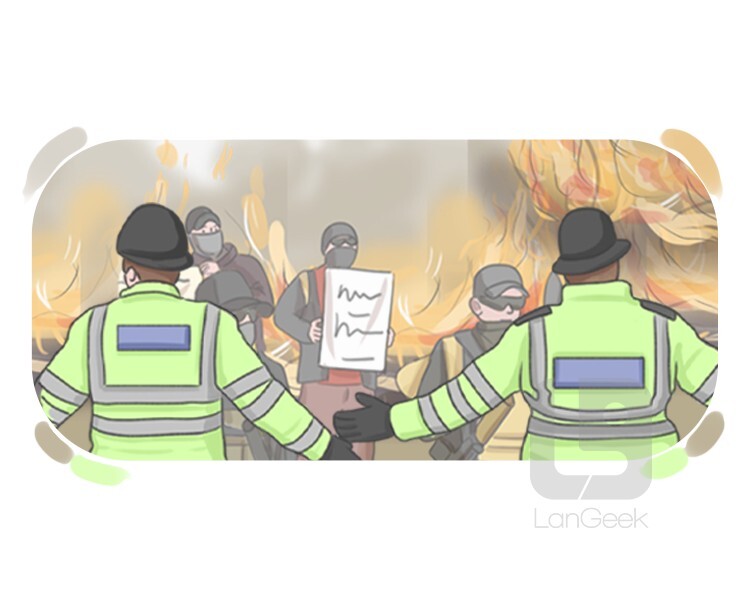
to lead a sudden and often forceful change against a government or system that is perceived as oppressive, seeking a radical transformation
Intransitive
Przykłady
The people decided to revolt against the oppressive government, seeking a complete overhaul of the system.
Ludzie zdecydowali się zbuntować przeciwko opresyjnemu rządowi, dążąc do całkowitej przebudowy systemu.
04
buntować się, zbuntować się
to strongly reject or oppose something
Przykłady
The students revolted against the strict school rules.
Uczniowie zbuntowali się przeciwko surowym szkolnym zasadom.
Revolt
01
bunt, powstanie
a rebellion or uprising, often involving violence, by a group of people against an authority or ruling power
informacje gramatyczne
status żywotności
abstrakcyjny
budowa morfologiczna
prosty
policzalny
singular
not gender specific
forma liczby mnogiej
revolts
Przykłady
The revolt against the oppressive regime lasted for months.
Bunt przeciwko opresyjnemu reżimowi trwał miesiącami.
LanGeek
Pobierz naszą aplikację mobilną

Drzewo Leksykalne
revolting
revolt

