




























to alloy
01
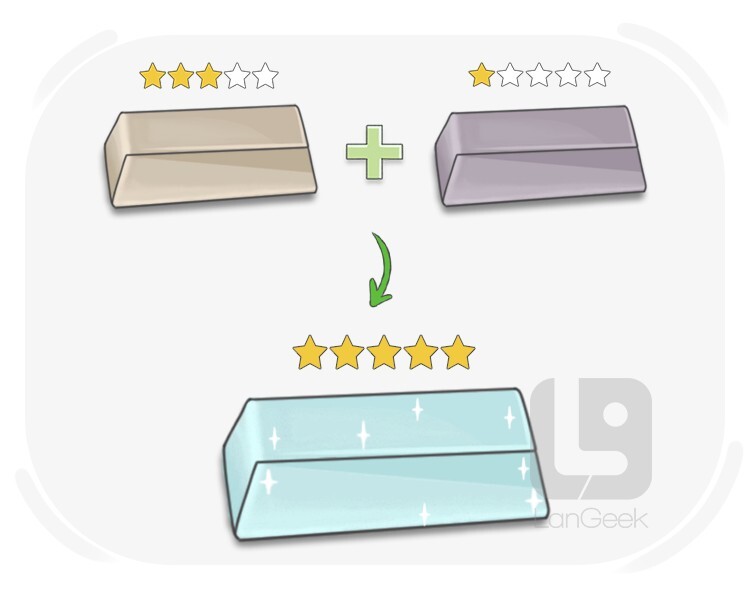
합금을 만들다, 섞다
to combine two or more metals to make a more suitable one
Transitive: to alloy two or more metals
Ditransitive: to alloy a metal with another
예시들
The metallurgist alloyed copper and zinc to produce brass, a durable and corrosion-resistant material.
야금학자는 구리와 아연을 합금하여 내구성이 있고 부식에 강한 재료인 황동을 생산했습니다.
02
합금하다, 품질을 저하시키다
to degrade or diminish the quality or value of something by adding an inferior substance or element
Transitive: to alloy sth
문법 정보
형태적 구성
단순어
동작 동사
규칙
현재 시제
alloy
3인칭 단수
alloys
현재분사
alloying
단순 과거
alloyed
과거분사
alloyed
예시들
The chef alloyed the premium olive oil with cheap vegetable oil, compromising the flavor of the dish.
셰프는 고급 올리브 오일과 값싼 식물성 기름을 혼합하여 요리의 맛을 해쳤다.
Alloy
문법 정보
유생성 상태
무생물
형태적 구성
단순어
가산
singular
not gender specific
복수형
alloys
예시들
An alloy is a mixture of two or more metals or a metal and another element.
합금은 두 가지 이상의 금속 또는 금속과 다른 원소의 혼합물입니다.
02
혼합물, 합금
a state or condition in which something pure is diminished or tainted, often by mixing with something inferior or undesirable
예시들
His joy was not without alloy; worry lingered beneath the surface.
그의 기쁨은 합금 없이 아니었다; 걱정이 표면 아래에 남아 있었다.