






























to alloy
01
合金を作る, 混ぜる
to combine two or more metals to make a more suitable one
Transitive: to alloy two or more metals
Ditransitive: to alloy a metal with another
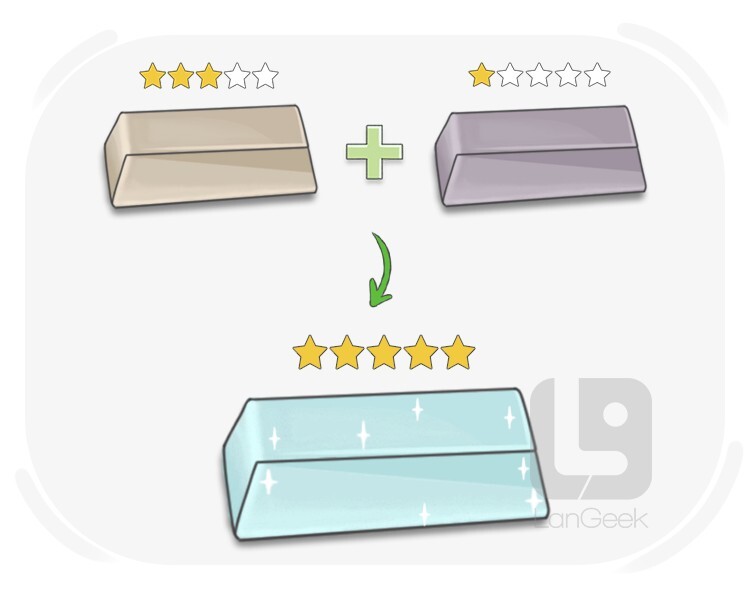
例
The metallurgist alloyed copper and zinc to produce brass, a durable and corrosion-resistant material.
冶金学者は銅と亜鉛を合金化して、耐久性があり腐食に強い材料である真鍮を生産しました。
02
合金する, 品質を低下させる
to degrade or diminish the quality or value of something by adding an inferior substance or element
Transitive: to alloy sth
文法情報
形態的構成
単純語
動作動詞
規則的
現在時制
alloy
三人称単数
alloys
現在分詞
alloying
単純過去
alloyed
過去分詞
alloyed
例
The chef alloyed the premium olive oil with cheap vegetable oil, compromising the flavor of the dish.
シェフはプレミアムオリーブオイルと安価な植物油を混ぜ合わせ、料理の味を損なった。
Alloy
文法情報
有生性の状態
無生物
形態的構成
単純語
可算
singular
not gender specific
複数形
alloys
例
An alloy is a mixture of two or more metals or a metal and another element.
合金は、2つ以上の金属、または金属と他の元素の混合物です。
02
混合物, 合金
a state or condition in which something pure is diminished or tainted, often by mixing with something inferior or undesirable
例
His joy was not without alloy; worry lingered beneath the surface.
彼の喜びは合金なしではなかった;心配が表面の下に残っていた。


