

Rechercher
Sélectionnez la langue du dictionnaire





























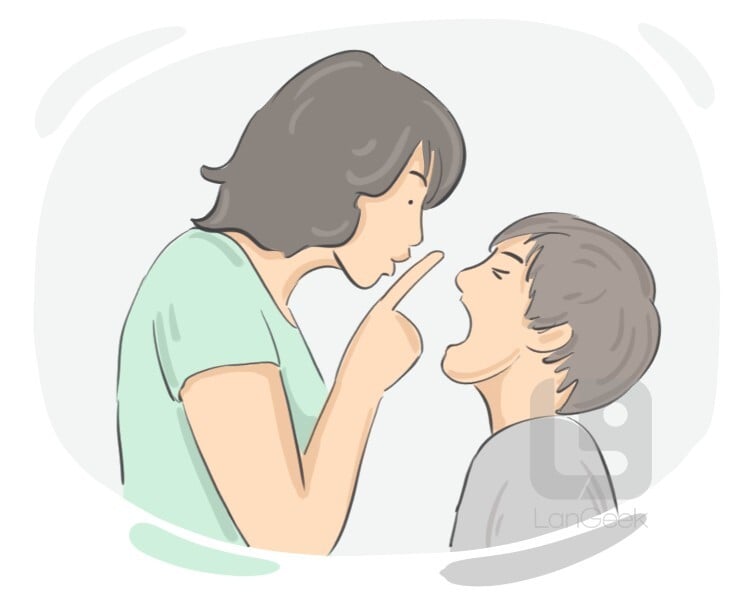
to act out
01
extérioriser, manifester
to communicate one's emotions, often negative, by misbehaving
Intransitive
informations grammaticales
composition morphologique
à particule
verbe d’action
régulier
inséparable
particule
out
verbe de base
act
présent
act out
3e personne du singulier
acts out
participe présent
acting out
passé simple
acted out
participe passé
acted out
Exemples
The child was acting out because he was feeling neglected by his parents.
L'enfant extériorisait parce qu'il se sentait négligé par ses parents.
02
jouer, interpréter
to perform a role or a scene on stage
Transitive: to act out a role or scene

Exemples
The actors will act out a thrilling chase scene in tonight's performance.
Les acteurs vont jouer une scène de poursuite palpitante dans la performance de ce soir.
03
jouer, interpréter
to play a role as in a child's imaginative play, where they play scenarios with toys or with their friends
Transitive: to act out an imaginative role
Exemples
The children love to act out their favorite fairy tales during playtime.
Les enfants adorent jouer leurs contes de fées préférés pendant les jeux.
04
extérioriser, mettre en acte
to unconsciously display one's internal conflicts, emotions, or unresolved issues by visible actions, often as a defense mechanism
Transitive: to act out emotions or internal conflicts
Exemples
His outbursts of anger are a way to act out the repressed trauma from his past.
Ses accès de colère sont un moyen de extérioriser le traumatisme refoulé de son passé.
LanGeek


