

অনুসন্ধান করুন
অভিধানের ভাষা নির্বাচন করুন





























to act out
01
প্রকাশ করা, প্রদর্শন করা
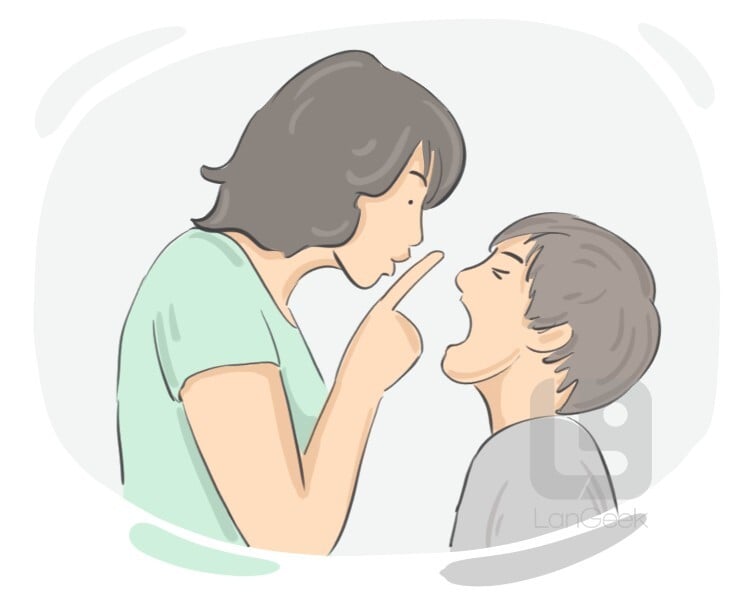
to communicate one's emotions, often negative, by misbehaving
Intransitive
ব্যাকরণগত তথ্য
রূপগত গঠন
বাগধারামূলক
কর্মসূচক ক্রিয়া
নিয়মিত
অবিচ্ছেদ্য
কণা
out
মূল ক্রিয়া
act
বর্তমান কাল
act out
৩য় পুরুষ একবচন
acts out
বর্তমান কৃদন্ত
acting out
সরল অতীত
acted out
অতীত কৃদন্ত
acted out
উদাহরণ
The child was acting out because he was feeling neglected by his parents.
শিশুটি খারাপ আচরণ করছিল কারণ সে তার বাবা-মায়ের দ্বারা অবহেলিত বোধ করছিল।
02
অভিনয় করা, চরিত্রে অভিনয় করা
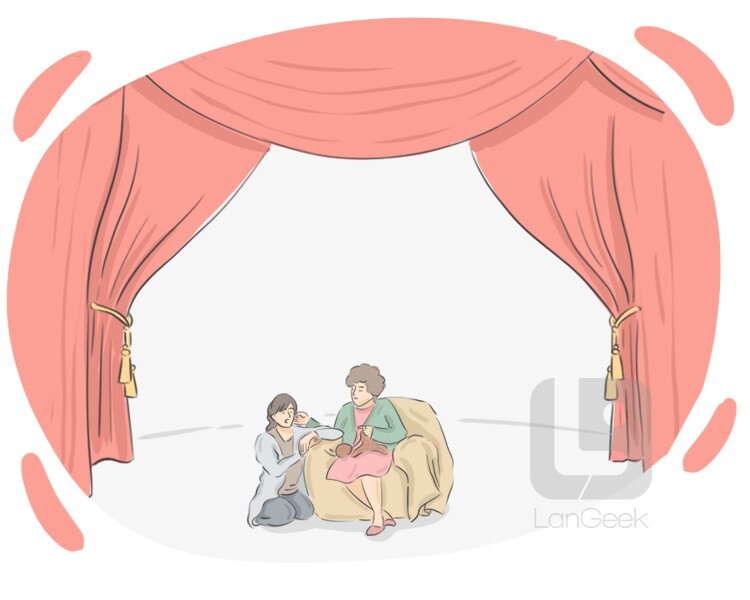
to perform a role or a scene on stage
Transitive: to act out a role or scene
উদাহরণ
The actors will act out a thrilling chase scene in tonight's performance.
আজ রাতের পারফরম্যান্সে অভিনেতারা একটি রোমাঞ্চকর ধাওয়া দৃশ্য অভিনয় করবে।
03
অভিনয় করা, চরিত্রে অভিনয় করা
to play a role as in a child's imaginative play, where they play scenarios with toys or with their friends
Transitive: to act out an imaginative role
উদাহরণ
The children love to act out their favorite fairy tales during playtime.
বাচ্চারা খেলার সময় তাদের প্রিয় পরীর গল্প অভিনয় করতে ভালোবাসে।
04
বাইরে প্রকাশ করা, কাজে পরিণত করা
to unconsciously display one's internal conflicts, emotions, or unresolved issues by visible actions, often as a defense mechanism
Transitive: to act out emotions or internal conflicts
উদাহরণ
His outbursts of anger are a way to act out the repressed trauma from his past.
তার রাগের বিস্ফোরণগুলি তার অতীতের দমন করা ট্রমাকে প্রদর্শন করার একটি উপায়।
LanGeek


