






























Name
문법 정보
유생성 상태
추상
형태적 구성
단순어
가산
singular
not gender specific
복수형
names
예시들
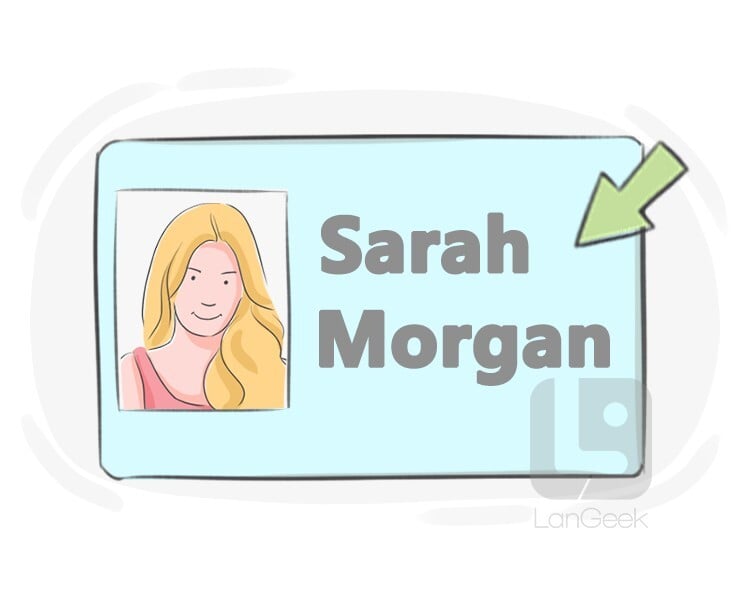
He introduced himself by saying, "Hi, my name is Alex."
그는 "안녕하세요, 제 이름은 알렉스입니다."라고 자기 소개를 했습니다.
1.1
모욕, 욕설
a word or phrase used to insult or defame someone
예시들
He called her a cruel name in anger.
그는 화가 나서 그녀를 잔인한 이름으로 불렀다.
1.2
평판, 명성
a person's reputation or standing in the community
예시들
He worked hard to make a good name for himself.
그는 자신에게 좋은 이름을 만들기 위해 열심히 일했다.
02
유명인, 인물
a famous or notable person
예시들
Albert Einstein is a name known worldwide.
알베르트 아인슈타인은 전 세계적으로 알려진 이름입니다.
to name
01
이름을 짓다, 명명하다
to give a name to something or someone
Transitive: to name sb/sth
Complex Transitive: to name sb/sth sth

문법 정보
형태적 구성
단순어
동작 동사
규칙
현재 시제
name
3인칭 단수
names
현재분사
naming
단순 과거
named
과거분사
named
예시들
Parents often carefully name their children after considering various factors.
부모들은 종종 다양한 요소를 고려한 후 아이들을 조심스럽게 이름 짓습니다.
02
이름을 짓다, 언급하다
to mention or designate something as a relevant or contributing factor
Transitive: to name sth as a relevant factor
예시들
The CEO named teamwork as the most important factor in achieving company goals.
CEO는 회사 목표 달성에 가장 중요한 요소로 팀워크를 지명했습니다.
2.1
이름을 짓다, 언급하다
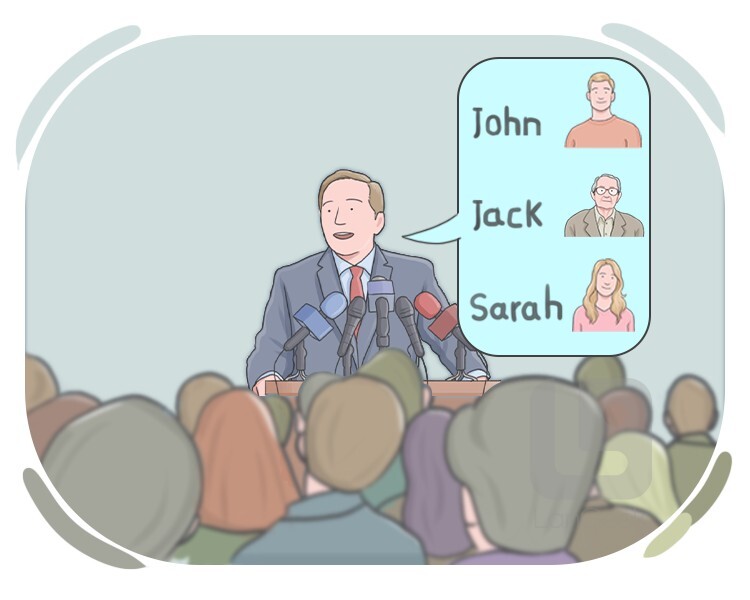
to state the name of someone or something
Transitive: to name sb
예시들
During the presentation, she named each member of the project team and their contributions.
프레젠테이션 동안 그녀는 프로젝트 팀의 각 구성원과 그들의 기여를 언급했다.
2.2
이름을 짓다, 지명하다
to identify someone or something by giving their name
Transitive: to name sb/sth
예시들
The witness was unable to name the suspect in the lineup.
증인은 줄에서 용의자를 지명할 수 없었다.
2.3
이름을 짓다, 지명하다
to specify or list something by giving its name
Transitive: to name a list
예시들
The chef named the ingredients for the recipe: flour, sugar, eggs, and vanilla extract.
셰프는 레시피 재료를 열거했다: 밀가루, 설탕, 달걀, 바닐라 추출물.
03
지명하다, 임명하다
to officially appoint or designate someone to a specific position or task
Complex Transitive: to name sb as holder of position or responsibility
예시들
The board of directors named her as the new CEO of the company.
이사회는 그녀를 회사의 새로운 CEO로 지명했습니다.
LanGeek
모바일 앱 다운로드

어휘 나무
nameless
namely
name

