Keresés
Vålassza ki a szótår nyelvét
to leave
01
elmegy, elhagy
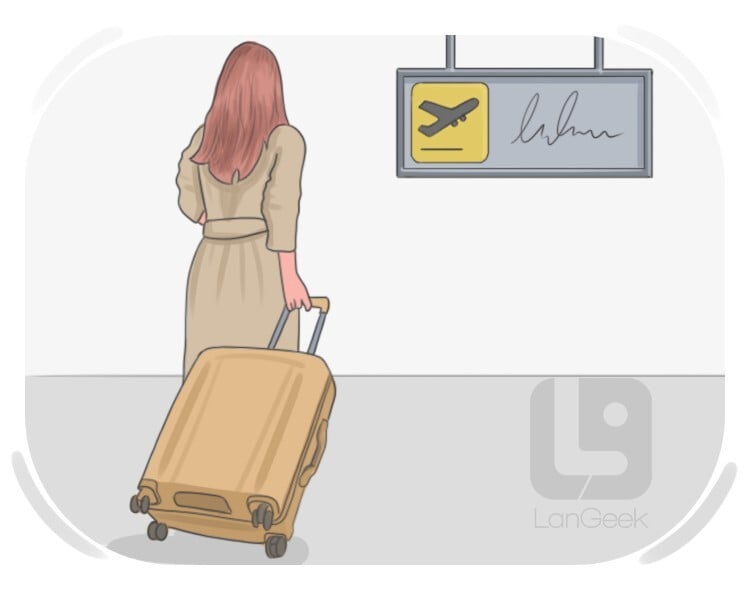
to go away from somewhere
Intransitive: to leave | to leave for a destination
Transitive: to leave sb/sth
Példåk
She decided to leave the party because it was too crowded.
Ăgy döntött, hogy elhagyja a bulit, mert tĂșl zsĂșfolt volt.
1.1
elmegy, otthagy
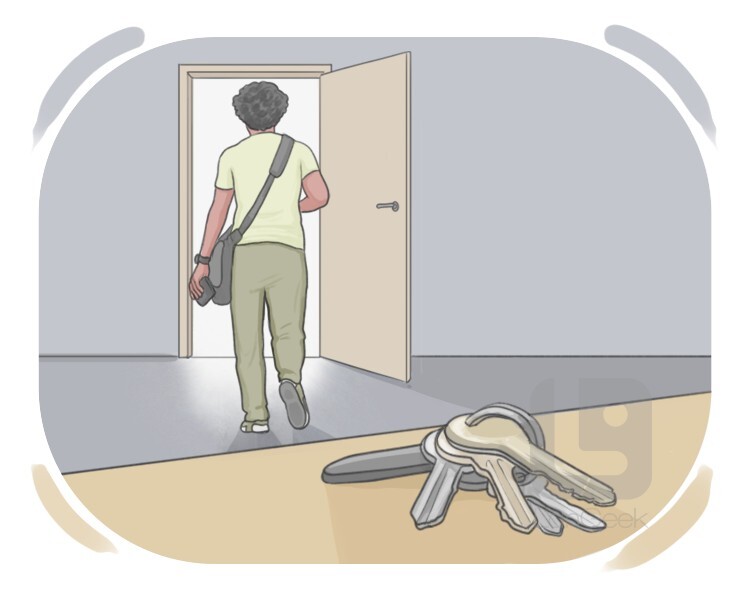
to go away from a place without taking someone or something with one either intentionally or unintentionally
Transitive: to leave sth somewhere
Példåk
I accidentally left my keys at home when I rushed out this morning.
VĂ©letlenĂŒl otthon hagytam a kulcsaimat, amikor sietve kimentem ma reggel.
1.2
elmegy, otthagy
to stop living, working, or being a part of a particular place or group
Transitive: to leave a place or position
Példåk
He decided to leave his job and pursue a new career.
Ăgy döntött, hogy otthagyja a munkĂĄjĂĄt, Ă©s Ășj karriert kezd.
1.3
elhagy, otthagy
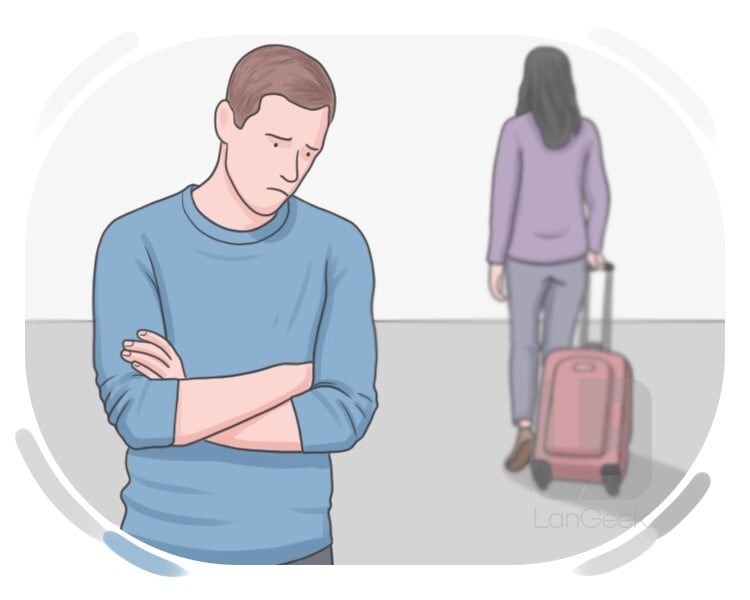
to abandon one's wife, husband, or partner with no plan of returning
Transitive: to leave one's partner
Példåk
He left his wife and children without warning.
FigyelmeztetĂ©s nĂ©lkĂŒl elhagyta felesĂ©gĂ©t Ă©s gyermekeit.
02
hagy, elhagy
to allow someone or something to remain in a particular place, state, or condition without changing or disturbing it
Complex Transitive: to leave sb/sth [adj]
Példåk
Leave the dough to rise for an hour before baking it.
Hagyja kelni a tĂ©sztĂĄt egy ĂłrĂĄig sĂŒtĂ©s elĆtt.
2.1
hagy, elhagy
to have a surviving family member who continue to live after one's death
Transitive: to leave a surviving family member
Példåk
When John passed away, he left two adult sons and a daughter-in-law.
Amikor John elhunyt, hĂĄtrahagyott kĂ©t felnĆtt fiĂșt Ă©s egy menyet.
2.2
hagy, örökĂŒl hagy
to give someone something, particularly money and wealth, after one's death
Ditransitive: to leave sb an inheritance | to leave an inheritance to sb
Példåk
Jane 's will ensured that she left her estate to her surviving relatives.
Jane vĂ©grendelete biztosĂtotta, hogy vagyonĂĄt a tĂșlĂ©lĆ rokonaira hagyta.
2.3
hagy, hagy valamit
to make something be seen, heard, or noticed by delivering, writing or recording something
Transitive: to leave a message on sth
Példåk
I left a voicemail for you on your phone.
Hagytam neked egy hangĂŒzenetet a telefonodban.
2.4
hagy, rĂĄbĂz
to let someone deal with something in one's place
Ditransitive: to leave a task to sb
Példåk
I 'll leave the task to you while I attend the meeting.
RĂĄd hagyom a feladatot, amĂg Ă©n a megbeszĂ©lĂ©sen veszek rĂ©szt.
2.5
hagy, eredményként hagy valamit
to cause something to remain as a result
Transitive: to leave sth on sb/sth
Példåk
The muddy shoes left tracks on the freshly cleaned carpet.
A sĂĄros cipĆk nyomokat hagytak a frissen tisztĂtott szĆnyegen.
2.6
hagy, marad
(in mathematics) to have a certain amount remaining
Transitive: to leave a number
Példåk
Four from eight leaves four.
Nyolcból négy marad négy.
2.7
hagyni, elhagyni
to refrain from doing or dealing with something
Transitive: to leave a task or issue
Példåk
Let 's leave the issue for now and discuss it later.
Hagyjuk most a problĂ©mĂĄt, Ă©s kĂ©sĆbb beszĂ©ljĂŒk meg.
Leave
01
permission or authorization to do something
Példåk
She requested leave to appeal the decision.
02
a period of authorized absence from work, duty, or service
Példåk
He took annual leave to visit his family.
Lexikai Fa
leaved
leaver
leaving
leave