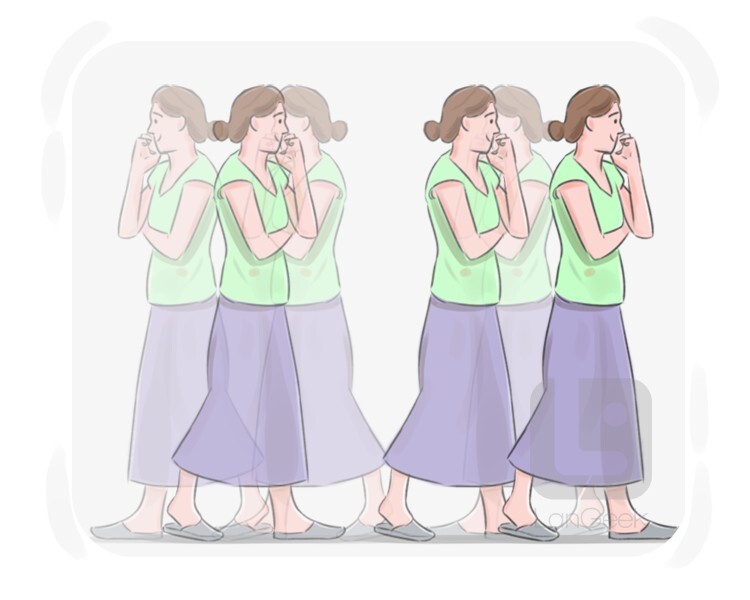
pace
pace
peɪs
peis
British pronunciation
/pˈeɪs/

Définition et signification de « pace » en anglais

Pace
01

cadence, allure, vitesse
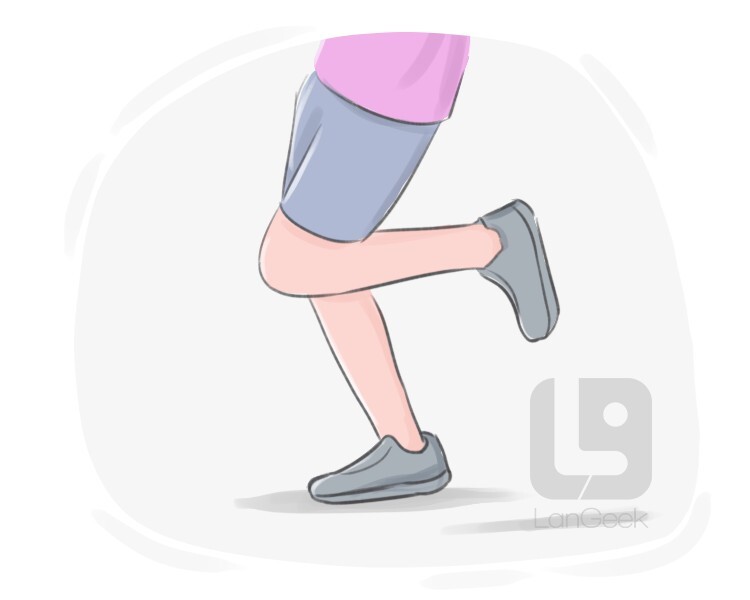
a person's speed when walking, moving, or running
pace definition and meaning
example
Exemples
The pace of the project was too slow, causing delays in the overall timeline.
Le rythme du projet était trop lent, ce qui a entraîné des retards dans le calendrier global.
02

pas

a measure of length that equals the distance traveled between two steps during a walk
example
Exemples
Soldiers and hikers often use pacing to estimate distances when navigating terrain without instruments.
Les soldats et les randonneurs utilisent souvent le pas pour estimer les distances lorsqu'ils naviguent sur un terrain sans instruments.
03

rythme, allure

the rate or speed at which something progresses or changes
example
Exemples
The pace of the conversation slowed as they delved into deeper topics.
Le rythme de la conversation ralentit alors qu'ils abordaient des sujets plus profonds.
04

pas

one step taken while walking or running
example
Exemples
Count each pace to reach the end of the room.
05

a unit of distance, traditionally considered the length of an average stride, equal to 3 feet or 91.44 centimeters

example
Exemples
He advanced fifty paces before stopping.
06

speed at which an action or process occurs

example
Exemples
He could n't keep up with the pace of work in the office.
07

the speed at which a narrative unfolds and how it affects audience engagement

example
Exemples
A slow pace allowed for deep character development.
08

the distance between two consecutive steps or risers in staircases

example
Exemples
Each pace was carefully measured for comfort.
09

a courtyard or open area within a building complex

example
Exemples
The café overlooked a quaint pace between houses.
to pace
01

arpenter

to walk back and forth in a small area at a fixed speed, often due to anxiety or being deep in thought
Intransitive
to pace definition and meaning
example
Exemples
Frustrated by the delay, she began to pace around the train platform.
Frustrée par le retard, elle commença à arpenter le quai de la gare.
02

aller au pas, marcher au pas

(of a horse) to move at a particular gait or speed, often in a rhythmic and coordinated manner
Intransitive
example
Exemples
The rider trained the horse to pace steadily during parades, showcasing a dignified and controlled movement.
Le cavalier a entraîné le cheval à allure régulièrement pendant les défilés, montrant un mouvement digne et contrôlé.
03

arpenter, mesurer en marchant

to determine the extent of a distance by walking it and keeping track of the number of steps taken
Transitive: to pace a distance or area
example
Exemples
To estimate the size of the room, he paced it from corner to corner and calculated the area.
Pour estimer la taille de la pièce, il l'a arpentée d'un coin à l'autre et a calculé la superficie.
04

réguler, contrôler

to regulate or control the rate or speed at which something moves or develops
Transitive: to pace an activity or development
example
Exemples
The project manager had to pace the implementation of new software features to ensure a smooth transition.
Le chef de projet a dû réguler la mise en œuvre des nouvelles fonctionnalités logicielles pour assurer une transition en douceur.
01

used to politely indicate disagreement with a person, typically placed before their name or title

example
Exemples
Pace the committee's report, the results of the study indicate a need for further research.
LanGeek
Télécharger l'Application
langeek application

Download Mobile App

stars

app store