






























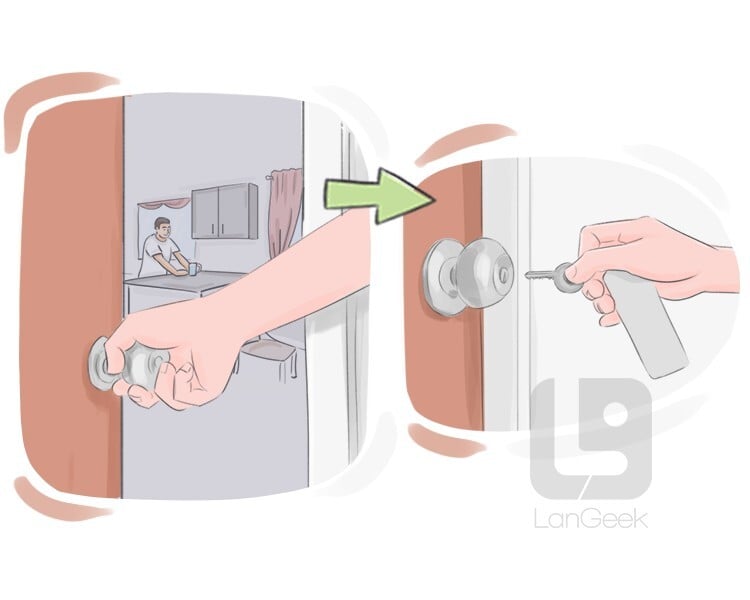
to lock out
01
锁在外面, 封锁入口
to prevent someone from entering a place by securing the entrance with a lock
语法信息
形态构成
短语
动作动词
规则
可分离
小品词
out
基本动词
lock
现在时
lock out
第三人称单数
locks out
现在分词
locking out
一般过去时
locked out
过去分词
locked out
例子
The security guard locked out the group of protesters who were trying to enter the government building.
保安锁住了试图进入政府大楼的抗议者群体。
02
不小心把自己锁在外面, 把钥匙留在里面而把自己锁在外面
to unintentionally prevent oneself from entering a place, particularly by leaving the keys inside
例子
The homeowner locked themselves out of their house after leaving the keys on the kitchen counter.
房主把钥匙留在厨房台面上后,把自己锁在了外面。
03
锁定, 防止未经授权的访问
to keep data secure by preventing unauthorized access
例子
The operating system locked out the process from accessing the memory-mapped file.
操作系统锁定了该进程,以防止访问内存映射文件。
04
锁出, 阻止工作
to prevent one's employees from working until they accept new policies or conditions
例子
The company locked its workers out after they voted down the proposed wage cuts.
公司在工人投票否决了提议的减薪后锁闭了他们。
05
排除, 封锁访问
to exclude someone or something from participation or access
例子
People with criminal records are often locked out of the job market due to discrimination and hiring biases.
有犯罪记录的人常常因为歧视和招聘偏见被排除在就业市场之外。


