






























to lock out
01
締め出す, 入り口をブロックする
to prevent someone from entering a place by securing the entrance with a lock
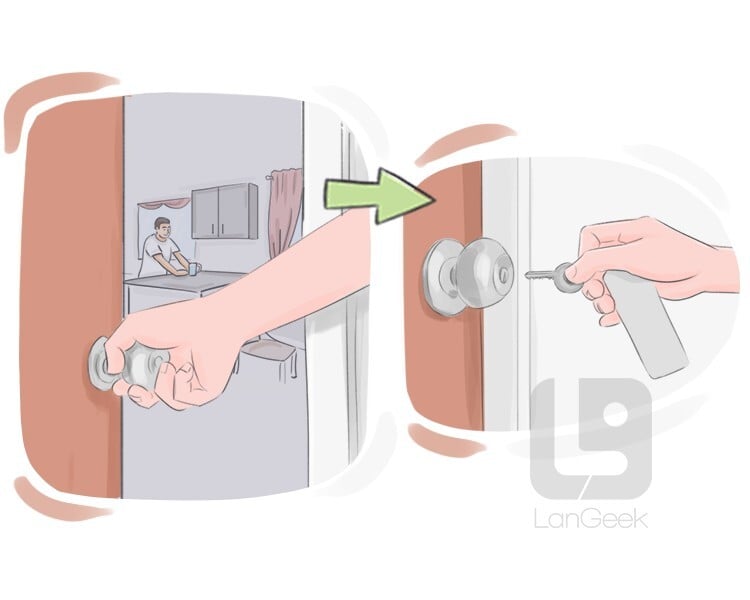
文法情報
形態的構成
句動詞
動作動詞
規則的
分離可能
不変化詞
out
基本動詞
lock
現在時制
lock out
三人称単数
locks out
現在分詞
locking out
単純過去
locked out
過去分詞
locked out
例
The security guard locked out the group of protesters who were trying to enter the government building.
警備員は政府の建物に入ろうとしていた抗議者のグループを締め出した。
02
誤って自分を締め出す, 鍵を中に置いて自分を締め出す
to unintentionally prevent oneself from entering a place, particularly by leaving the keys inside
例
The homeowner locked themselves out of their house after leaving the keys on the kitchen counter.
家主はキッチンカウンターに鍵を置いた後、自分を締め出してしまった。
03
ロックアウトする, 不正アクセスを防ぐ
to keep data secure by preventing unauthorized access
例
The operating system locked out the process from accessing the memory-mapped file.
オペレーティングシステムは、メモリマップトファイルへのアクセスを防ぐためにプロセスをロックアウトしました。
04
締め出す, 作業を阻止する
to prevent one's employees from working until they accept new policies or conditions
例
The company locked its workers out after they voted down the proposed wage cuts.
会社は、提案された賃金削減を投票で否決した後、労働者を締め出しました。
05
締め出す, アクセスをブロックする
to exclude someone or something from participation or access
例
People with criminal records are often locked out of the job market due to discrimination and hiring biases.
犯罪歴のある人は、差別や採用時の偏見により、就職市場から締め出されることが多い。


