






























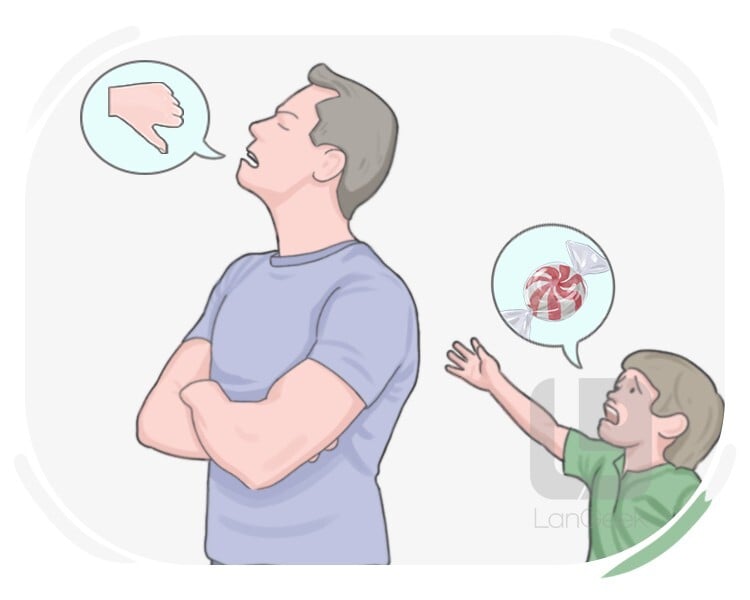
to reject
01
拒否する, 却下する
to refuse to accept a proposal, idea, person, etc.
Transitive: to reject a proposal or idea
文法情報
形態的構成
派生語
動作動詞
規則的
現在時制
reject
三人称単数
rejects
現在分詞
rejecting
単純過去
rejected
過去分詞
rejected
例
He rejected the first draft of the report, asking for major revisions.
彼は報告書の最初の草案を拒否し、大幅な改訂を求めた。
02
拒絶する, 受け入れない
to show an immune response and not accept a new organ in the body
Transitive: to reject a transplanted organ
例
The patient's body began to reject the transplanted kidney, resulting in complications.
患者の体は移植された腎臓を拒絶し始め、合併症を引き起こしました。
03
拒絶する, 拒否する
to refuse to believe in or abide by the rules, principles, or norms of a particular system, ideology, or belief structure
Transitive: to reject a belief system or its norms
例
Despite growing up in a religious household, he chose to reject the teachings of organized religion.
宗教的な家庭で育ったにもかかわらず、彼は組織化された宗教の教えを拒否することを選んだ。
04
拒絶する, 見捨てる
to fail to provide enough affection or care to a person or animal
Transitive: to reject sb/sth
例
The neglectful owner rejected the cat, leaving it to fend for itself without proper food or shelter.
無責任な飼い主は猫を拒否し、適切な食べ物や住処なしで自力で生きていくようにした。
05
拒否する, 却下する
to dismiss or decide against using or distributing something
Transitive: to reject a work or product
例
She felt disheartened when they rejected her manuscript for publication.
彼らが彼女の原稿を出版することを拒否したとき、彼女はがっかりした。
06
拒否する, 却下する
to decline or turn down someone's application or request for a specific opportunity or position
Transitive: to reject a candidate or applicant
例
The committee decided to reject all the candidates due to their failure to meet the minimum requirements.
委員会は、最低要件を満たしていないため、すべての候補者を拒否することを決定しました。
Reject
01
拒絶された者, のけ者
a person regarded as unwanted, worthless, or socially outcast

くだけた
不快感を与える
例
Everyone laughed at the reject's failed attempt.
皆が拒絶された者の失敗した試みを笑った。
02
拒否, 不良品
the person or thing that is rejected or set aside as inferior in quality
文法情報
有生性の状態
抽象的
形態的構成
複合語
可算
singular
not gender specific
複数形
rejects
LanGeek
モバイルアプリをダウンロード

語彙ツリー
rejected
rejection
rejective
reject

