

Szukaj





























to veto
01
zawetować, odrzucić
to reject or prohibit a decision, proposal, or action
Transitive: to veto a decision or action
informacje gramatyczne
budowa morfologiczna
prosty
czasownik czynnościowy
regularny
czas teraźniejszy
veto
3. osoba liczby pojedynczej
vetoes
imiesłów czynny
vetoing
czas przeszły prosty
vetoed
imiesłów bierny
vetoed
Przykłady
The president has the authority to veto a bill passed by the legislature, preventing it from becoming law.
Prezydent ma prawo weta wobec ustawy uchwalonej przez legislaturę, uniemożliwiając jej wejście w życie.
02
zawetować, odrzucić
to reject or refuse to allow an idea or suggestion
Transitive: to veto an idea or plan
Przykłady
The homeowner vetoed the idea of installing a swimming pool in the backyard due to space constraints.
Właściciel domu zawetował pomysł zainstalowania basenu na podwórku z powodu ograniczeń przestrzennych.
Veto
01
weto, prawo weta
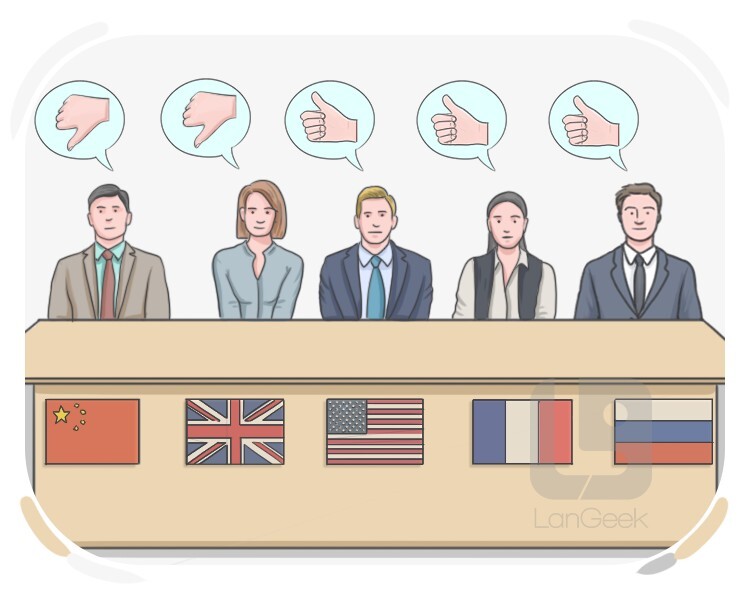
a vote or formal decision that prevents a proposal or measure from being approved
informacje gramatyczne
status żywotności
abstrakcyjny
budowa morfologiczna
prosty
policzalny
singular
not gender specific
forma liczby mnogiej
vetoes
Przykłady
The council used its veto to block the new zoning law.
Rada użyła swojego weta, aby zablokować nowe prawo zagospodarowania przestrzennego.
1.1
weto, prawo weta
the authority or right to forbid or reject an action, often by a head of state or executive
Przykłady
The president has the constitutional veto over bills passed by Congress.
Prezydent ma konstytucyjne weto wobec ustaw uchwalonych przez Kongres.
LanGeek


