

Искать





























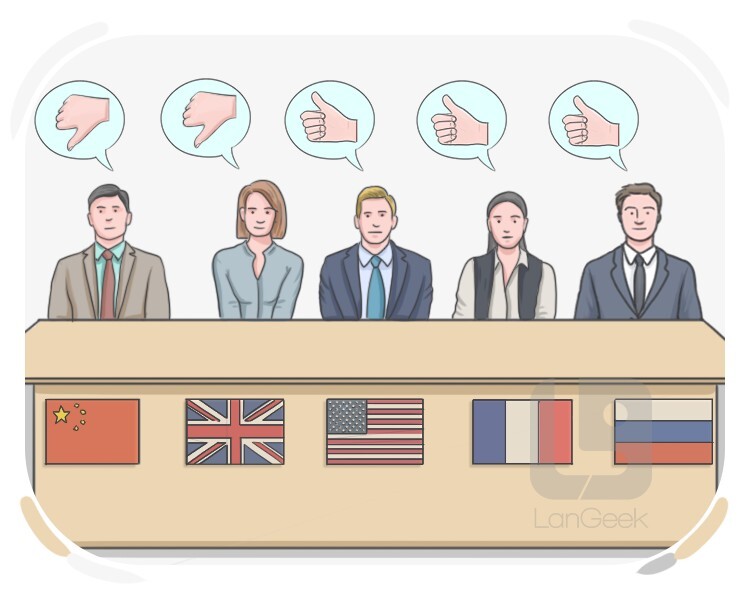
to veto
01
наложить вето, ветировать
to reject or prohibit a decision, proposal, or action
Transitive: to veto a decision or action
грамматическая информация
морфологический состав
простое
глагол действия
правильный
настоящее время
veto
3-е лицо единственного числа
vetoes
причастие настоящего времени
vetoing
простое прошедшее время
vetoed
причастие прошедшего времени
vetoed
Примеры
The president has the authority to veto a bill passed by the legislature, preventing it from becoming law.
Президент имеет право наложить вето на законопроект, принятый законодательным органом, предотвращая его превращение в закон.
02
наложить вето, отклонить
to reject or refuse to allow an idea or suggestion
Transitive: to veto an idea or plan
Примеры
The homeowner vetoed the idea of installing a swimming pool in the backyard due to space constraints.
Домовладелец наложил вето на идею установки бассейна во дворе из-за ограничений по пространству.
Veto
грамматическая информация
статус одушевлённости
абстрактное
морфологический состав
простое
исчисляемое
singular
not gender specific
форма множественного числа
vetoes
Примеры
The council used its veto to block the new zoning law.
Совет использовал свое вето, чтобы заблокировать новый закон о зонировании.
1.1
право вето
the authority or right to forbid or reject an action, often by a head of state or executive
Примеры
The president has the constitutional veto over bills passed by Congress.
Президент имеет конституционное вето на законопроекты, принятые Конгрессом.
LanGeek


