






























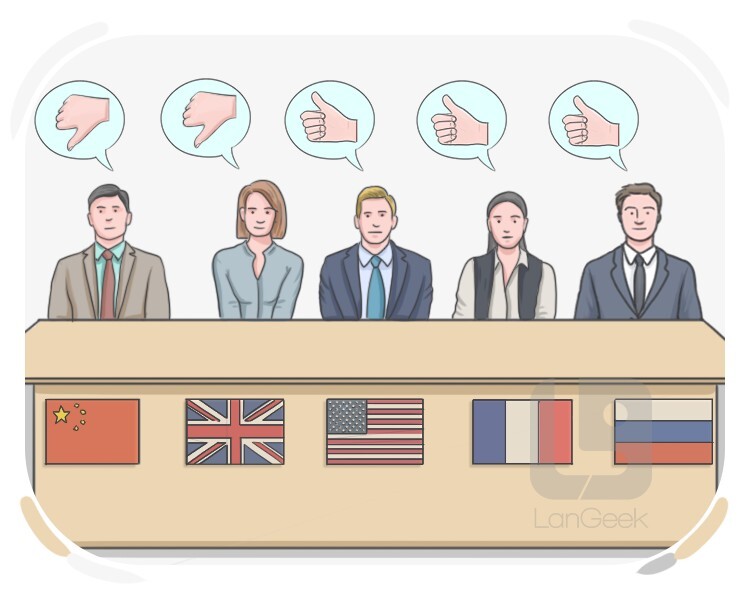
to veto
01
拒否する, ベトーする
to reject or prohibit a decision, proposal, or action
Transitive: to veto a decision or action
文法情報
形態的構成
単純語
動作動詞
規則的
現在時制
veto
三人称単数
vetoes
現在分詞
vetoing
単純過去
vetoed
過去分詞
vetoed
例
The president has the authority to veto a bill passed by the legislature, preventing it from becoming law.
大統領は、立法府によって可決された法案を拒否する権限を持っており、それが法律になるのを防ぎます。
02
拒否権を行使する, 拒絶する
to reject or refuse to allow an idea or suggestion
Transitive: to veto an idea or plan
例
The homeowner vetoed the idea of installing a swimming pool in the backyard due to space constraints.
家主は、スペースの制約により、裏庭にプールを設置するという考えを拒否しました。
Veto
文法情報
有生性の状態
抽象的
形態的構成
単純語
可算
singular
not gender specific
複数形
vetoes
例
The council used its veto to block the new zoning law.
評議会は新しいゾーニング法を阻止するために拒否権を使用した。
1.1
拒否権, 拒否権
the authority or right to forbid or reject an action, often by a head of state or executive
例
The president has the constitutional veto over bills passed by Congress.
大統領は、議会で可決された法案に対する憲法上の拒否権を持っています。


