






























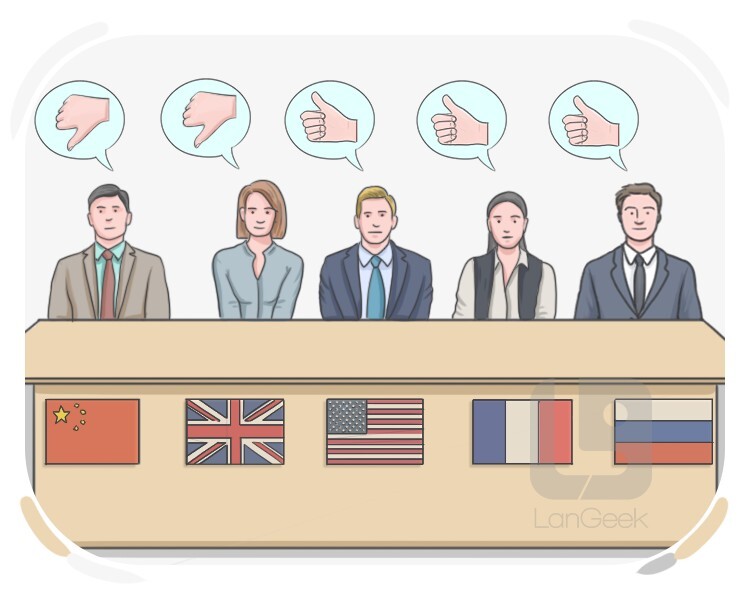
to veto
01
否决, 行使否决权
to reject or prohibit a decision, proposal, or action
Transitive: to veto a decision or action
语法信息
形态构成
简单词
动作动词
规则
现在时
veto
第三人称单数
vetoes
现在分词
vetoing
一般过去时
vetoed
过去分词
vetoed
例子
The president has the authority to veto a bill passed by the legislature, preventing it from becoming law.
总统有权否决立法机关通过的法案,阻止其成为法律。
02
否决, 拒绝
to reject or refuse to allow an idea or suggestion
Transitive: to veto an idea or plan
例子
The homeowner vetoed the idea of installing a swimming pool in the backyard due to space constraints.
由于空间限制,房主否决了在后院安装游泳池的想法。
Veto
语法信息
有生性状态
抽象
形态构成
简单词
可数
singular
not gender specific
复数形式
vetoes
例子
The council used its veto to block the new zoning law.
理事会使用其否决权来阻止新的分区法。
1.1
否决权, 否决权
the authority or right to forbid or reject an action, often by a head of state or executive
例子
The president has the constitutional veto over bills passed by Congress.
总统对国会通过的法案拥有宪法否决权。


