Buscar
Selecciona el idioma del diccionario




























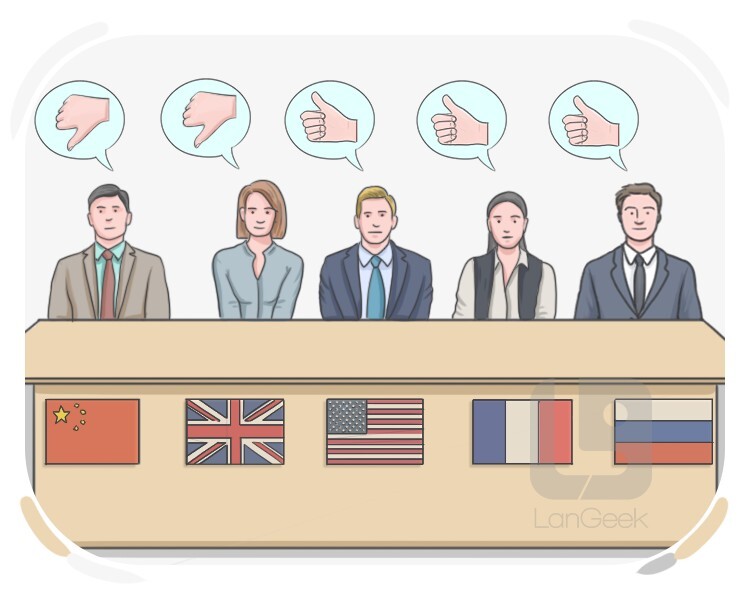
to veto
01
vetar, poner veto
to reject or prohibit a decision, proposal, or action
Transitive: to veto a decision or action
información gramatical
composición morfológica
simple
verbo de acción
regular
presente
veto
3.ª persona singular
vetoes
participio presente
vetoing
pretérito simple
vetoed
participio pasado
vetoed
Ejemplos
The president has the authority to veto a bill passed by the legislature, preventing it from becoming law.
El presidente tiene la autoridad para vetar un proyecto de ley aprobado por la legislatura, impidiendo que se convierta en ley.
02
vetar, rechazar
to reject or refuse to allow an idea or suggestion
Transitive: to veto an idea or plan
Ejemplos
The homeowner vetoed the idea of installing a swimming pool in the backyard due to space constraints.
El propietario vetó la idea de instalar una piscina en el patio trasero debido a limitaciones de espacio.
Veto
información gramatical
estado de animacidad
abstracto
composición morfológica
simple
contable
singular
not gender specific
forma plural
vetoes
Ejemplos
The council used its veto to block the new zoning law.
El consejo utilizó su veto para bloquear la nueva ley de zonificación.
1.1
derecho de veto
the authority or right to forbid or reject an action, often by a head of state or executive
Ejemplos
The president has the constitutional veto over bills passed by Congress.
El presidente tiene el veto constitucional sobre los proyectos de ley aprobados por el Congreso.
LanGeek