

Rechercher
Sélectionnez la langue du dictionnaire





























to disgrace
01
déshonorer
to bring shame or dishonor on oneself or other people
Transitive: to disgrace sb/sth | to disgrace oneself
informations grammaticales
composition morphologique
dérivé
verbe d’action
régulier
présent
disgrace
3e personne du singulier
disgraces
participe présent
disgracing
passé simple
disgraced
participe passé
disgraced
Exemples
His scandalous behavior disgraced his family and tarnished their reputation.
Son comportement scandaleux a déshonoré sa famille et entaché leur réputation.
02
déshonorer, discréditer
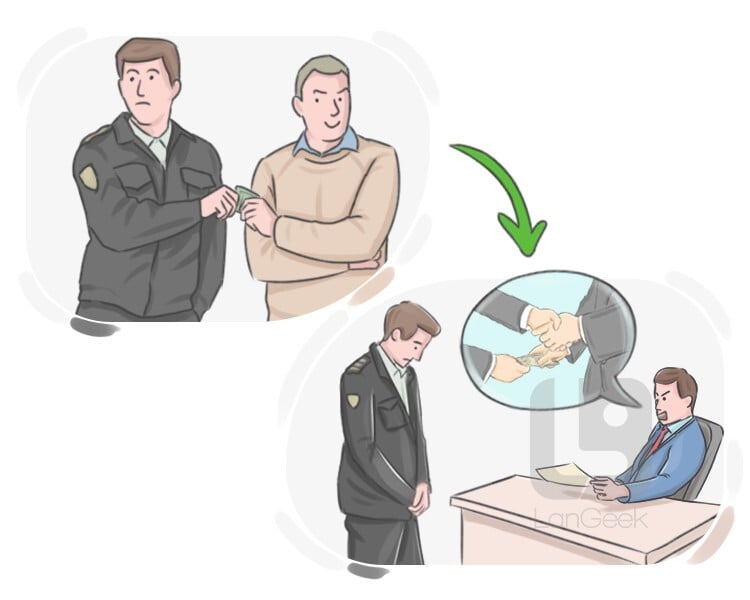
to lead someone to lose respect, honor, or a valued position
Transitive: to disgrace sb/sth
Exemples
The scandal disgraced the politician, forcing him to step down from office.
Le scandale a déshonoré le politicien, le forçant à démissionner de son poste.
Disgrace
01
déshonneur, honte
a state of dishonor
informations grammaticales
statut d’animéité
abstrait
composition morphologique
composé
dénombrable
singular
not gender specific
forme plurielle
disgraces
LanGeek
Téléchargez notre application mobile

Arbre Lexical
disgraced
disgrace
grace

